Word & Phrase Analysis
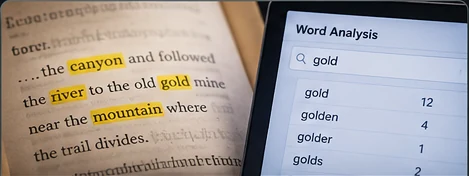
Search and compare words and short phrases across book sections, examine patterns, and inspect page and line references.
Analyze Words & PhrasesTreasure Hunting
Clue analysis, field observations, source trails, tools, and working theories organized for easier discovery. Explore the latest posts or search by topic to find what interests you.
WONDER is often where the search begins.
Search and compare words and short phrases across book sections, examine patterns, and inspect page and line references.
Analyze Words & Phrases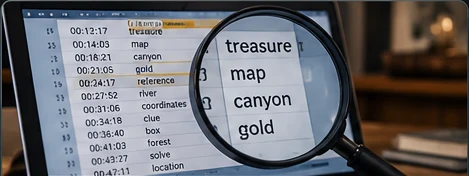
Search interview transcripts by word or phrase, open the surrounding context, and jump to supported source video.
Search Interviews
Search the complete Q&A session, review Jon's full responses, and jump directly to supported moments in the source video.
Search the Q&A
Browse documented treasure items by acquisition timing, value, known box, research notes, and source records.
Explore the Collection
Explore real-world examples from armchair treasure books, movies, and music to see how clue-solving methods actually work.
Explore Clue Methods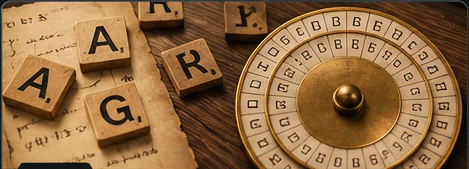
Test words and phrases against derived first-letter streams using anagrams, Caesar shifts, or both.
Open the Lab
Join a large, active community of treasure hunters discussing hunts, puzzles, games, and more.
Explore the CommunityExplore the Research
227 published articles
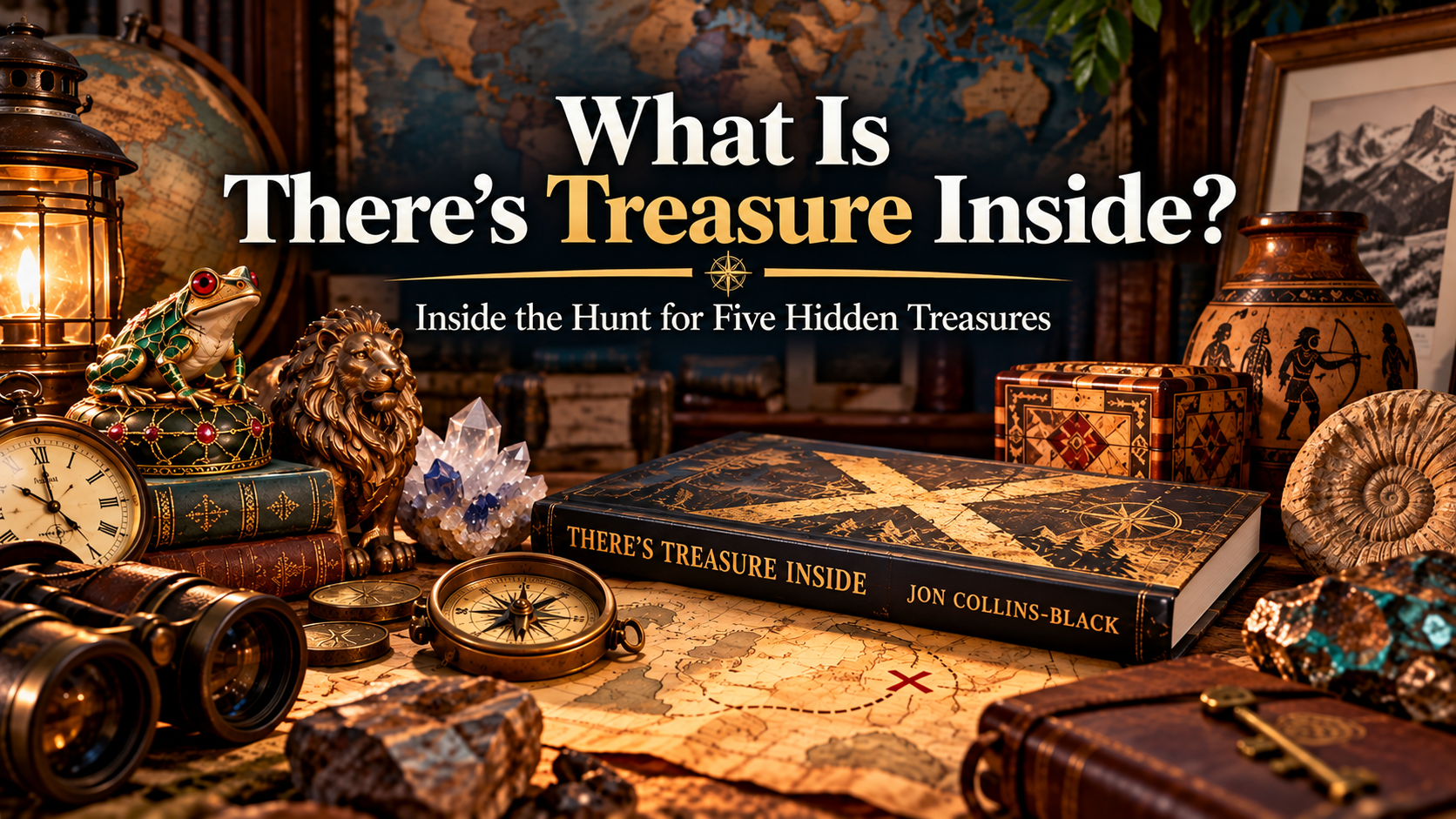
Jon Collins-Black hid five treasure boxes across the United States and put the path to finding them inside one book. Here is the story of the hunt, the five boxes, the treasures at stake, and why so many people are trying to solve it.
Read Article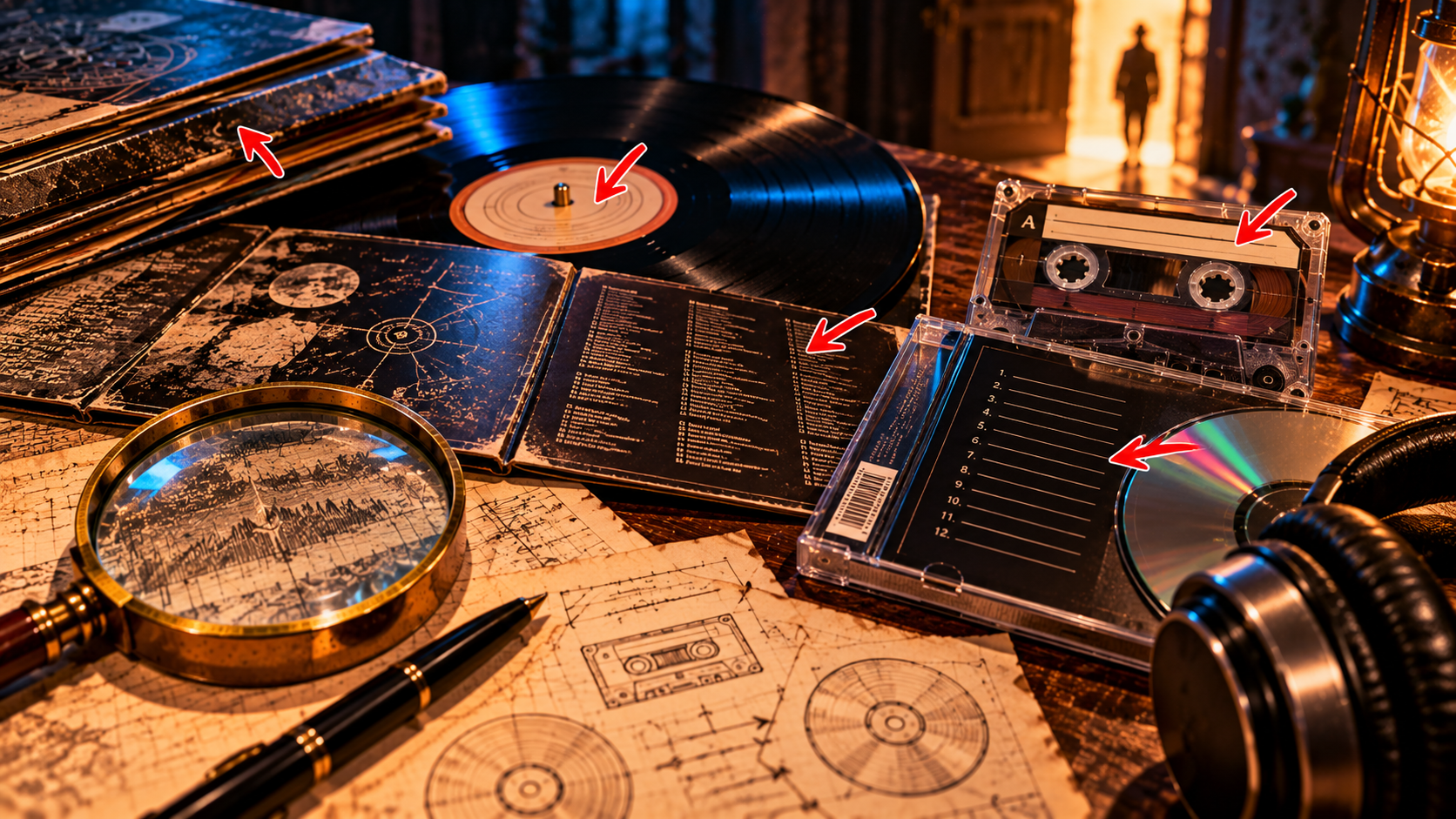
Don't examine only the message. Its cover, order, format, packaging, or other surroundings may also be part of the clue.
Read Article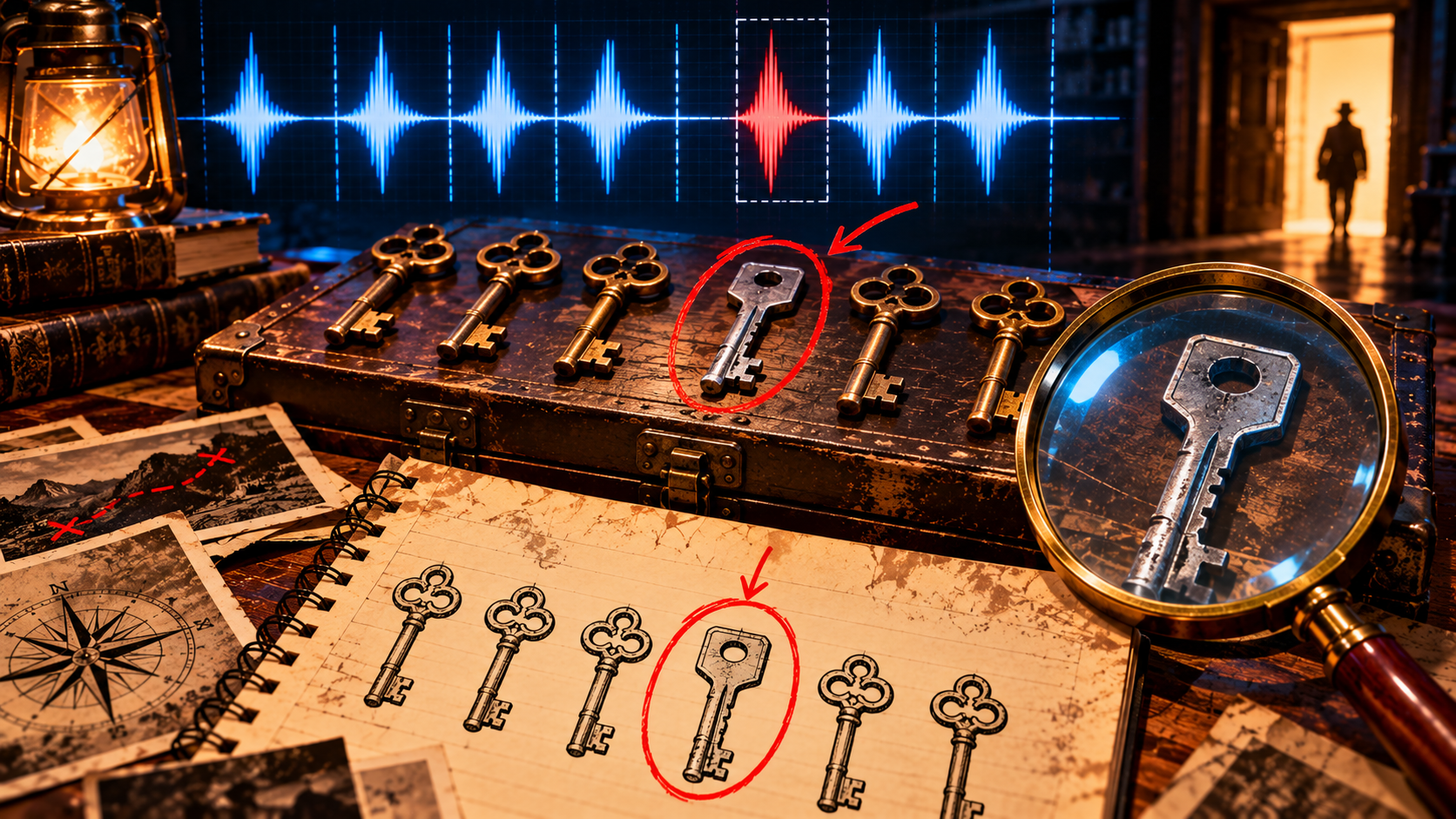
Repetition teaches you what is normal. Once a pattern is clear, the one thing that breaks it may be the important clue.
Read Article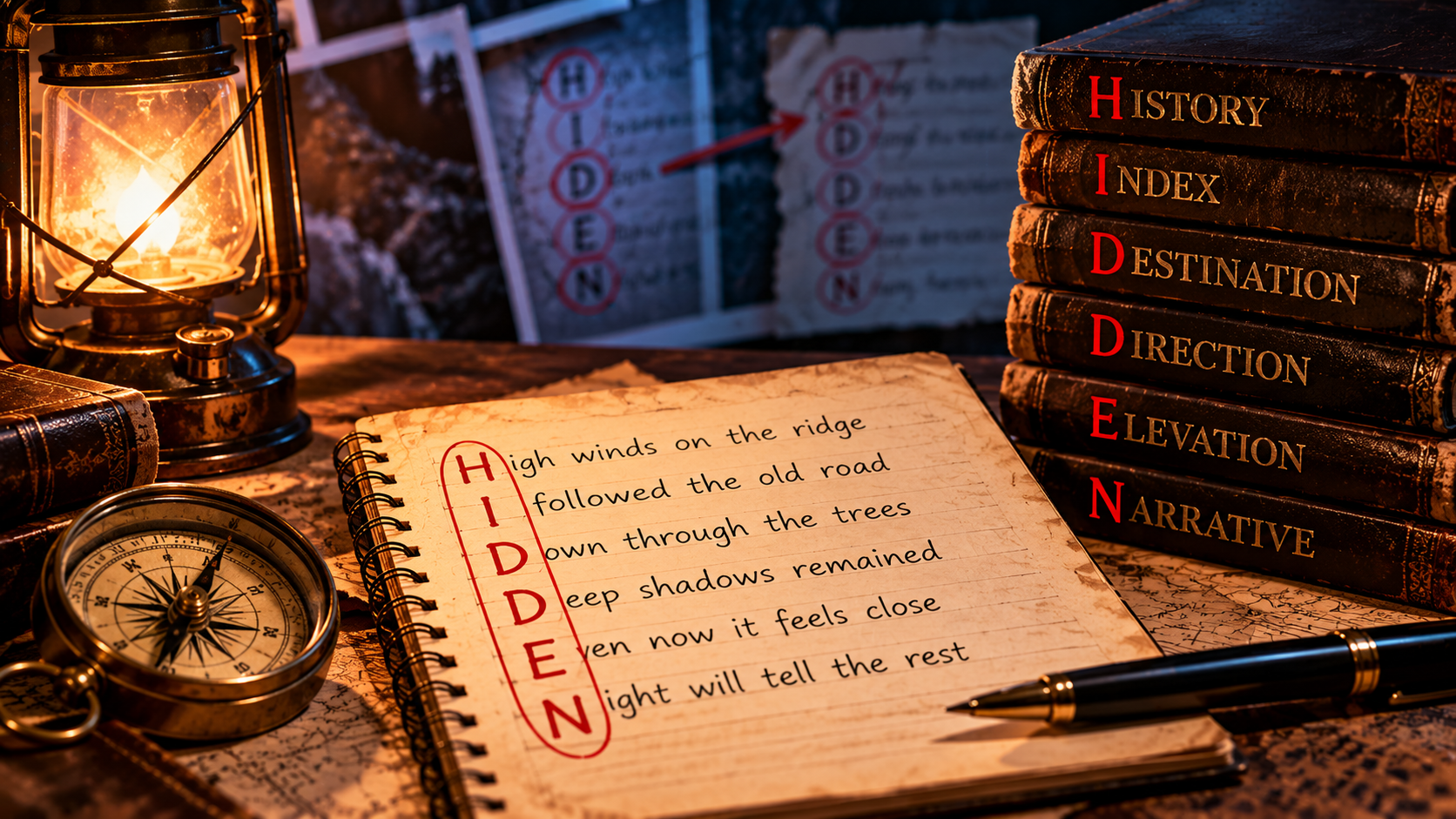
Words can carry two messages at once. First letters, last letters, or selected positions may reveal what normal reading misses.
Read Article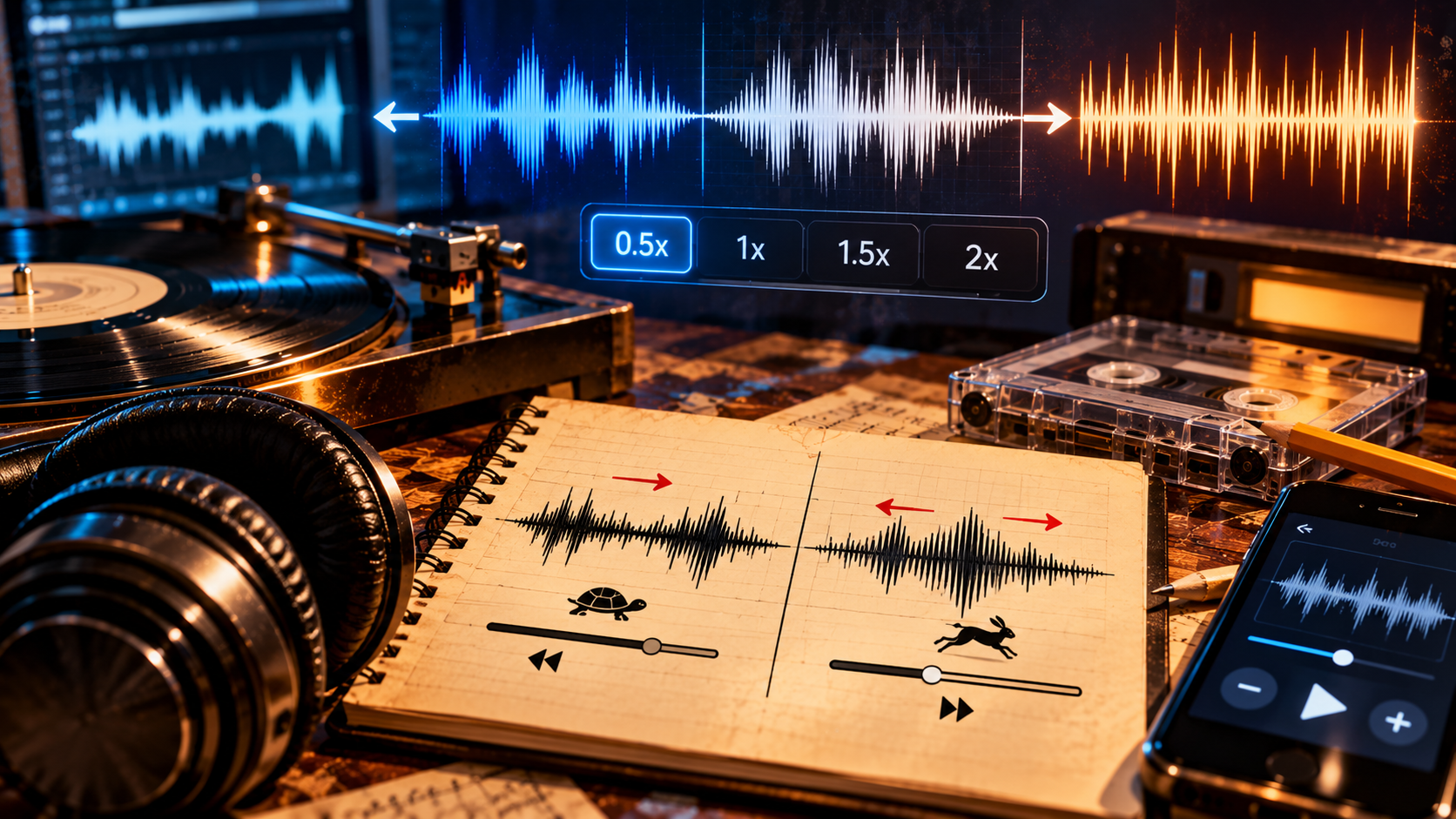
If a clue makes no sense, try changing how you examine it. The same information may become clear in a different form.
Read Article
An empty space may not be empty at all. Silence, gaps, and missing pieces can hide, separate, or point toward information.
Read Article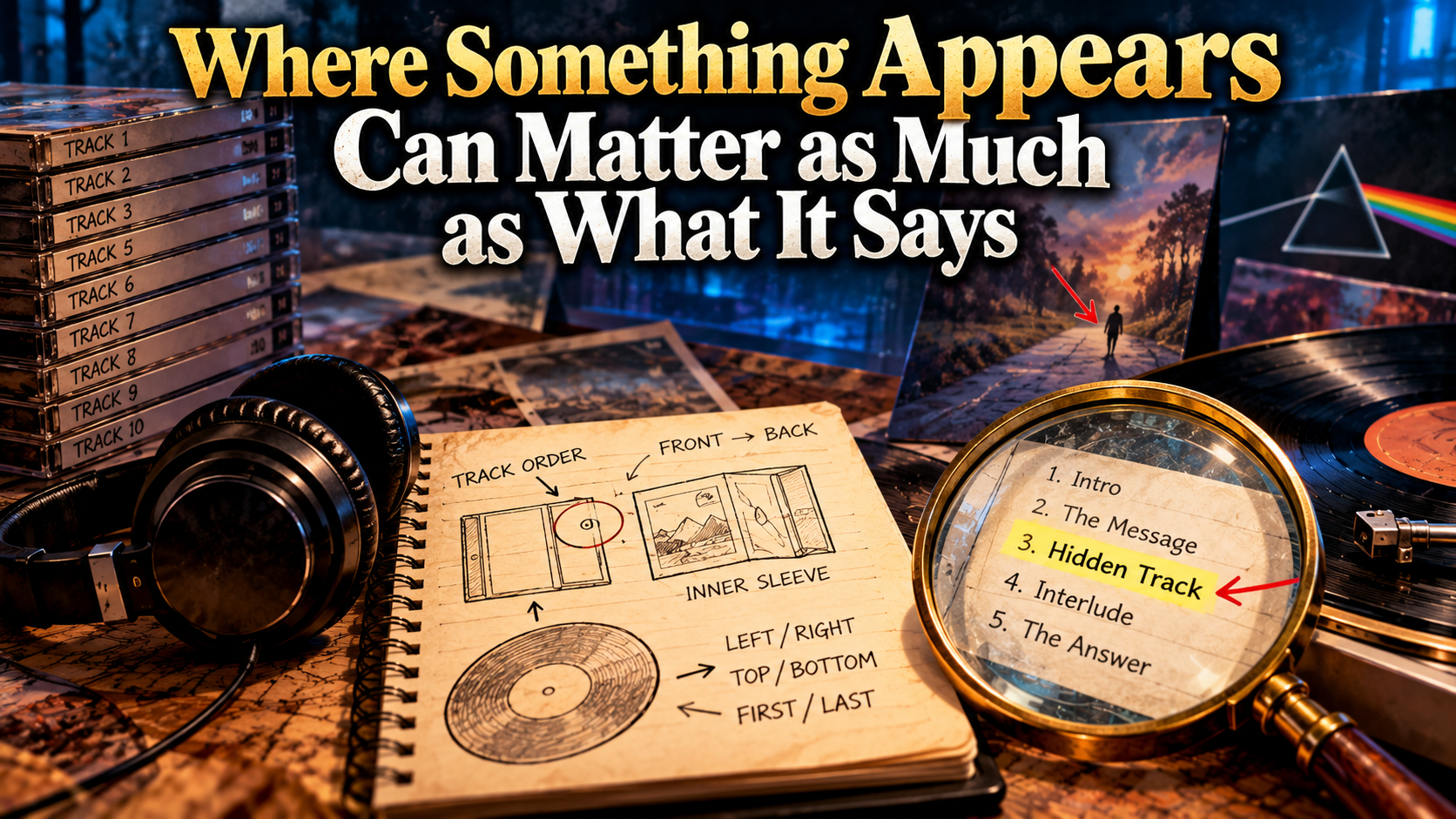
Where something appears can be a clue. First, last, left, right, between, or at an edge may tell you how to use it.
Read Article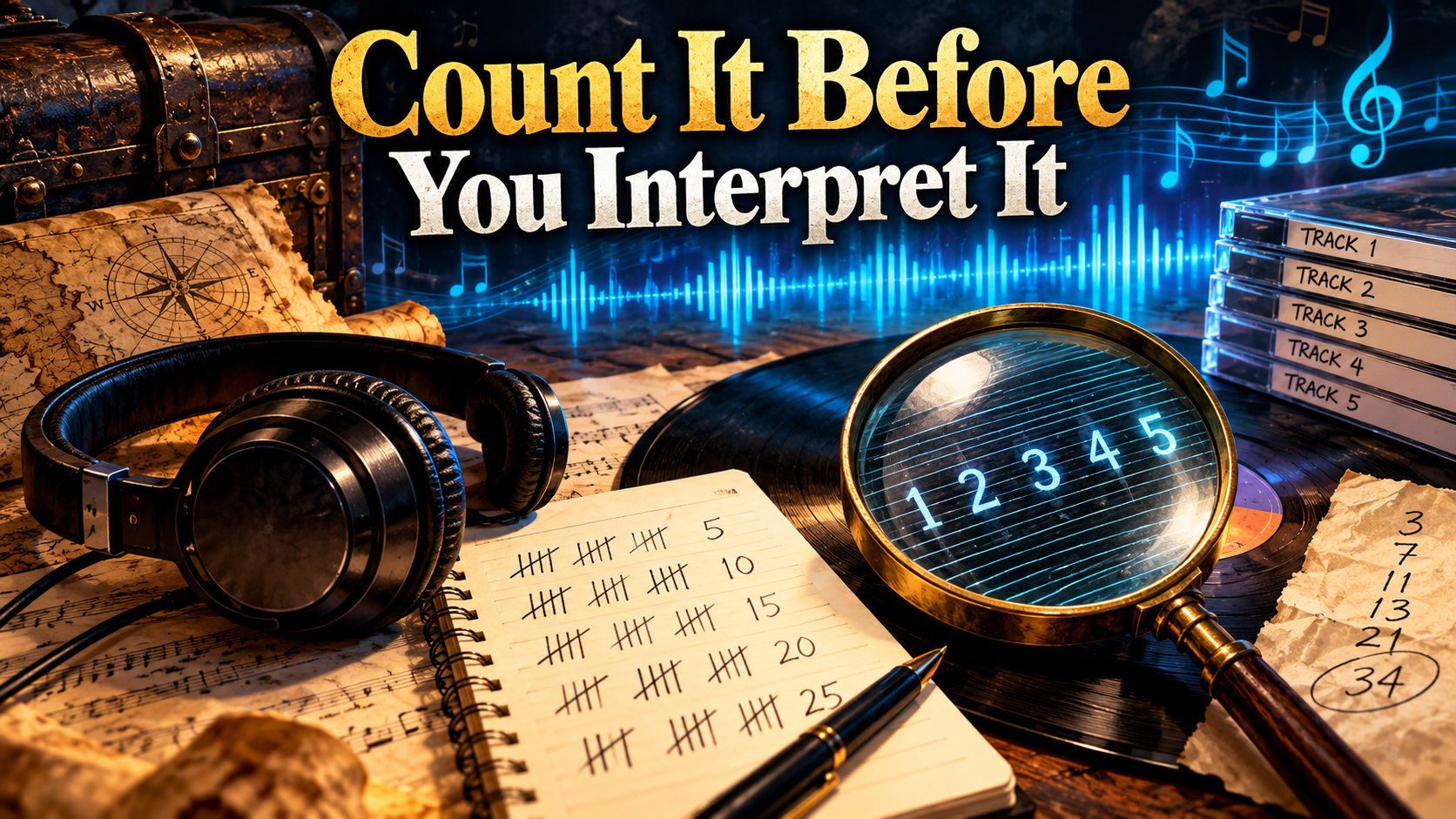
Counts and number patterns can be instructions. Before deciding what something means, try counting how it is structured.
Read Article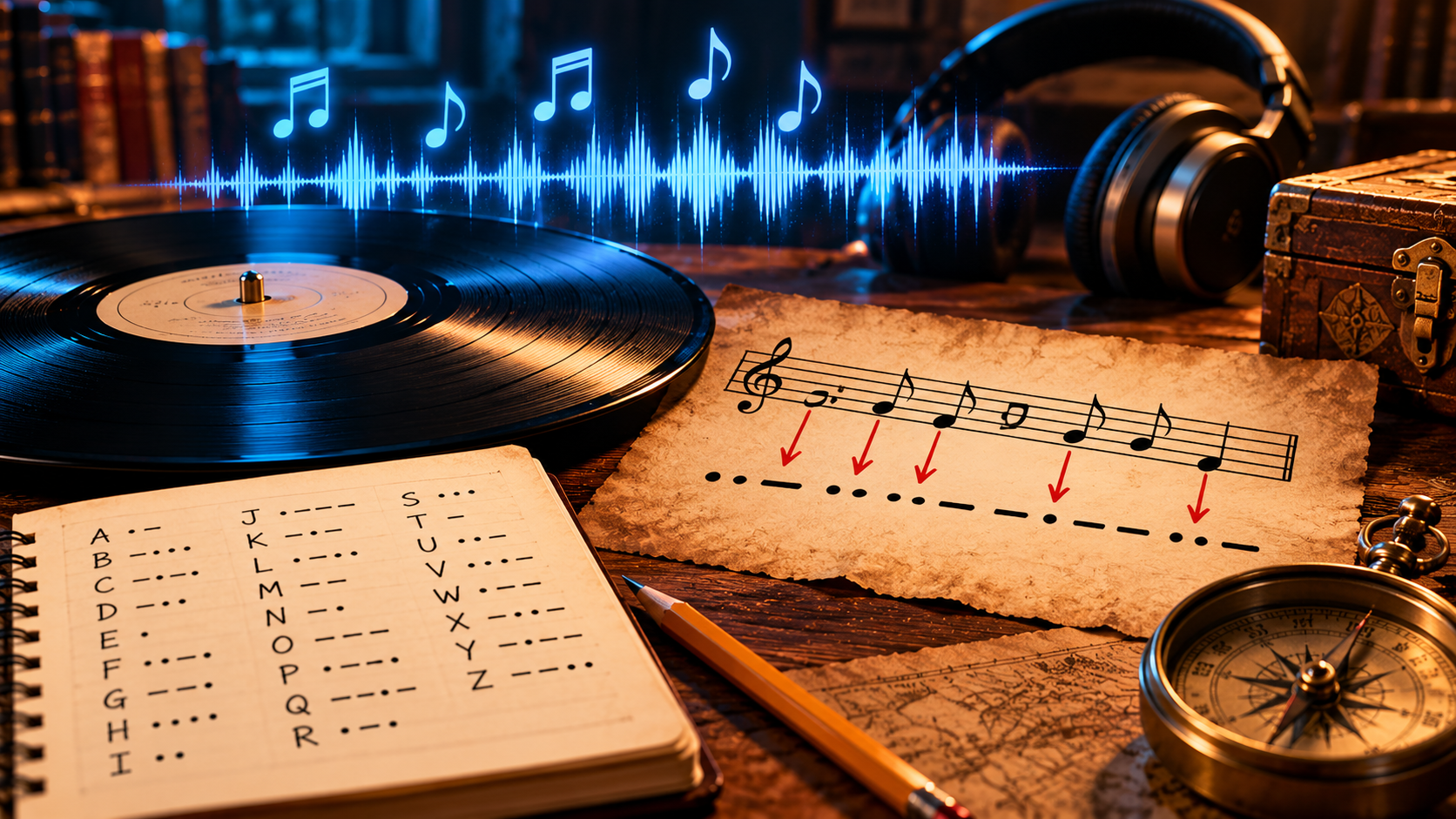
Music does not have to hide words as words. Rhythm, pitch and repeated tones can carry an entirely separate symbolic language—Morse code being the...
Read Article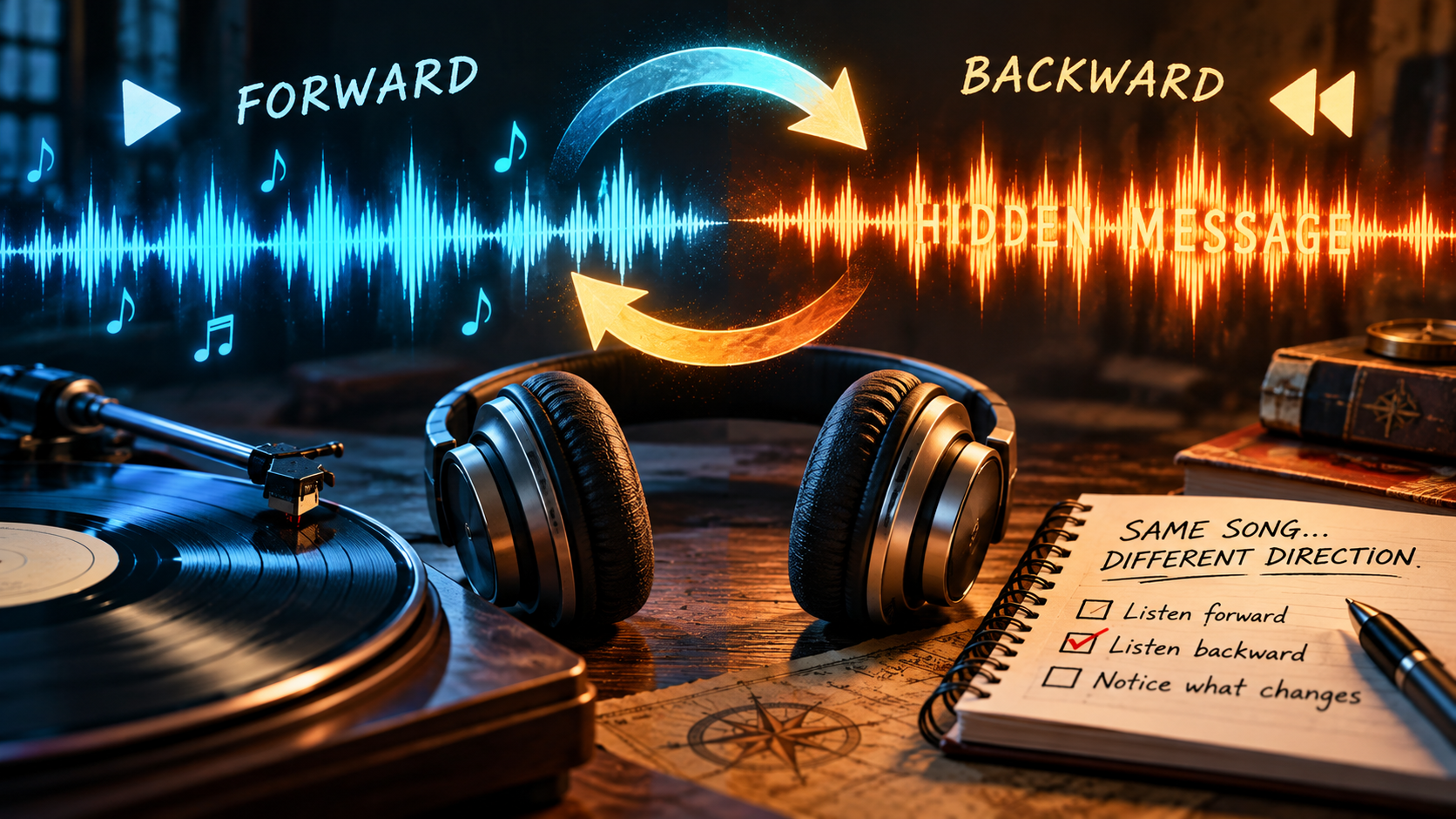
Reversal is one of the simplest transformations a clue setter can use: the information is present, but it becomes intelligible only after the order...
Read Article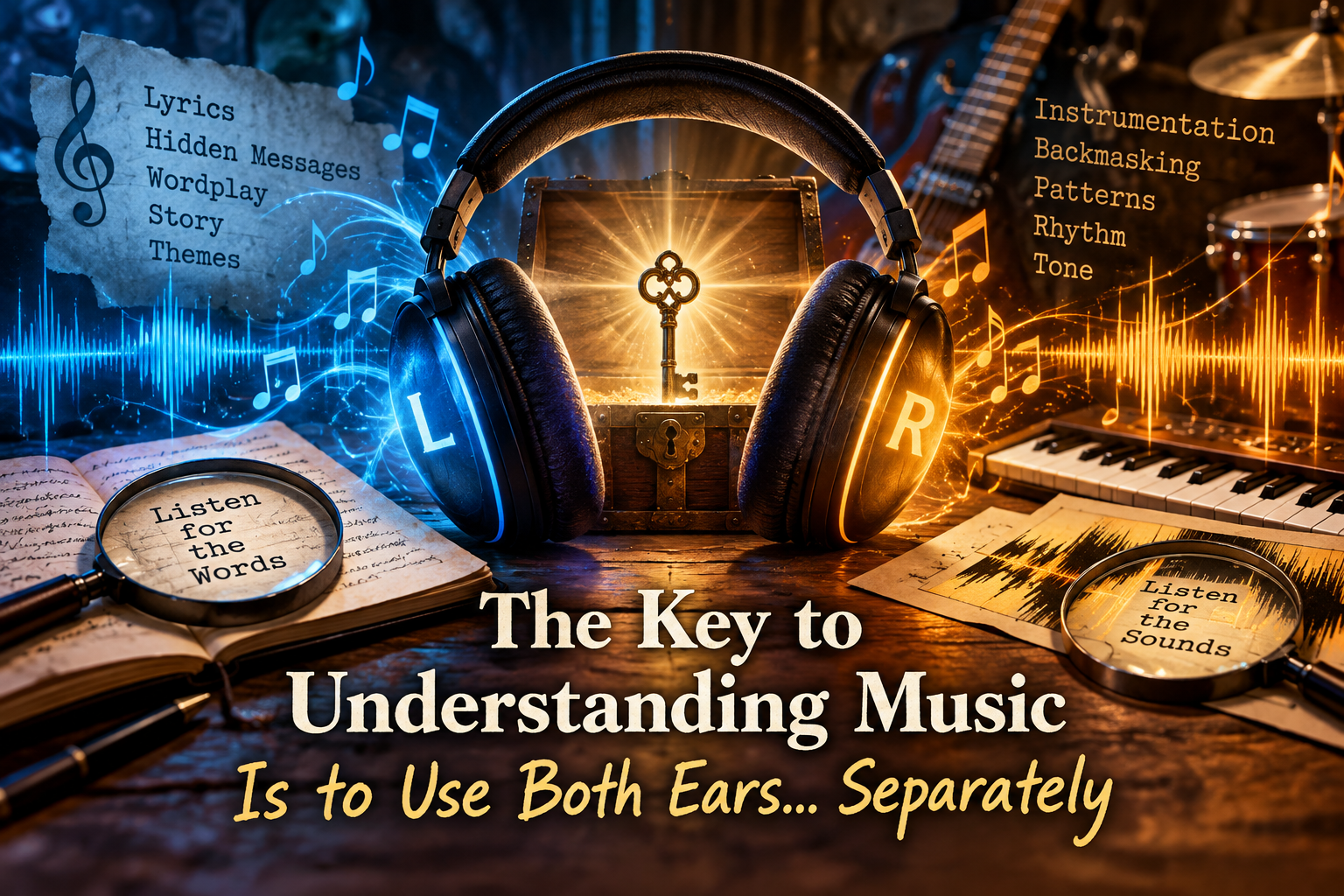
A correct first interpretation may still be incomplete when a songwriter makes the same words carry two meanings at once.
Read Article
Do not demand a single master map. In chained hunts, the route may be generated progressively, with each stage producing the key for the next.
Read Article
When two clue lines or objects each seem incomplete, test their intersection, overlay, shared axis, or common reference frame.
Read Article
Urban hunts can have layers. Compare modern maps with older plans, building history, tunnels, foundations, and access points.
Read Article
When a hunt gives you matched objects, inspect them for complementary mechanical roles before treating them only as identifiers or collectibles.
Read Article
Define the real objective before optimizing. A hunt may reward exploration, discovery, or breaking an apparent rule instead of scoring.
Read Article
Some puzzles require participation. Once a reference is identified, ask what the solver is expected to do inside that framework.
Read Article
Creator context can constrain an authored hunt, but use documented facts and never treat biography as permission for unlimited inference.
Read Article
When everyone fails the same way, test the premise. Ask what rule solvers have assumed that the clue setter never actually stated.
Read Article
Strong puzzles often use AND logic. Track which conditions must be true simultaneously instead of treating every clue as an independent alternative.
Read Article
When safe and authorized, test whether a puzzle object is layered. Internal alignment or removable parts may conceal information.
Read Article
If an object begins, stops, or changes behavior at a specific celestial event, treat timing as part of the mechanism rather than background story.
Read Article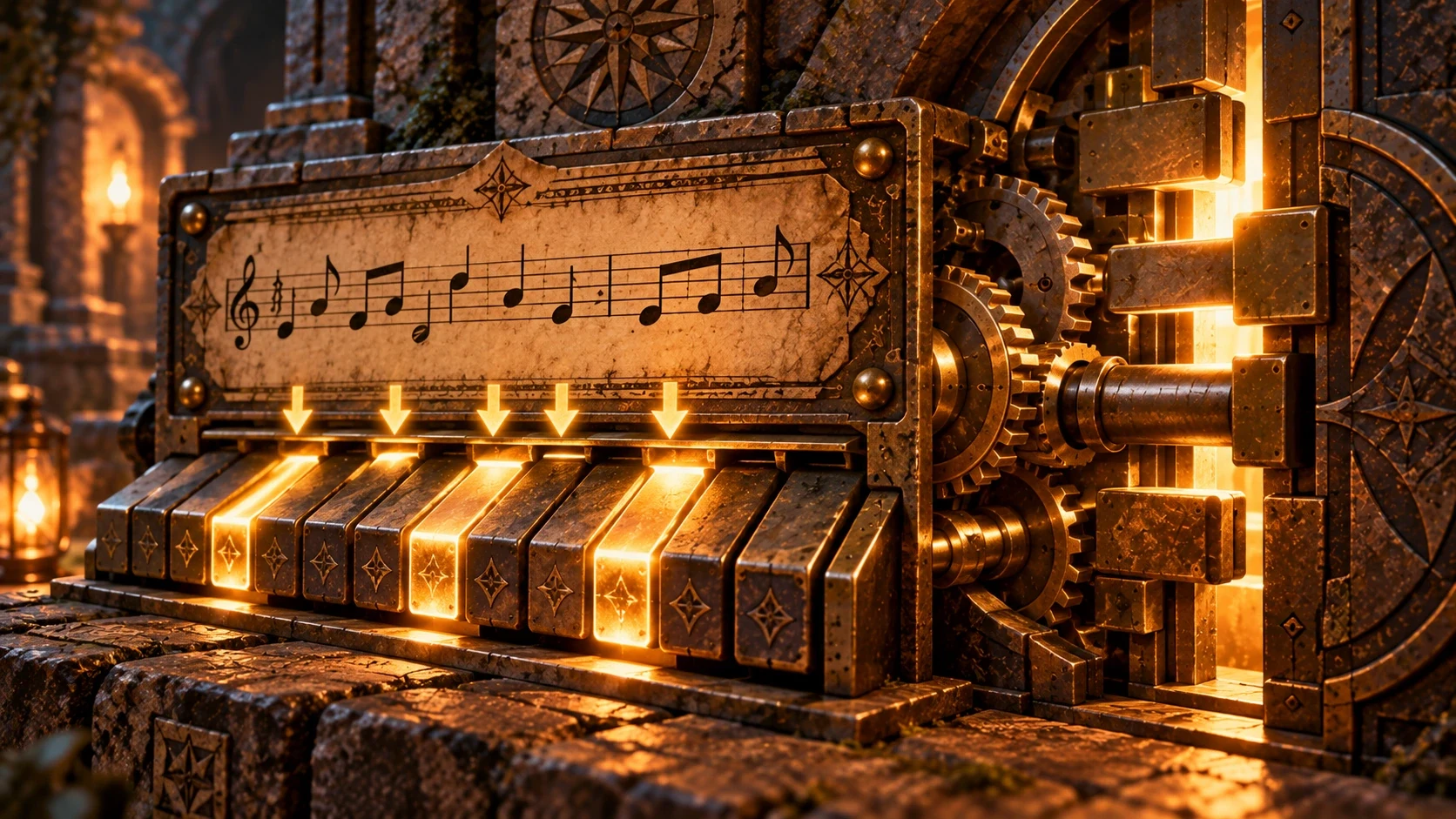
Encoded information may specify an action sequence. Music, rhythm, button order, footsteps, colors, or gestures can function like a combination lock.
Read Article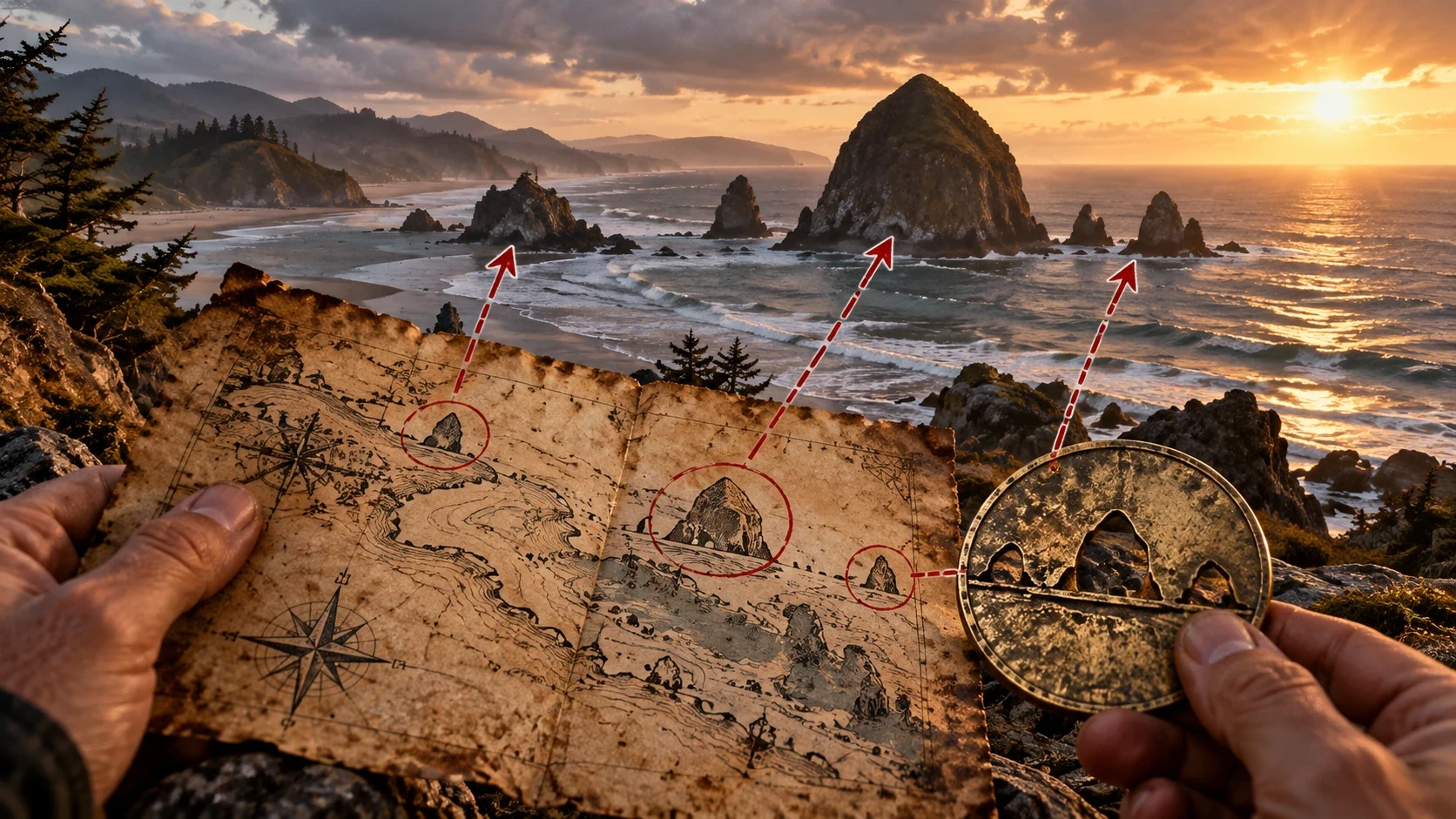
A field map should predict visible features. Confirm at least two stable landmarks before trusting scale, orientation, or final direction.
Read Article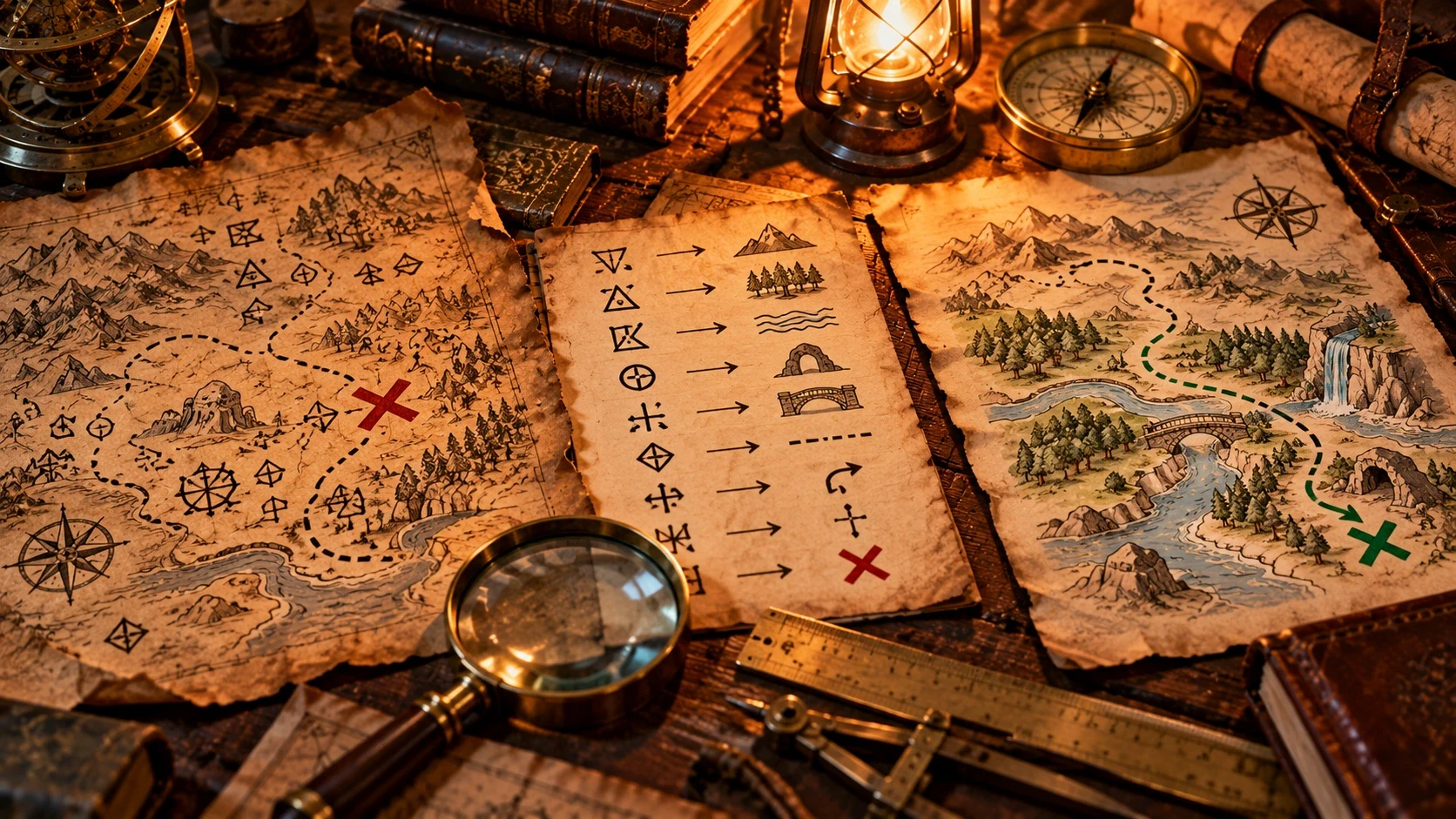
Translate first, navigate second. Preserve uncertain words and alternate meanings so a bad translation does not silently become a bad route.
Read Article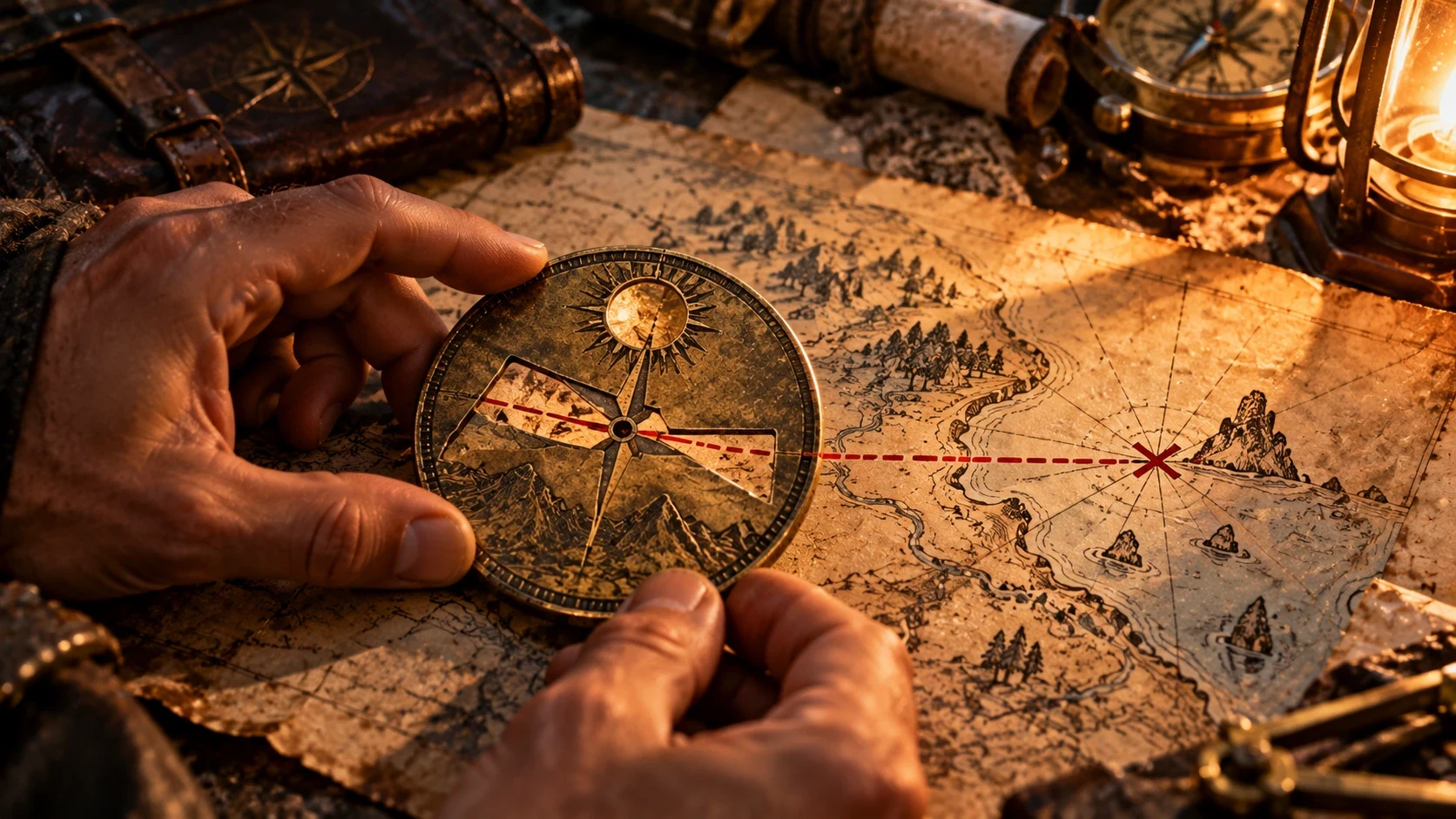
Objects with holes, notches, markings, or sighting features may be field instruments. Identify their purpose before aligning them.
Read Article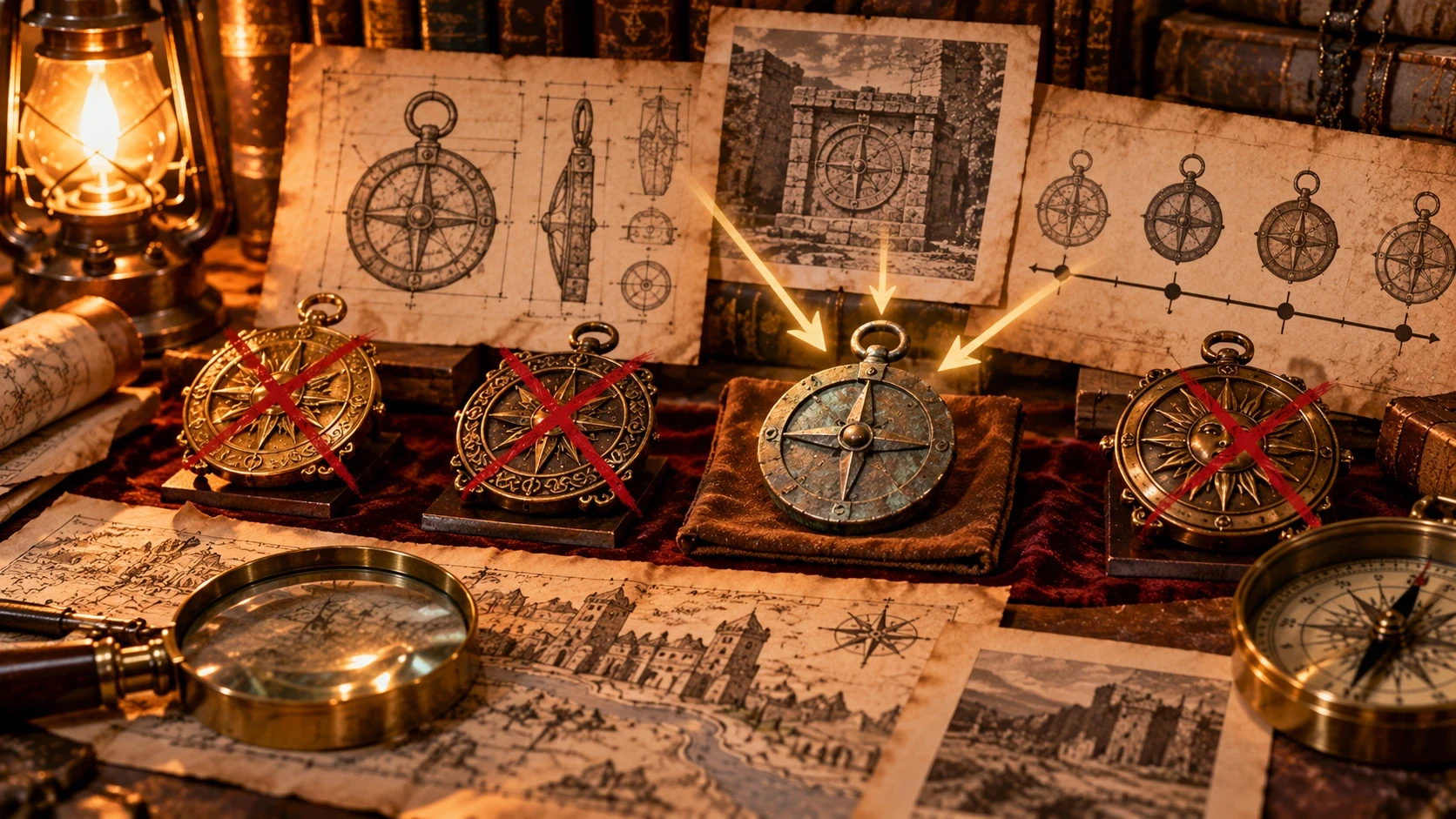
When candidates look equally plausible, use contextual constraints such as provenance, era, material, function, and intended user.
Read Article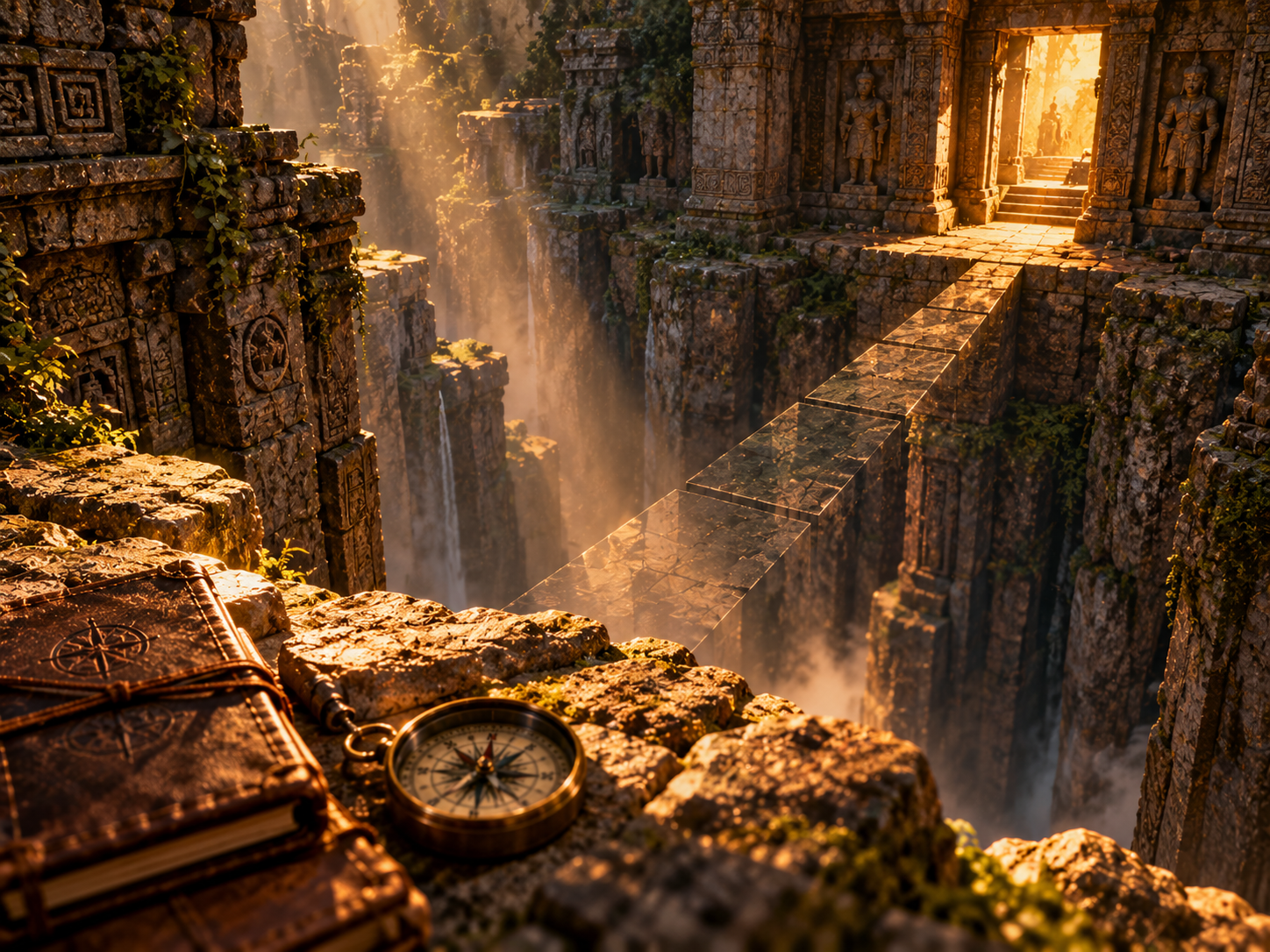
Perspective can conceal real structure. Shift viewpoint, lighting, depth cues, and background alignment when a scene seems impossible.
Read Article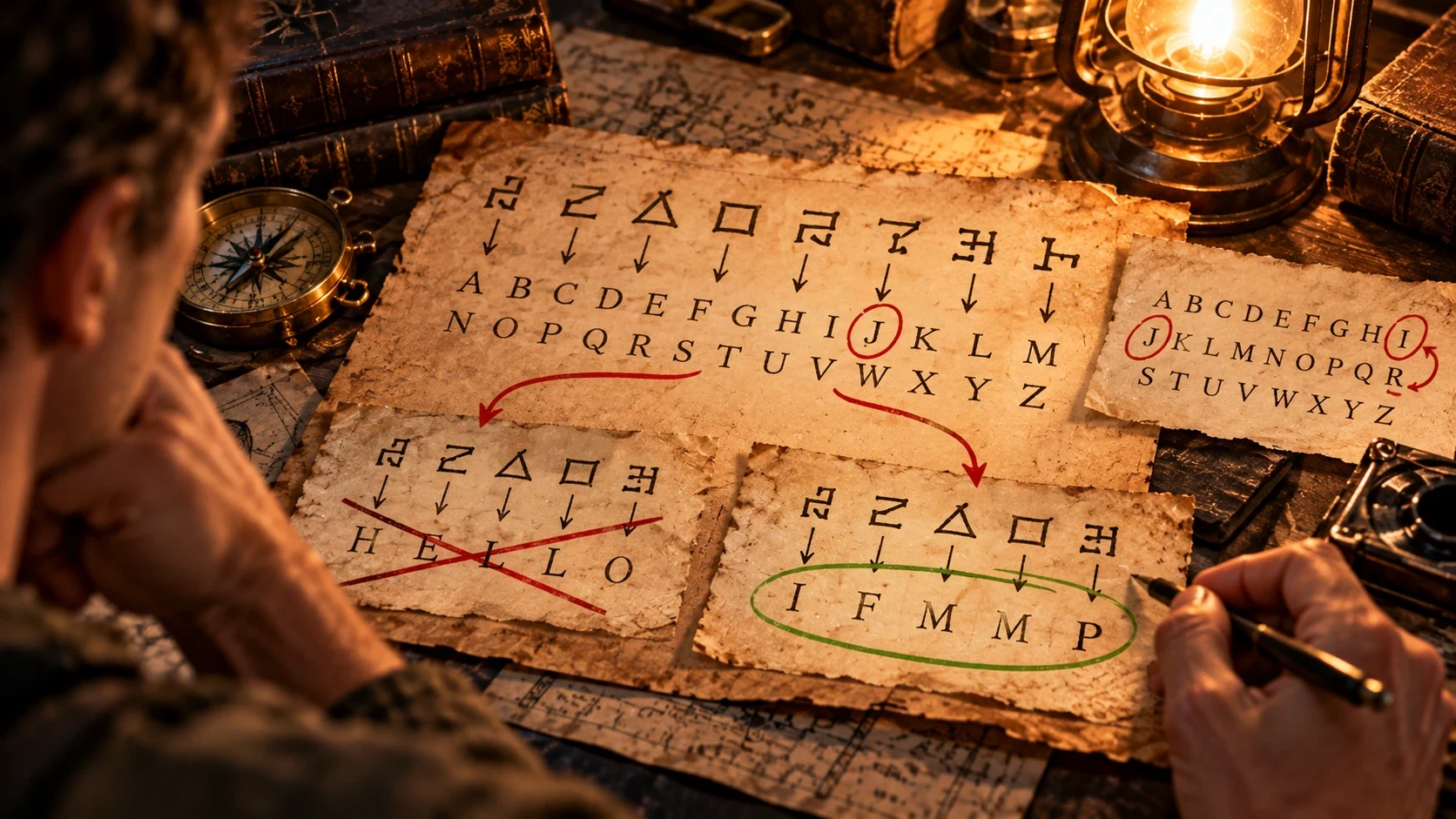
Before rejecting a spelling or letter path, check the language, period, alphabet, transliteration, and naming convention the clue belongs to.
Read Article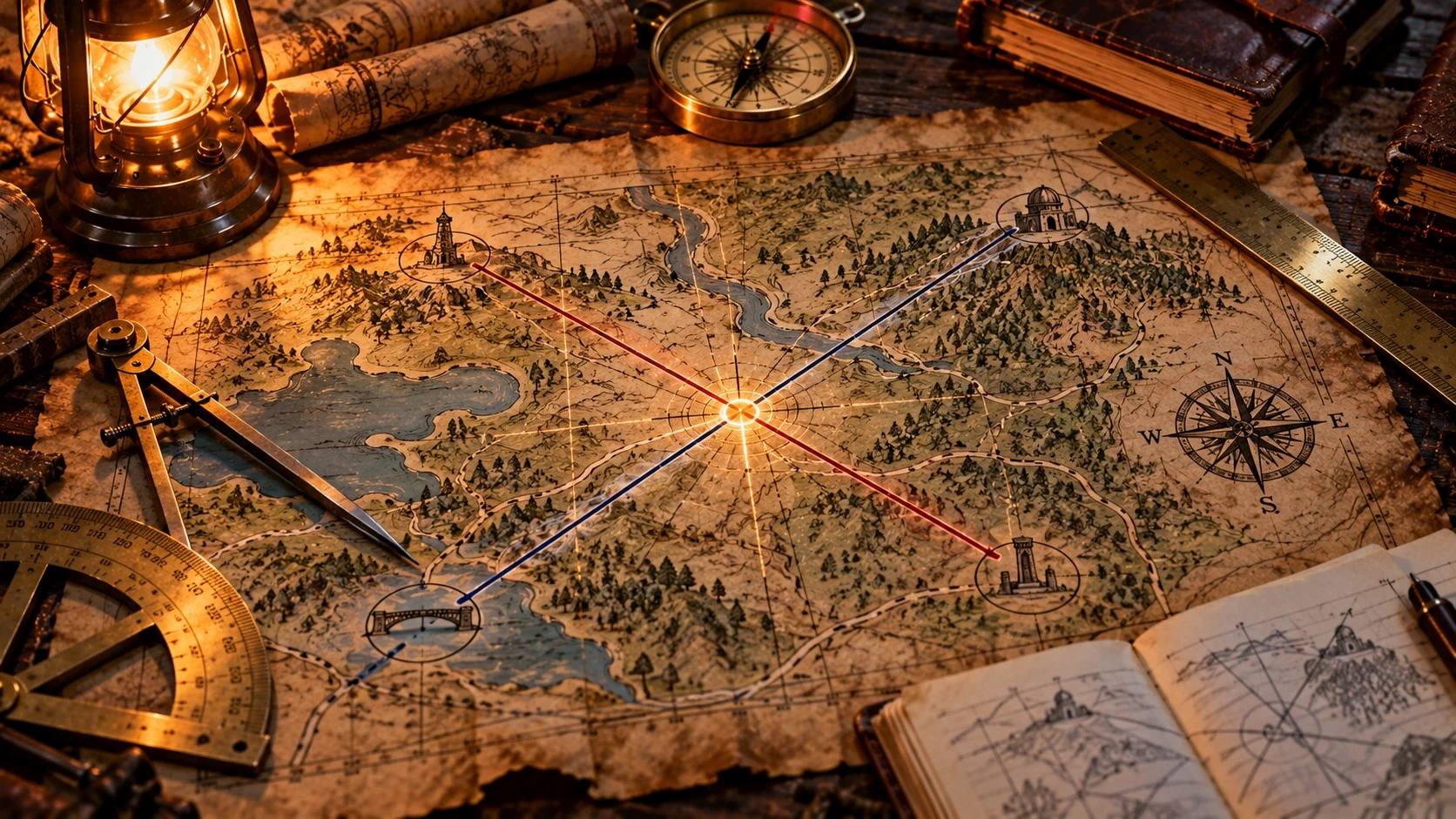
Clichés can be operational. When wording is conspicuous, test both figurative and literal physical interpretations.
Read Article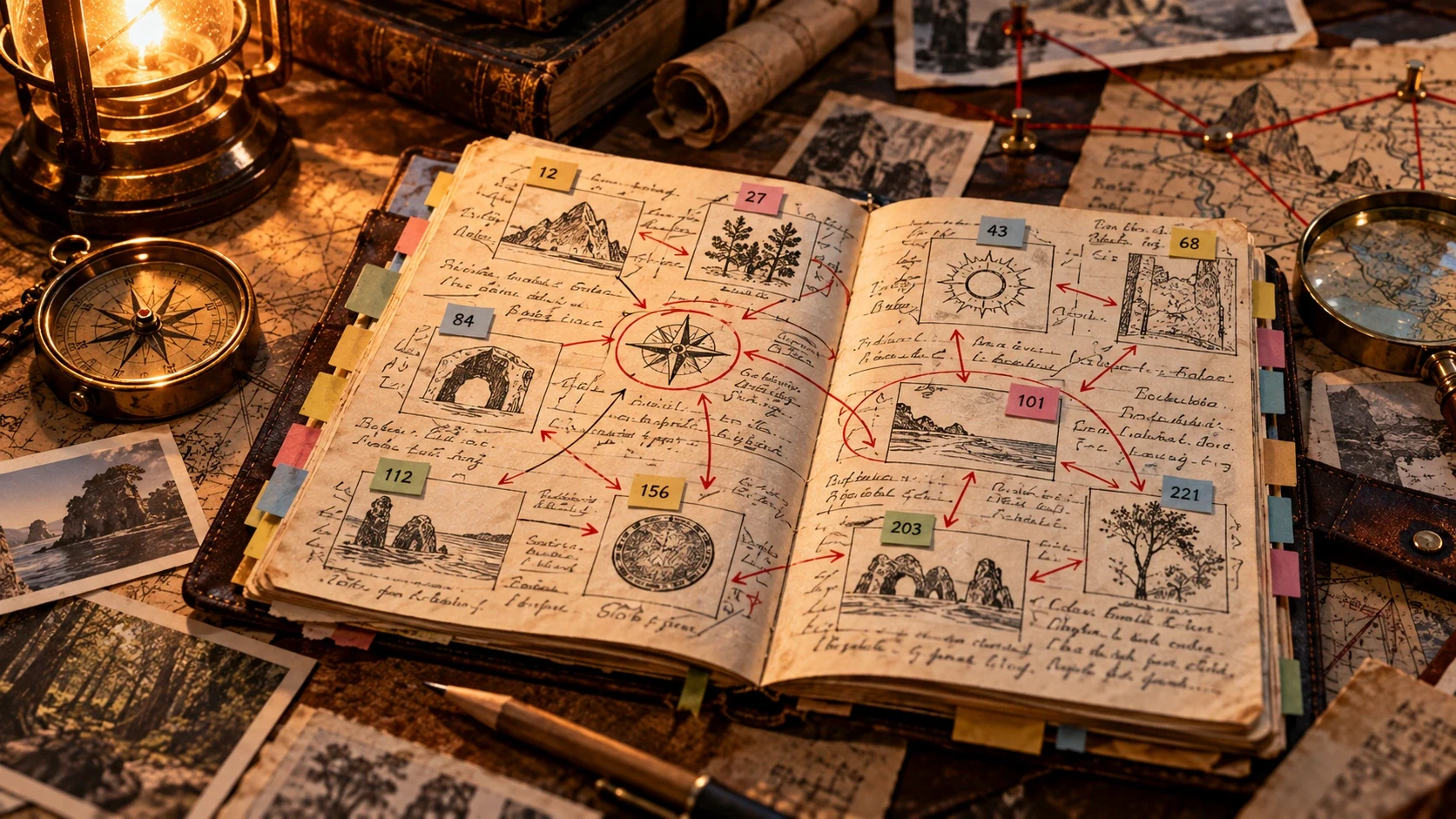
Treat notebooks and clue collections as networks. Cross-reference repeated names, symbols, places, measurements, and diagrams.
Read Article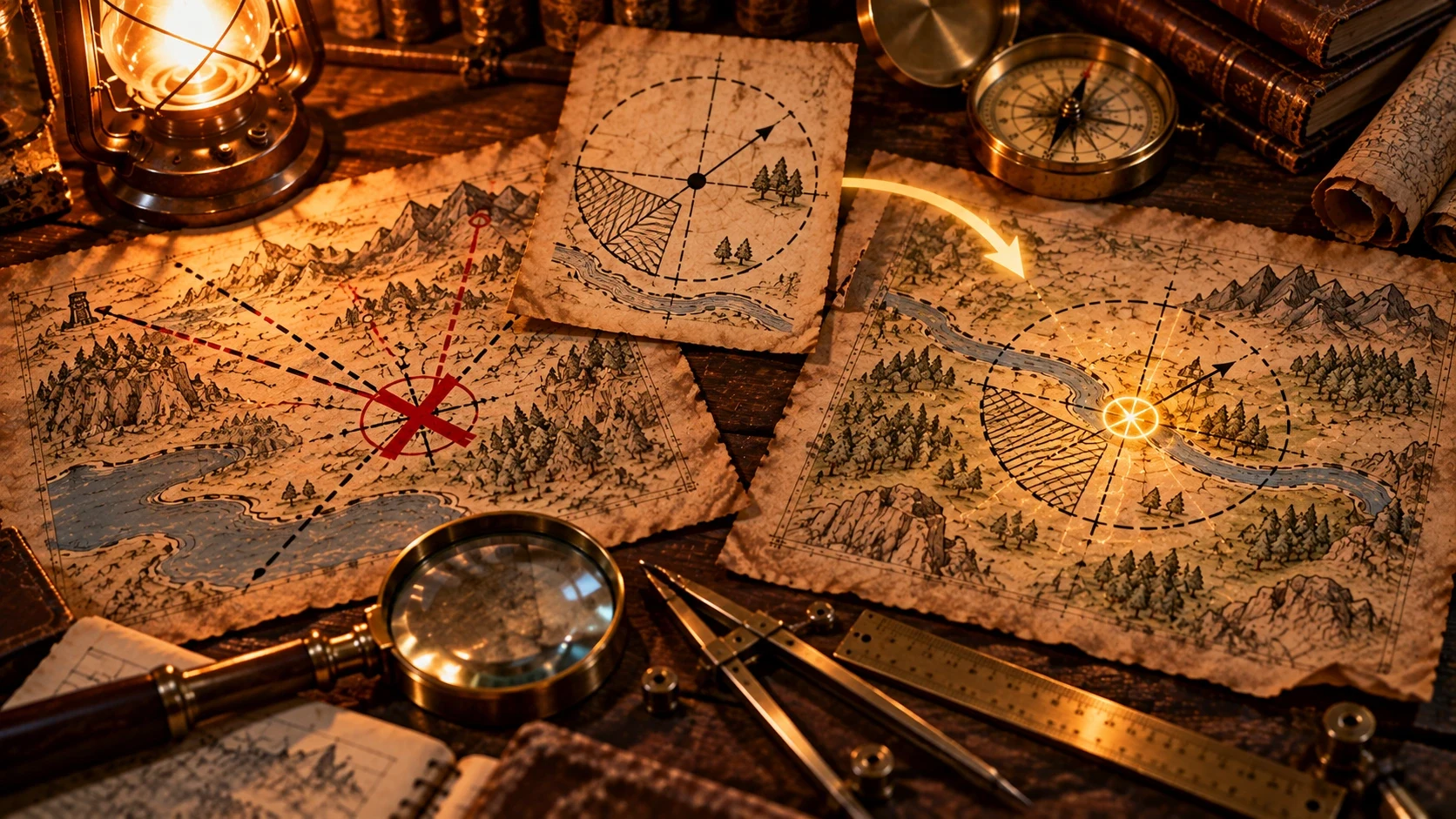
When a near-solve fails, ask what constraint is missing. A systematic offset can reveal an omitted instruction, wrong scale, or incomplete key.
Read Article
Light can be a measuring tool. Test apertures, lenses, shadows, reflections, and solar position when the clue supports it.
Read Article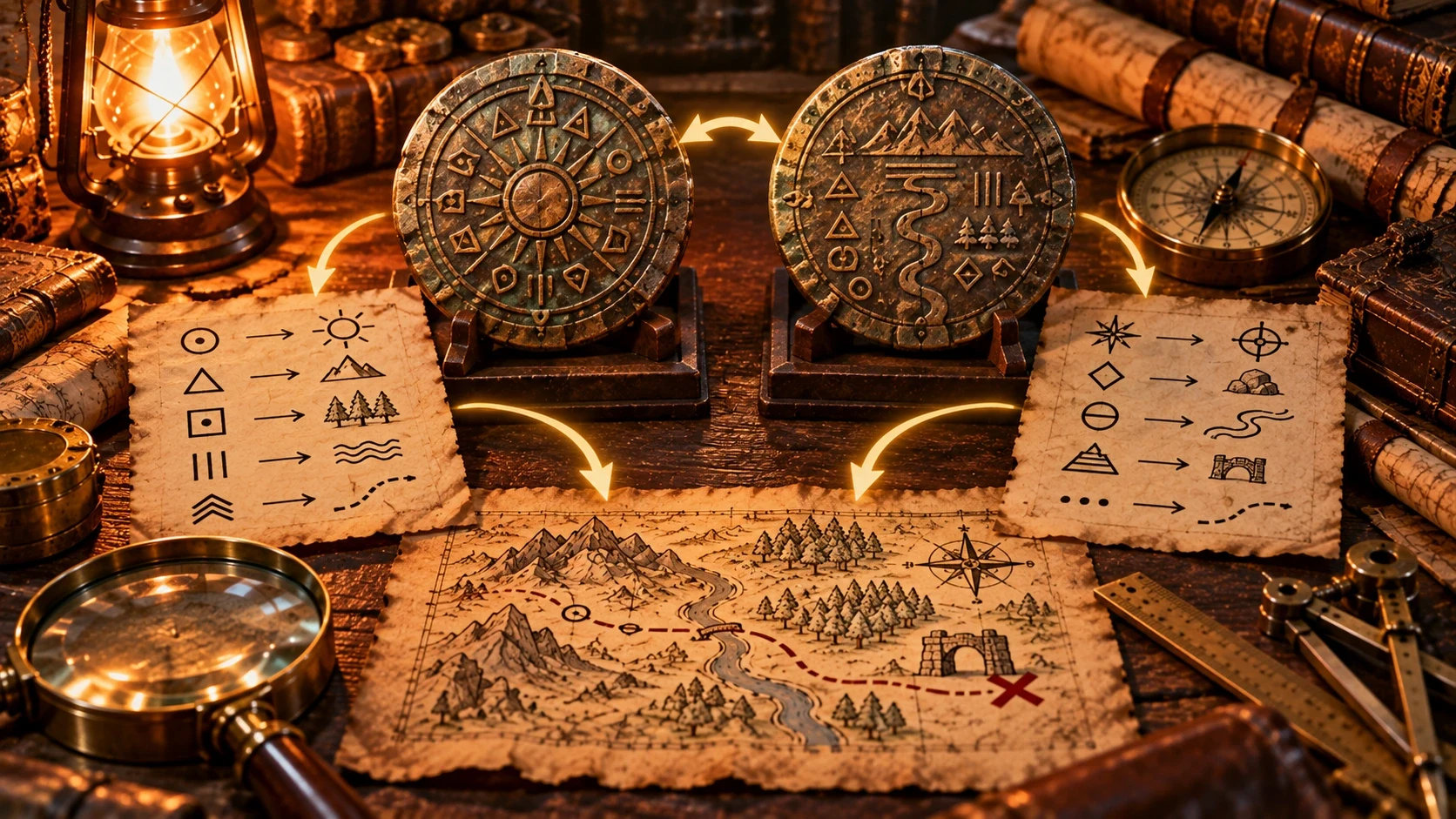
Before acting on an artifact, inventory every surface. Front/back, rim, edge, underside, and interior information may modify the apparent instruction.
Read Article
An inscribed object may be more than text. Test whether its shape, holes, edges, transparency, or mounting points imply a second use.
Read Article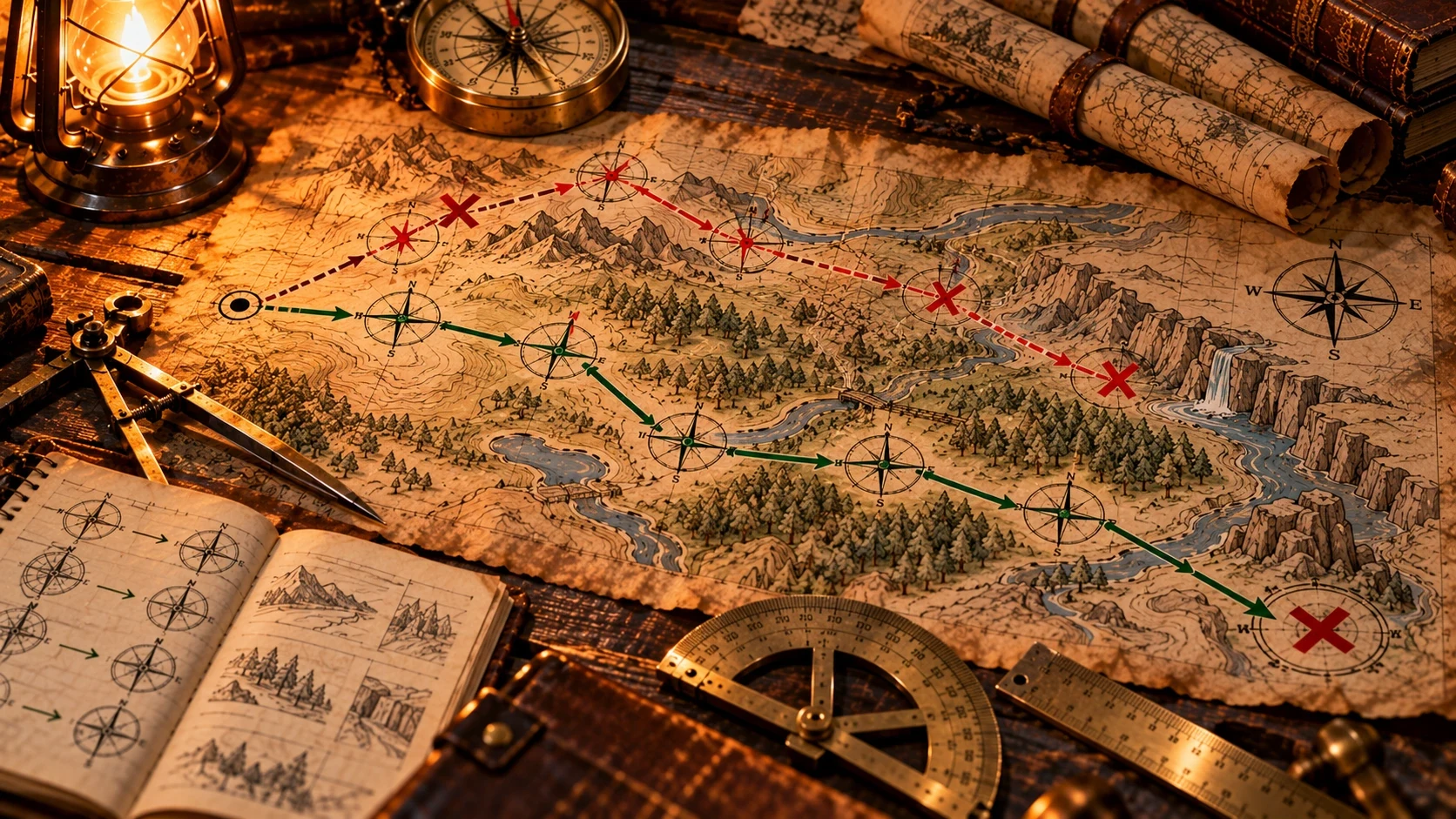
Plot solved points. A route theory becomes stronger when bearings, order, distance, and endpoint behavior agree on a map.
Read Article
At a confirmed landmark, inspect orientation. Faces, fingers, arrows, sightlines, axes, and shadows may indicate direction.
Read Article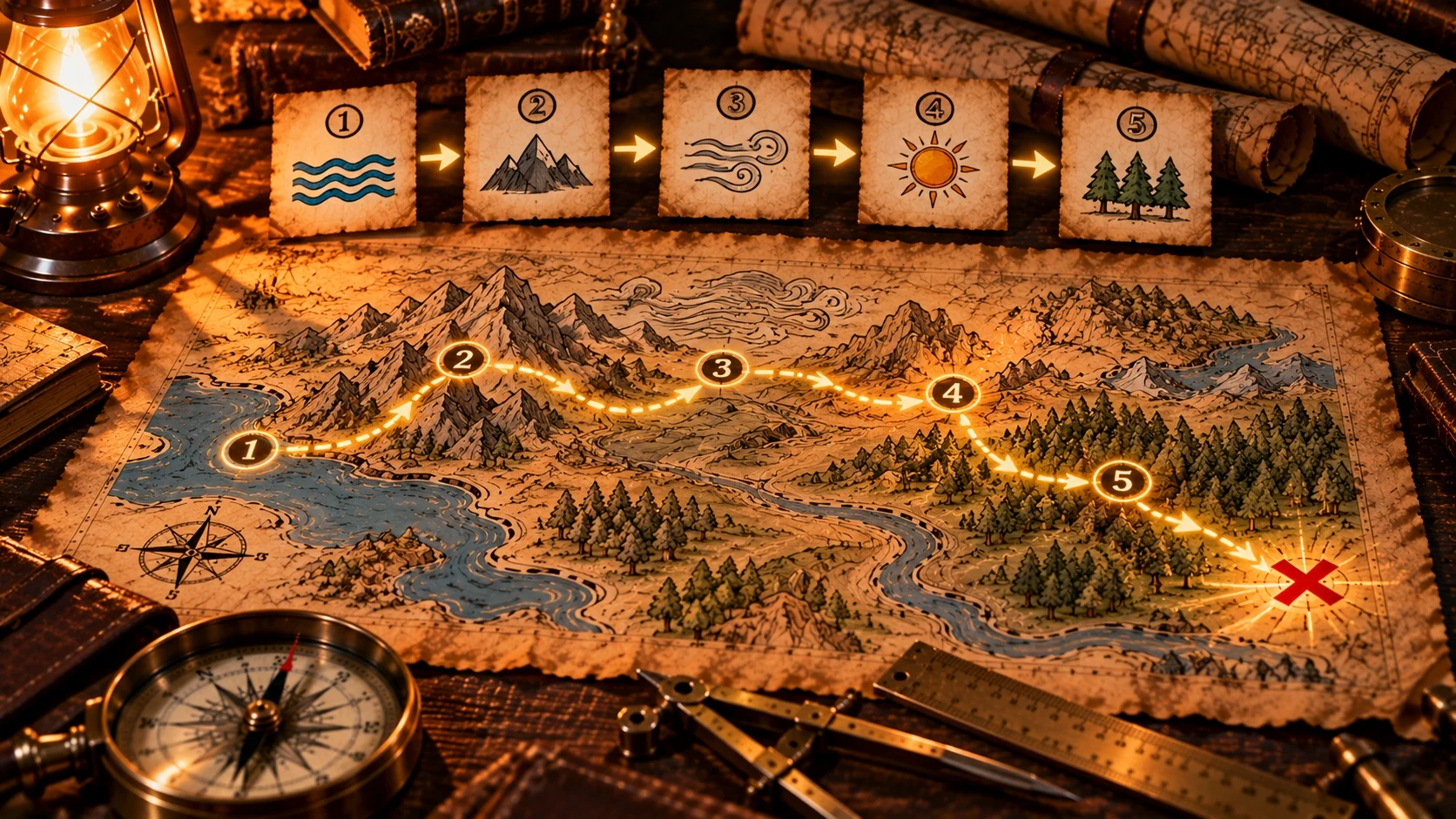
When clues form a known ordered set, preserve the order. A sequence can carry route logic even when each individual clue uses a different mechanism.
Read Article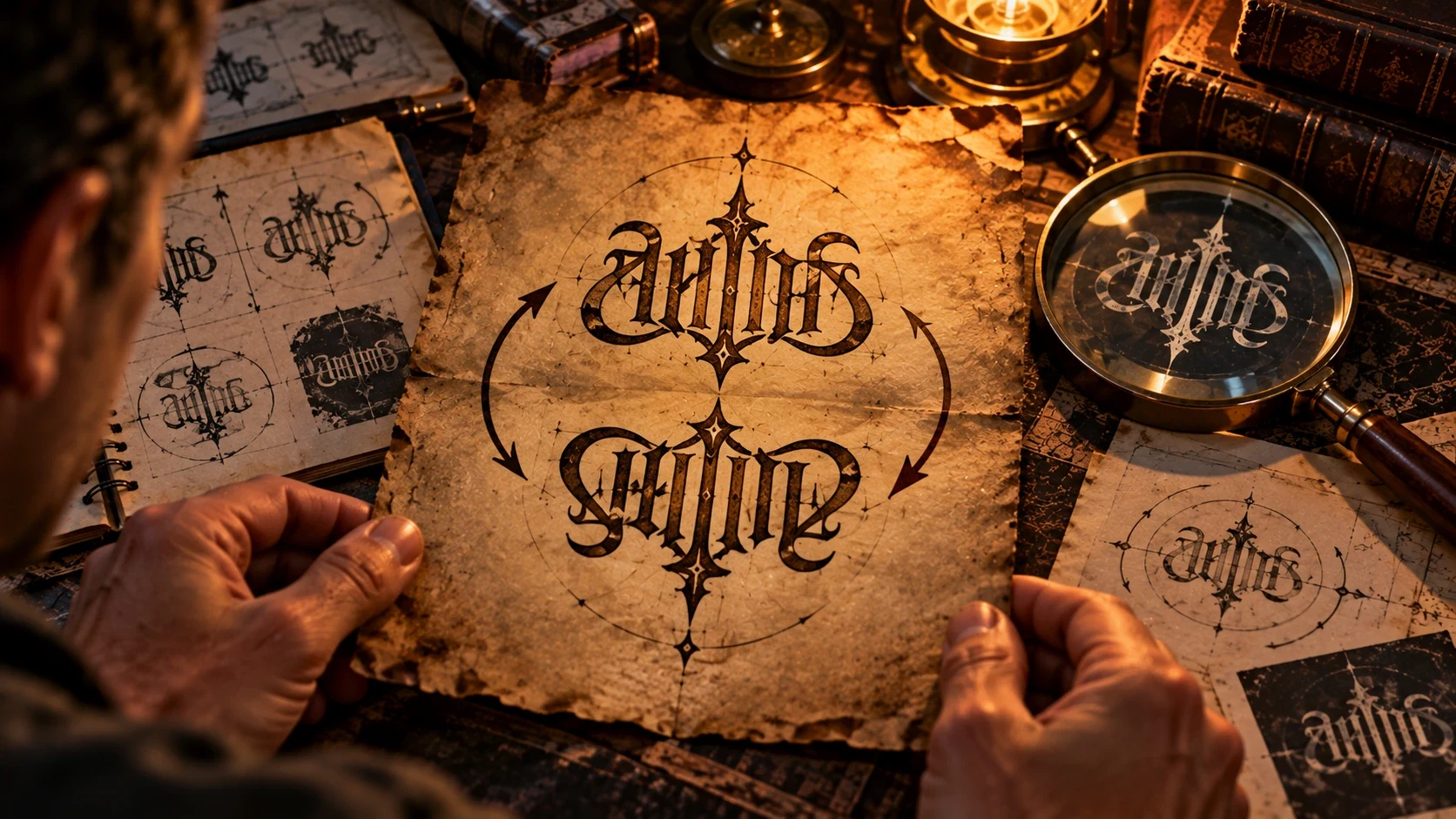
If a word or symbol has unusual symmetry, test rotation, reflection, inversion, and negative space before assuming the typography is ornamental.
Read Article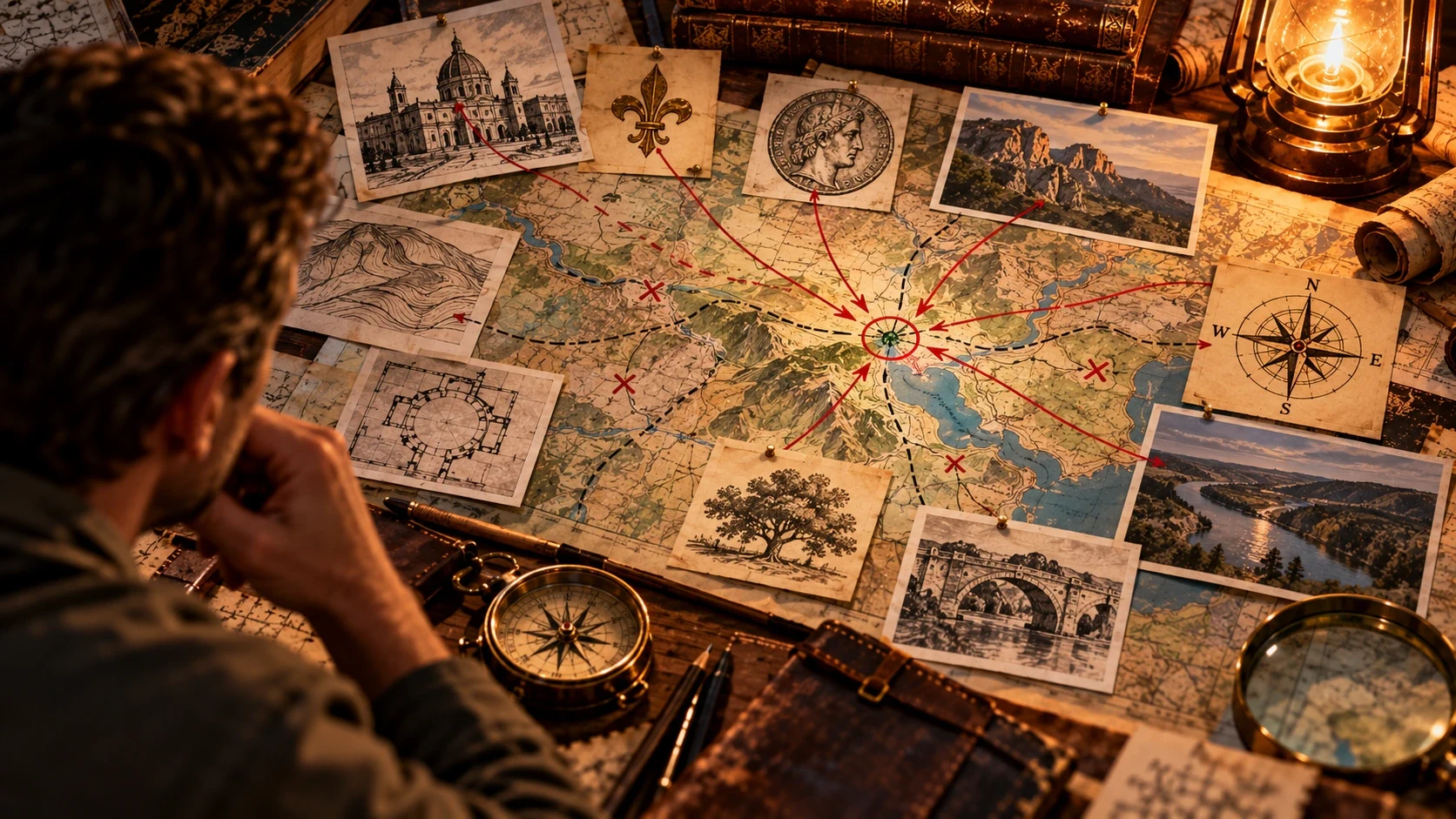
Build geographic hypotheses from independent clues. Names, history, orientation, institutions, and physical features should converge.
Read Article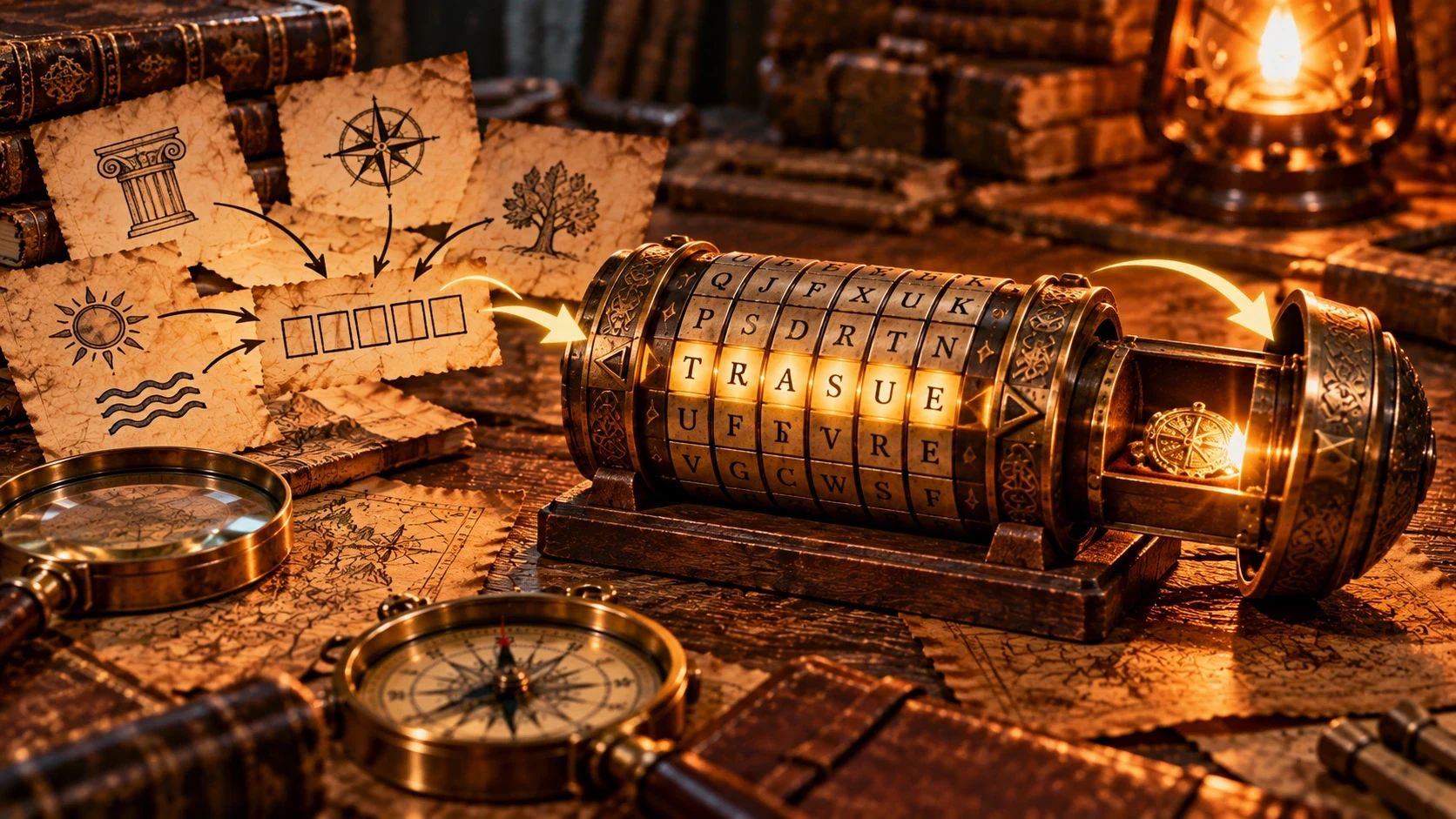
A final answer may be an input rather than a destination. Ask what device, lock, ordering, or action the answer is meant to operate.
Read Article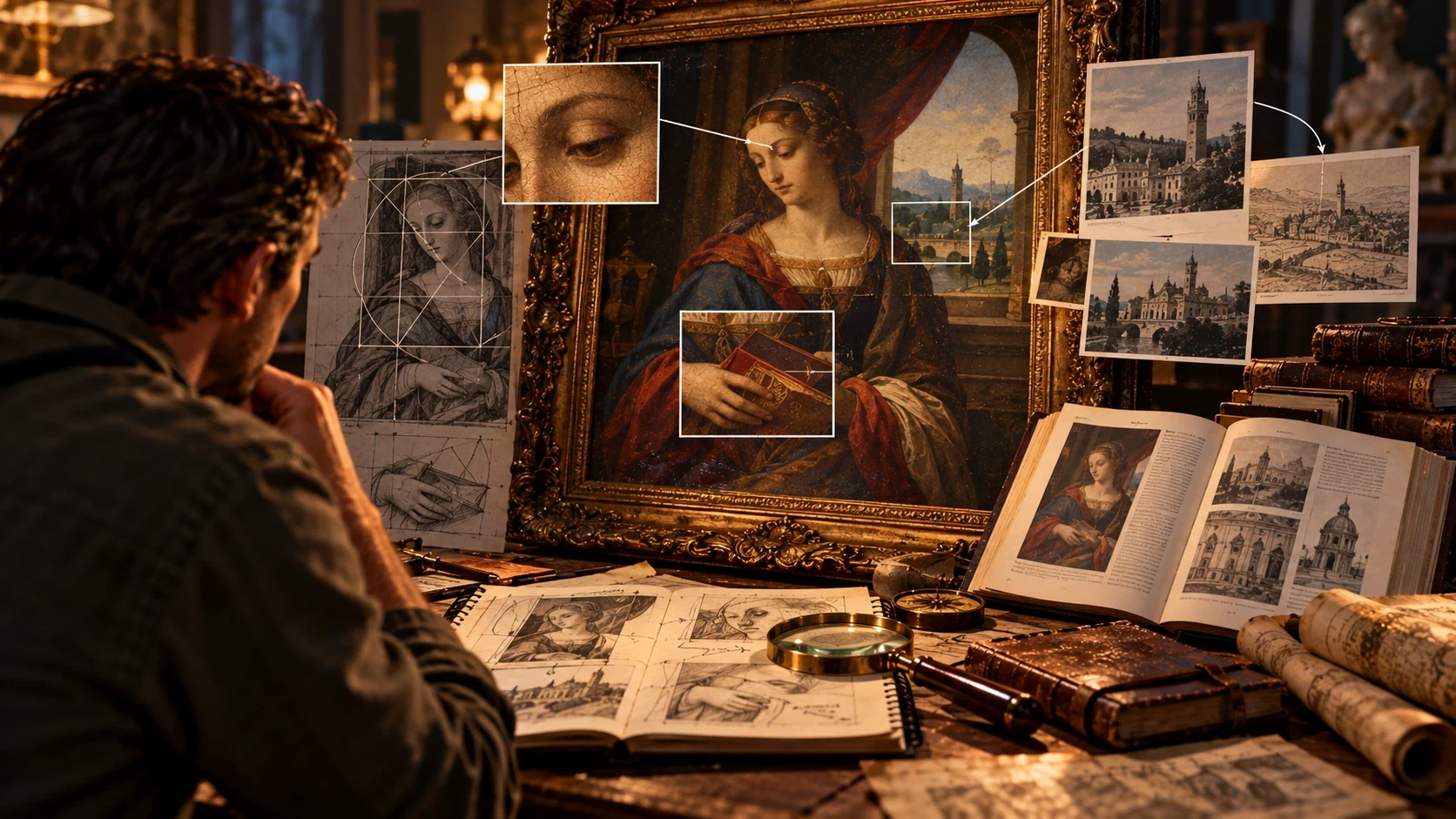
For artwork clues, separate what is visibly present from what outside research says about it. Use both layers as evidence.
Read Article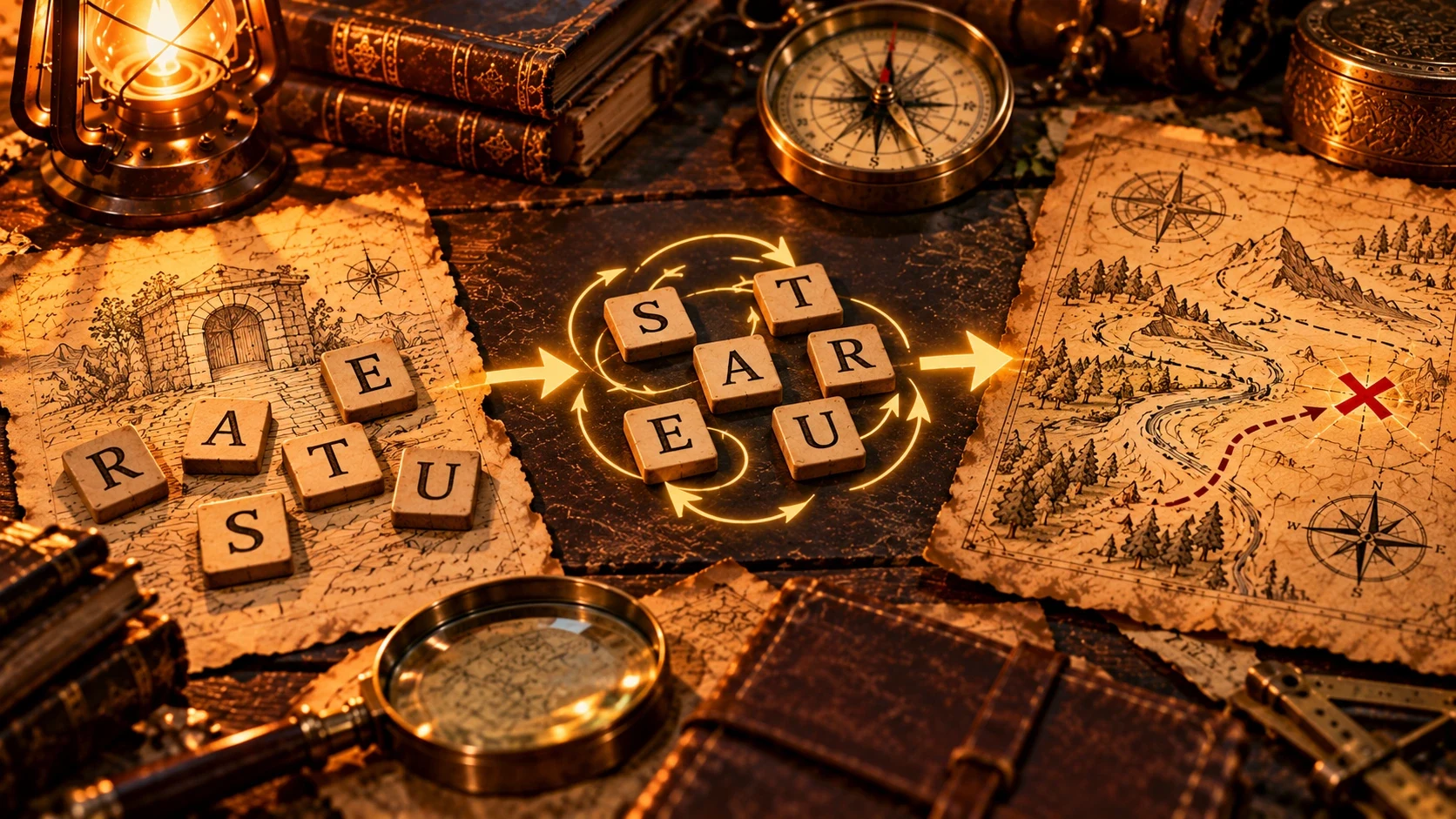
When an anagram is suspected, verify exact letter inventory and ask whether the result meaningfully advances the next clue.
Read Article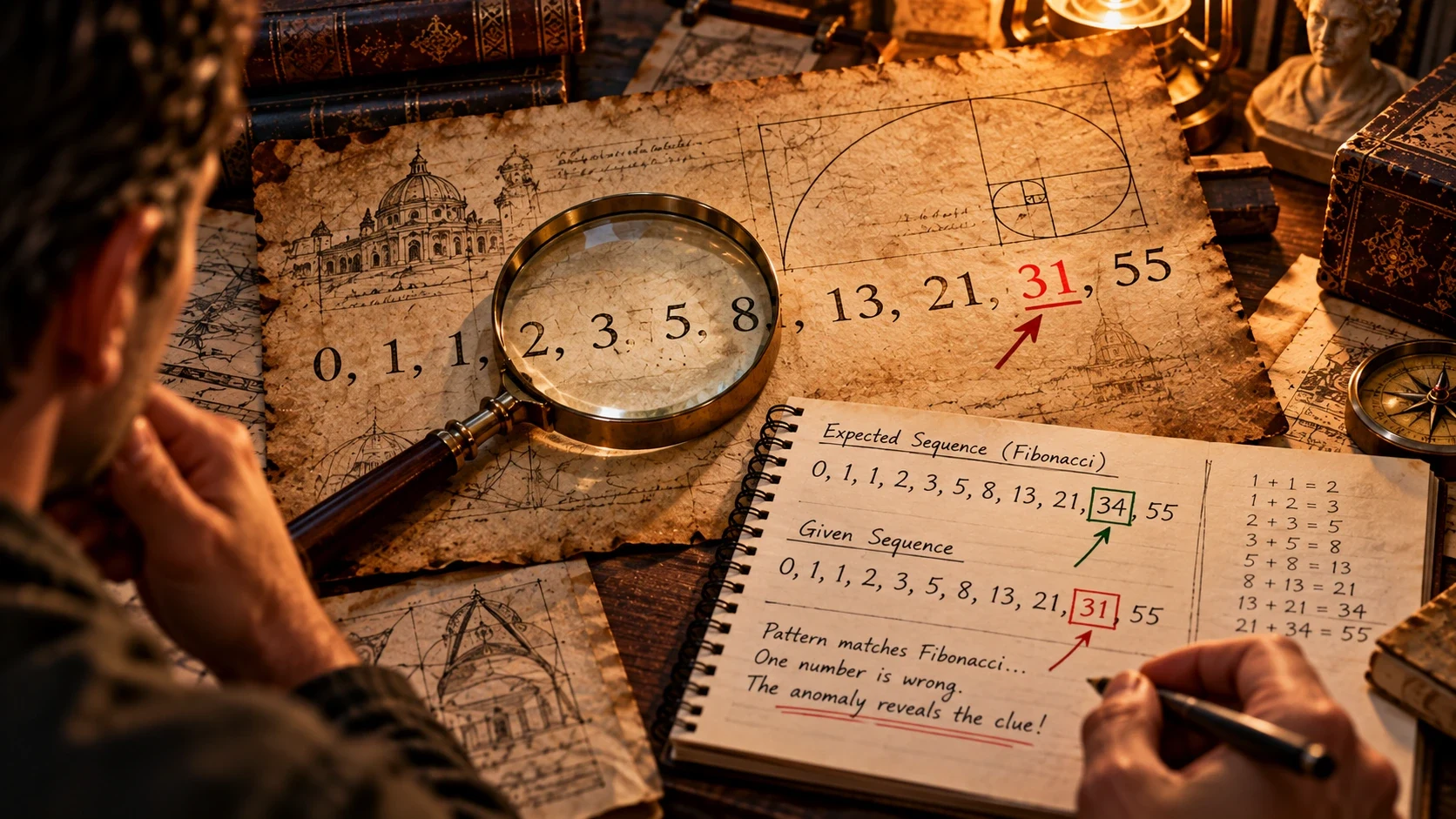
Near-patterns deserve attention. First identify the expected rule, then measure the deviations instead of treating every number as independent.
Read Article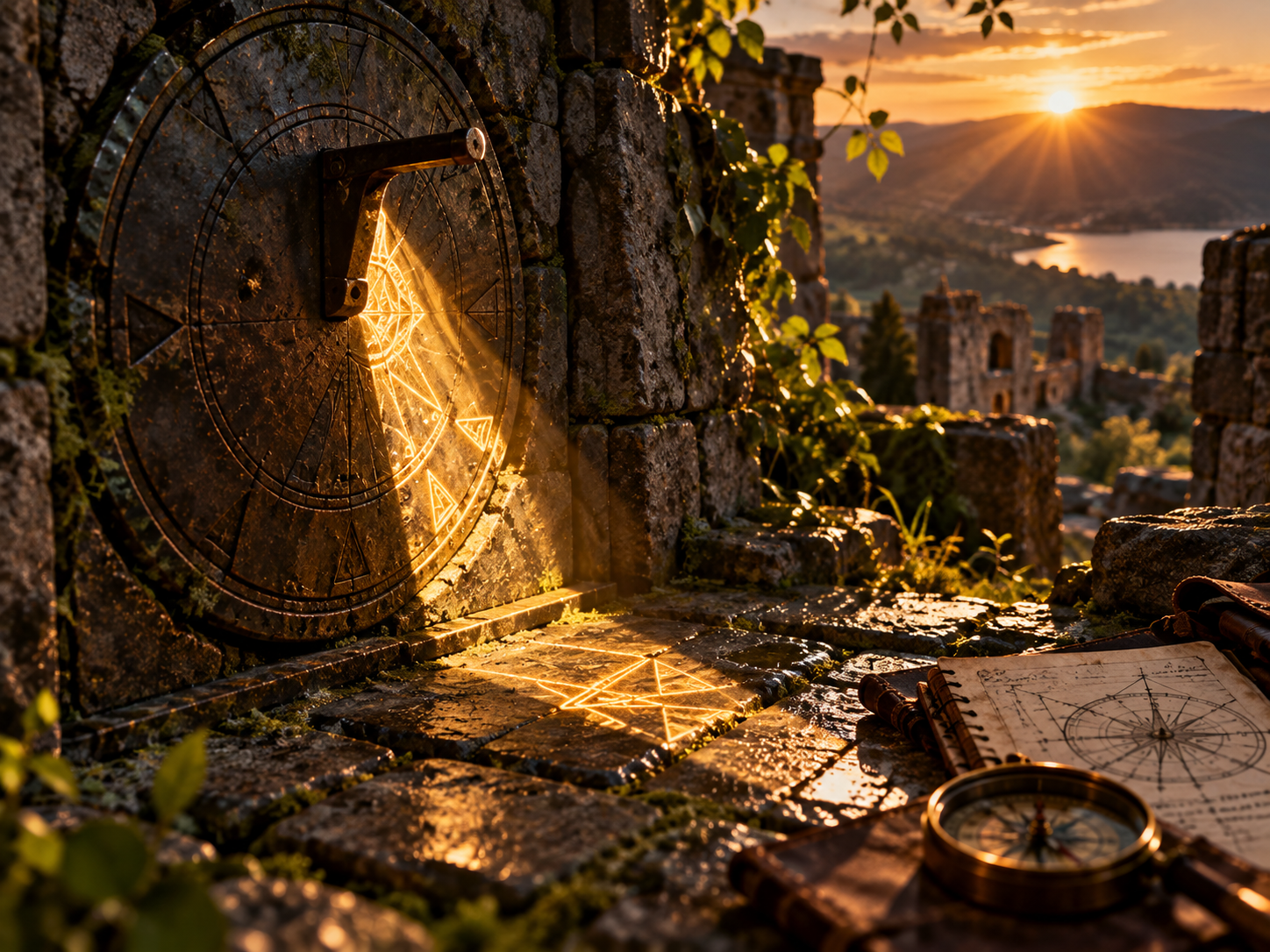
Some clues are operating instructions. On site, test what changes with water, weight, pressure, alignment, movement, or light.
Read Article
Separate symbol identification from geographic interpretation. Determine what a mark means before deciding where it points.
Read Article
If a clue stresses twins, pairs, mirrors, counterparts, or divided objects, test whether information is split across both.
Read Article
Research clues can bridge distant places. Track people, gifts, monuments, dates, replicas, and institutional relationships.
Read Article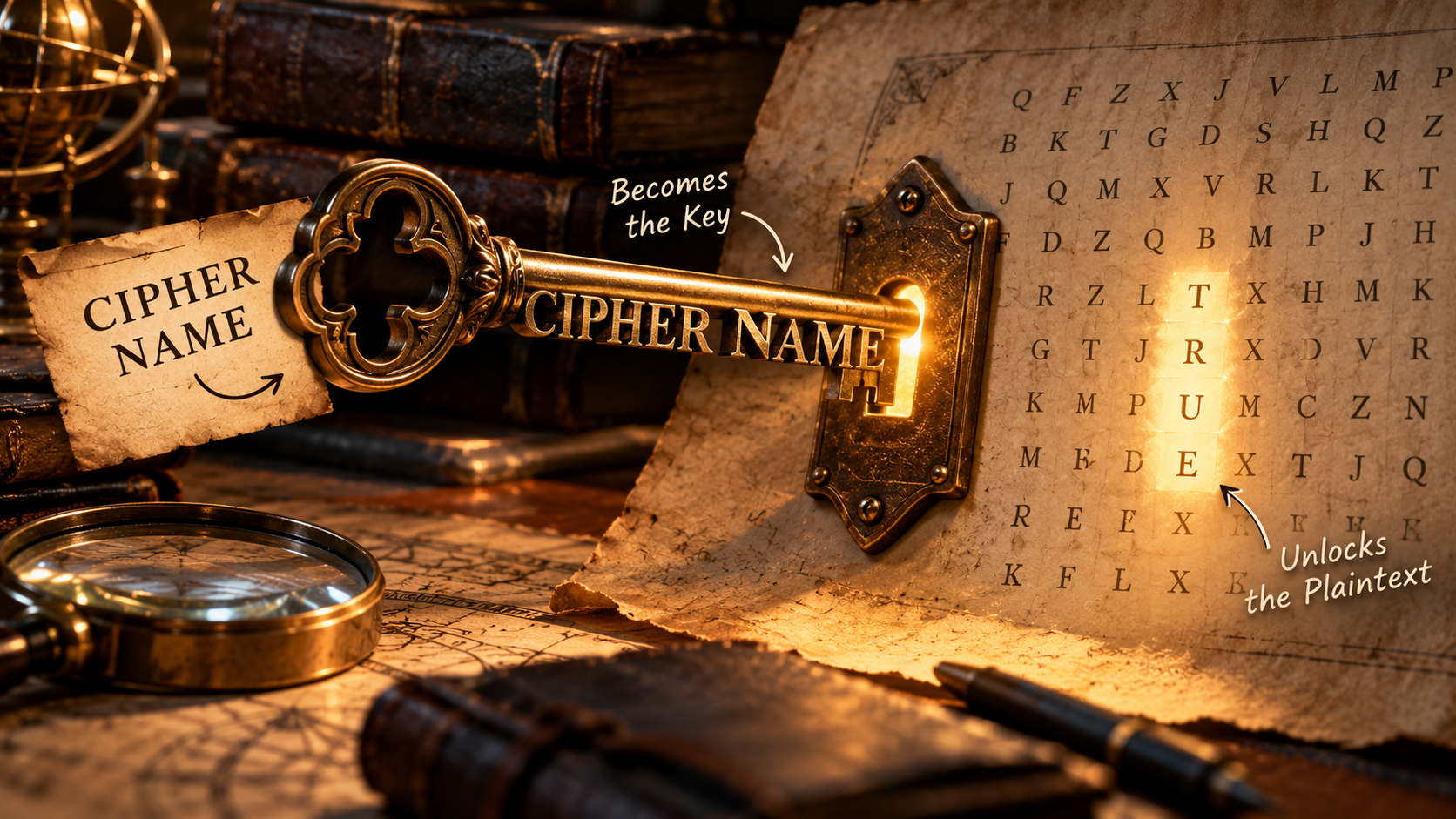
First classify the encoding system. If a cipher is named or strongly signaled, test its real rules before inventing custom ones.
Read Article
A plausible historical story can still be a false lead. Verify the details and require independent support before changing course.
Read Article
When a visual clue appears noisy or incomplete, test filtering, overlays, color channels, transparency, rotation, and alternate viewing conditions.
Read Article
Words about time, light, shadow, noon, season, or direction can impose a real-world condition on an otherwise static location.
Read Article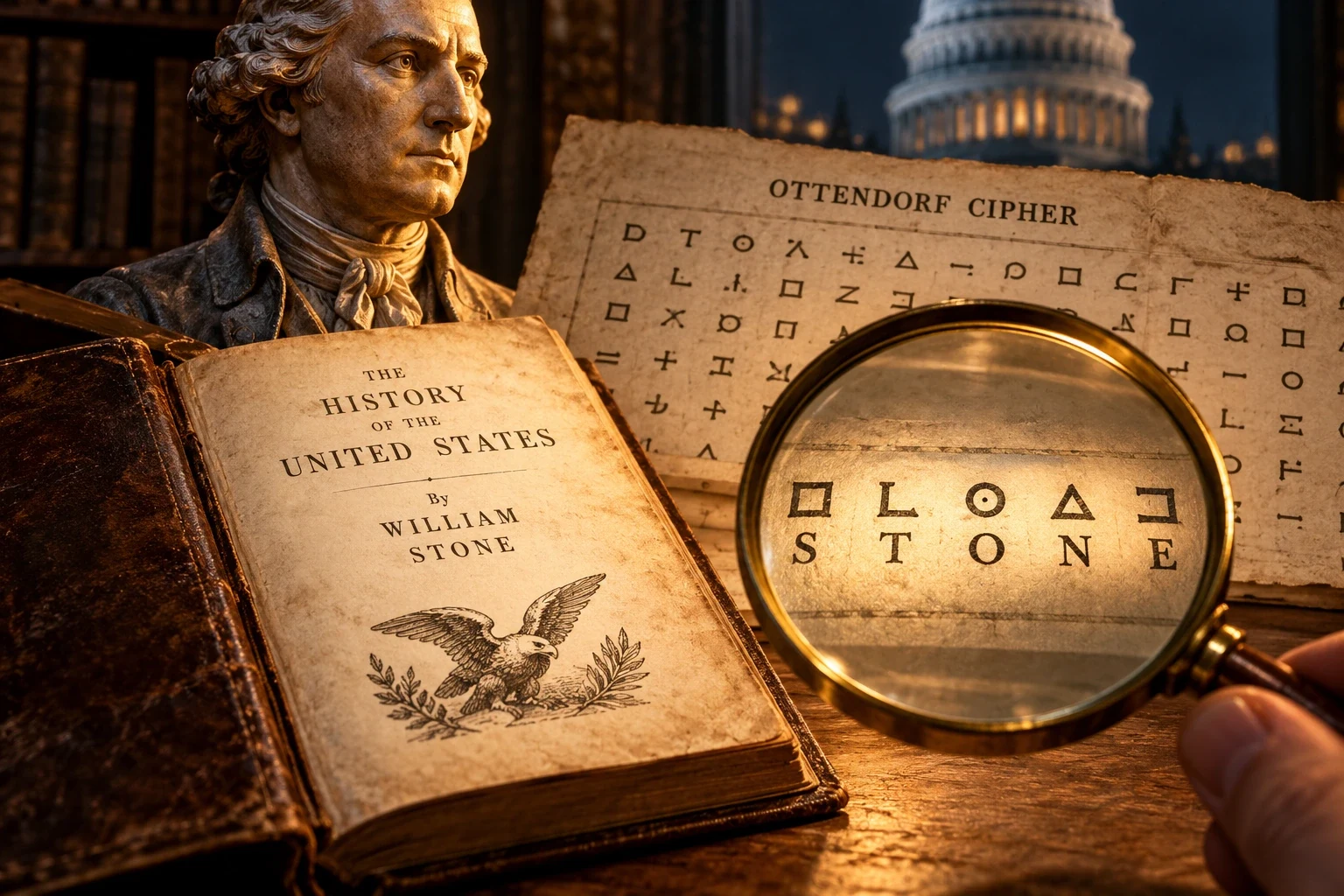
Before manipulating conspicuous numbers mathematically, test whether they behave as addresses into a referenced text.
Read Article
When markings on a three-dimensional object look incomplete, test whether motion, contact, rotation, or transfer is part of the reading method.
Read Article
Treat proper nouns as hypotheses, not conclusions. Build a candidate list, then demand a concrete connection to the next clue.
Read Article
The documented solutions do not reduce to one mechanical cipher; different stories use maps, folklore, dialect, visual matching and route instructions
Read Article
A sentence near the front of the book carried layered references to secret messages, ancient Egyptians and gold.
Read Article
The creator released hints over the long solve period, including clarifications about the final answer.
Read Article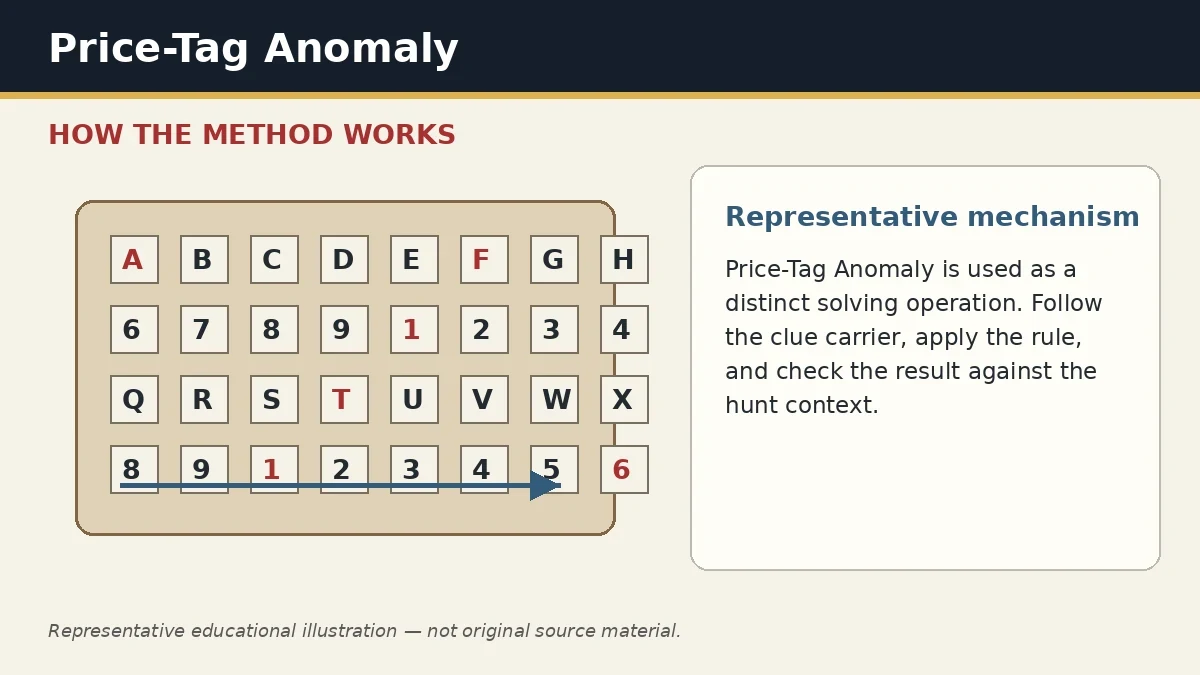
A number that makes little sense as a price functions as the mile value.
Read Article
A phrase associated with Idaho’s motto helps establish the state.
Read Article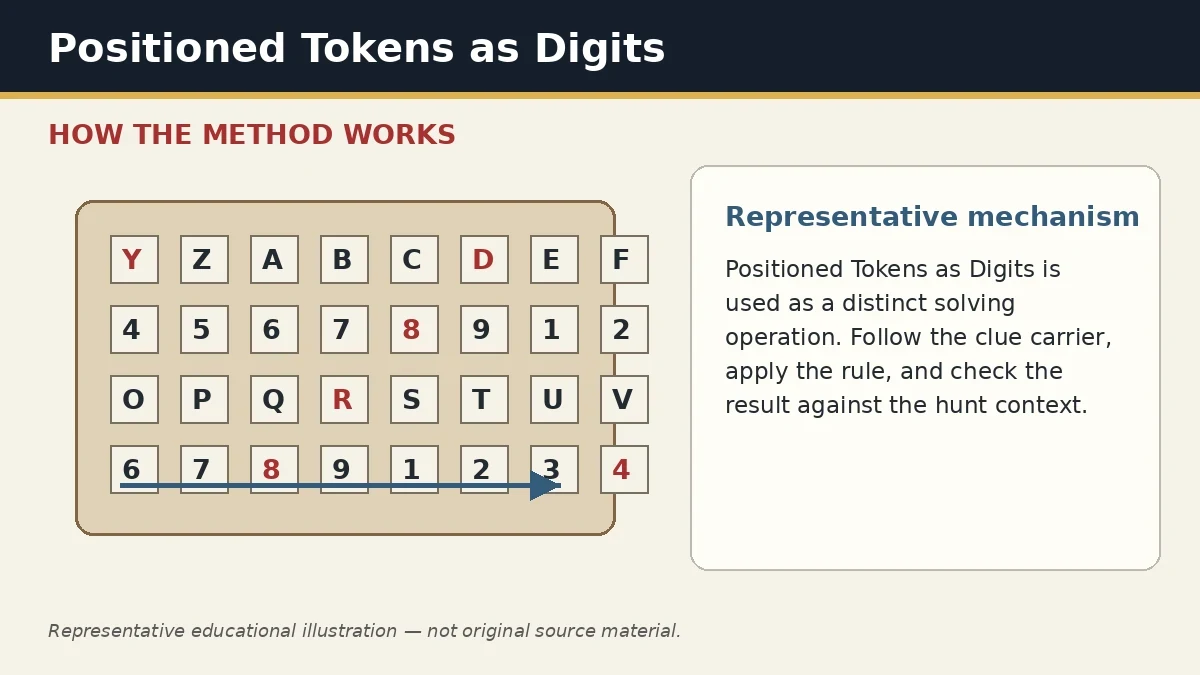
Rocks positioned on the 9 and 5 squares of a hopscotch board supply I-95.
Read Article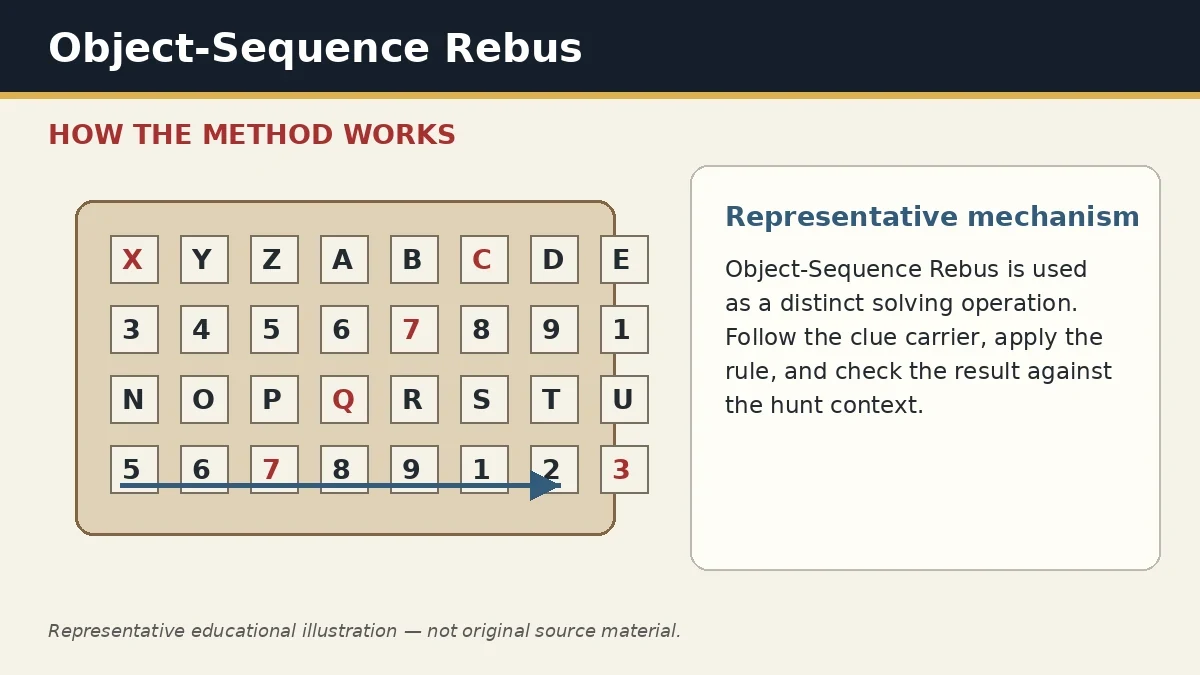
A Connect Four game, an eye and scissors form a phonetic rebus for Connecticut.
Read Article
A distinctive W-shaped natural feature serves as the final visual confirmer near the solitary stone.
Read Article
The clue describes a physical structure through material-versus-appearance wordplay.
Read Article
A deliberately indirect phrase is translated into a real place name through synonyms/associations.
Read Article
Successive verbal instructions transform an intermediate number into the target street number.
Read Article
A phrase sends the solver to a photographed number on Blaine’s arm.
Read Article
A transformed phrase is interpreted semantically as Los Angeles.
Read Article
The chest was recovered, but no complete authoritative clue-by-clue solution was published by Fenn, and later reconstructions differ.
Read Article
The poem includes a physical “blaze” concept associated with the final approach.
Read Article
Fenn repeatedly pushed searchers back toward the poem rather than elaborate code systems.
Read Article
The poem appears inside a memoir containing stories that searchers treated as possible hints or context.
Read Article
Fenn directed searchers toward maps and geographic understanding.
Read Article
The poem uses natural-language descriptions that searchers map to waters, canyons, creeks and other terrain.
Read Article
Fenn repeatedly described nine clues in the poem and emphasized following them in order.
Read Article
The recovered cases share broad image/verse convergence but use different local details and routes.
Read Article
Nine casques remain unrecovered, so many popular pairings and exact-site theories cannot be creator-confirmed.
Read Article
Each puzzle is tied to cultural/immigration material associated with its city and jewel.
Read Article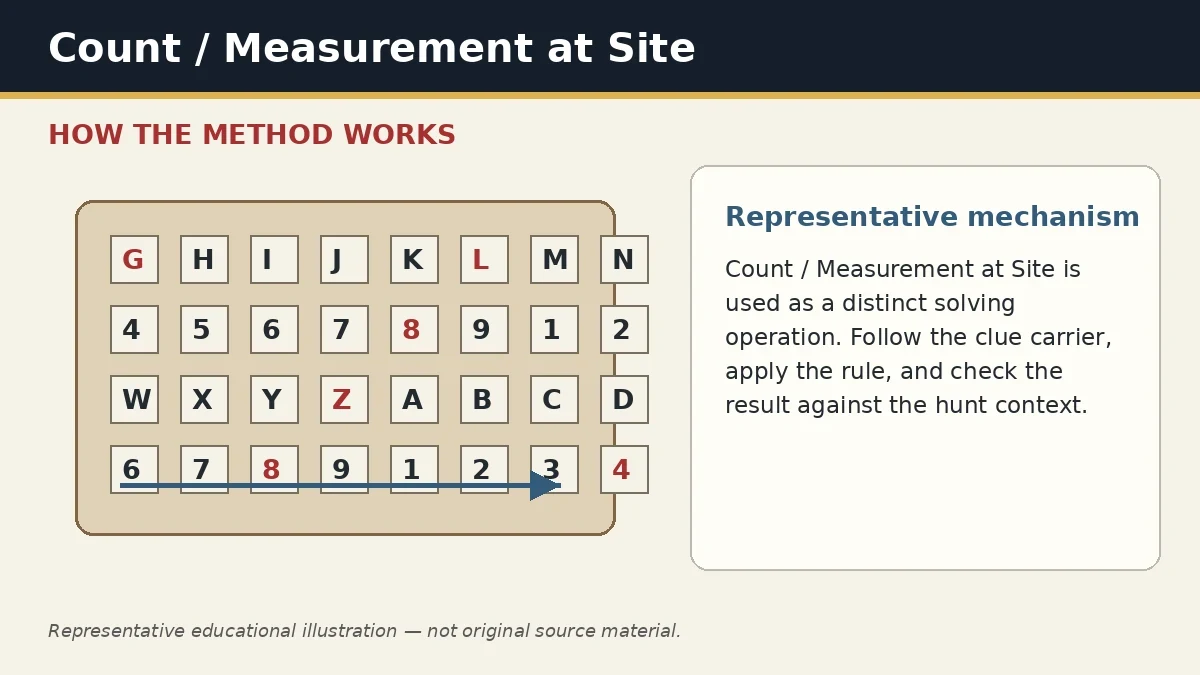
Numeric language in the verse participates in narrowing the final area.
Read Article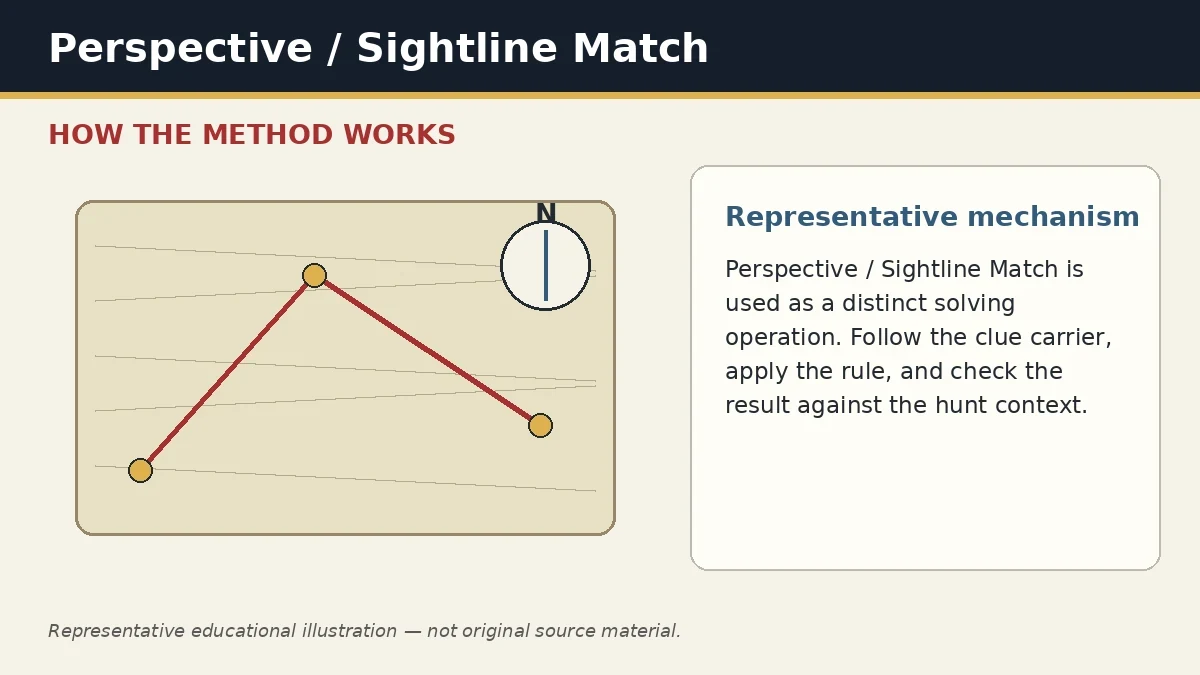
The recovered Chicago solve depends on reaching a place where visual relationships in the image align with the real scene.
Read Article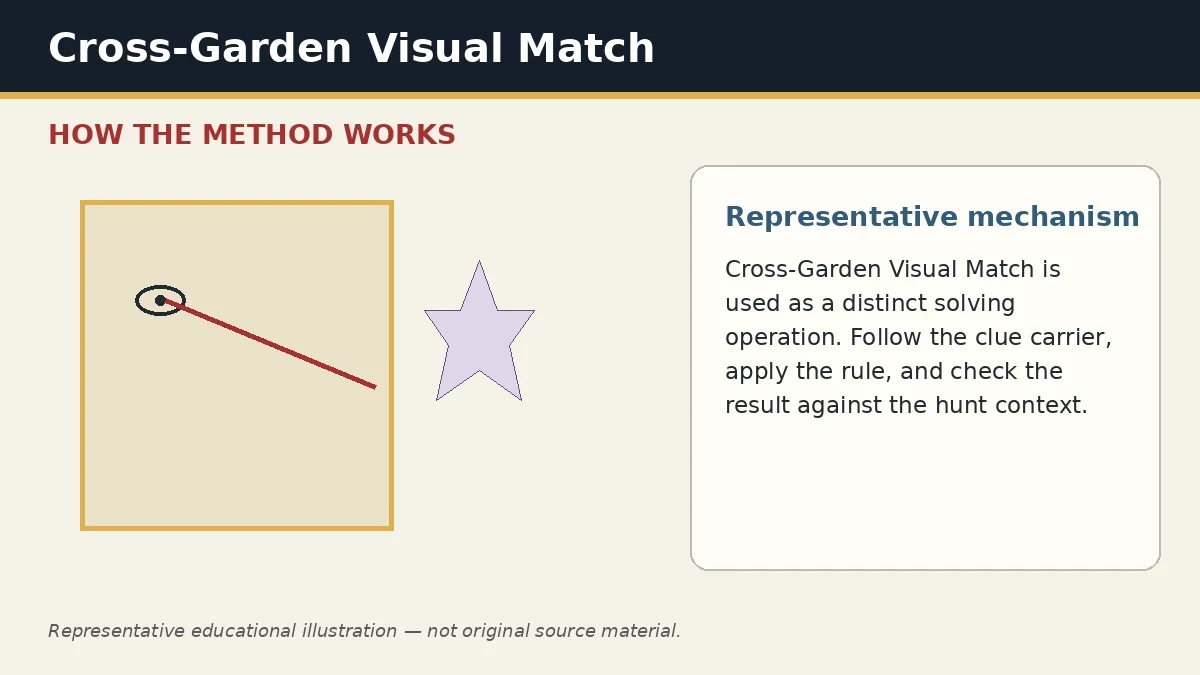
Elements in the painting resemble features in neighboring cultural gardens.
Read Article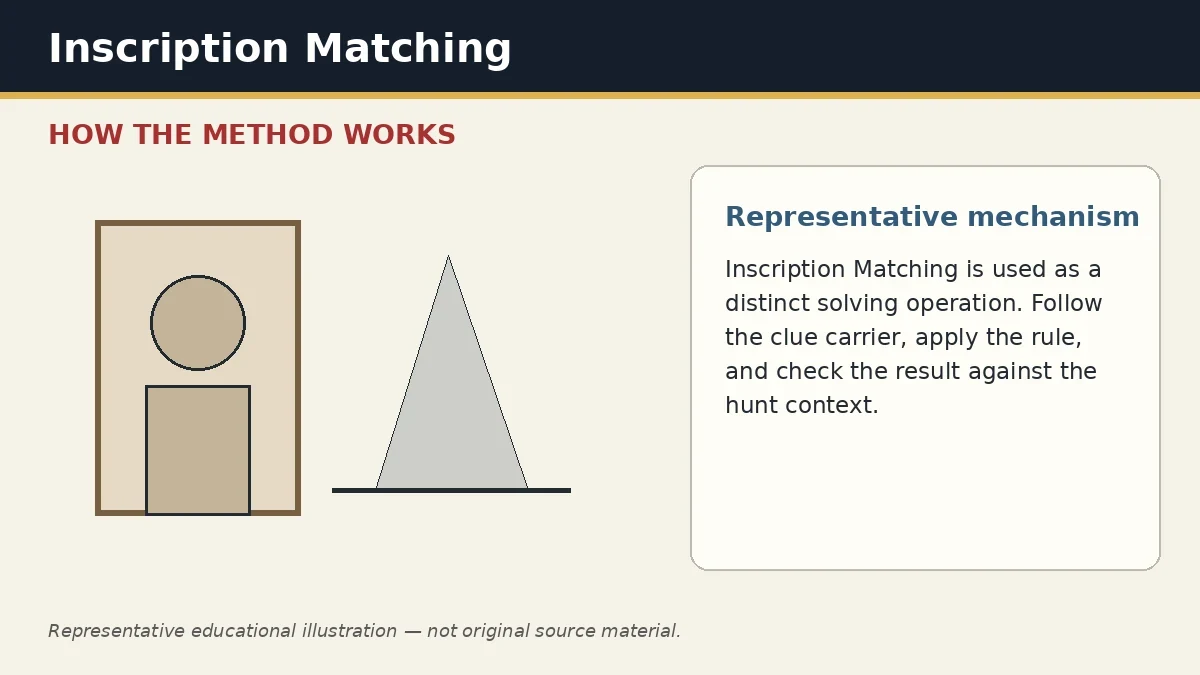
Verse language corresponds to names/words found on the Greek Cultural Garden wall.
Read Article
An Ohio outline is embedded within the painting’s patterned surface.
Read Article
The Cleveland painting contains a skyline/landmark form read through negative space.
Read Article
State, shoreline or geographic outlines can be embedded in otherwise fantastical forms.
Read Article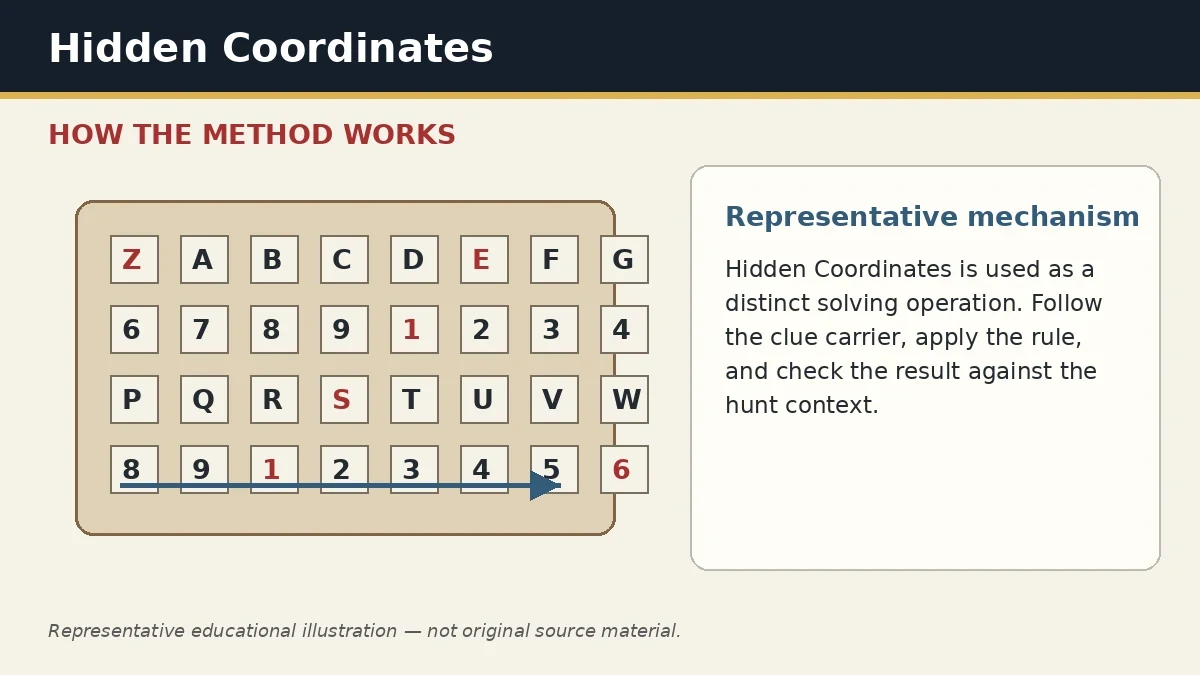
Several paintings contain numbers interpreted as latitude/longitude components.
Read Article
Painting and verse clues converge on a North American city before the exact park is solved.
Read Article
The book separates twelve paintings from twelve verses, requiring solvers to determine the pairings.
Read Article
The final answer is a two-word historical name not expected to appear directly in the novel.
Read Article
The Eye of Horus motif points solvers toward a chapter icon and associated number.
Read Article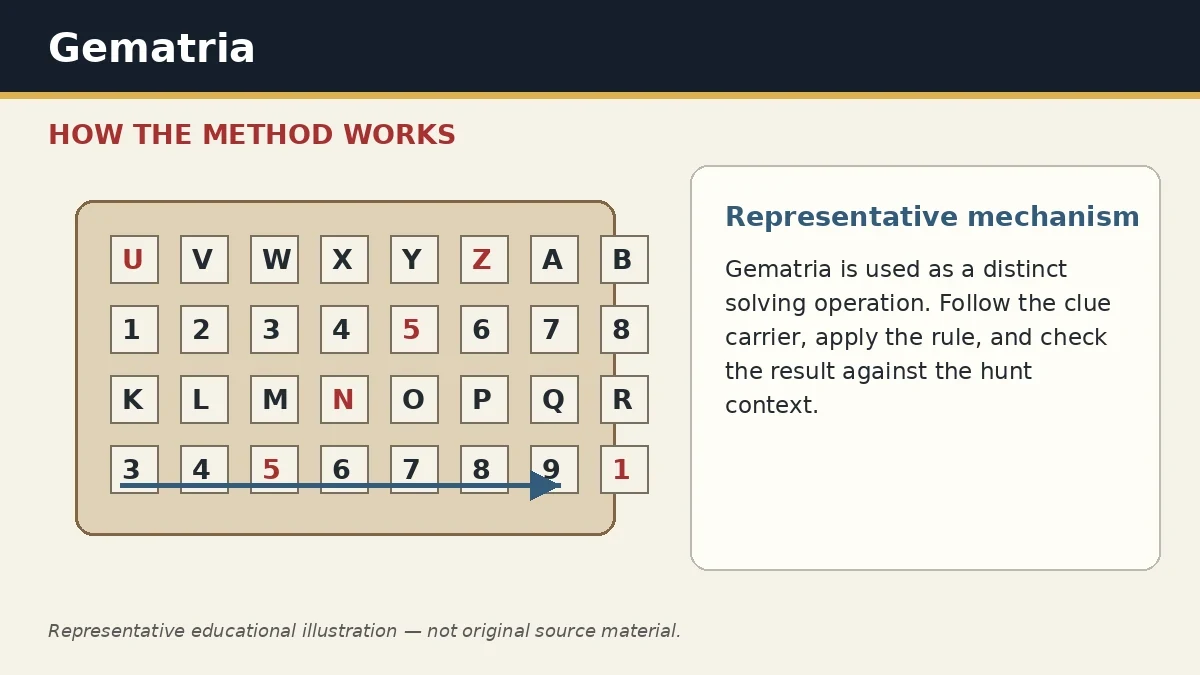
The value 70 is entered into a Jewish Gematria framework to obtain Ayin, associated with eye.
Read Article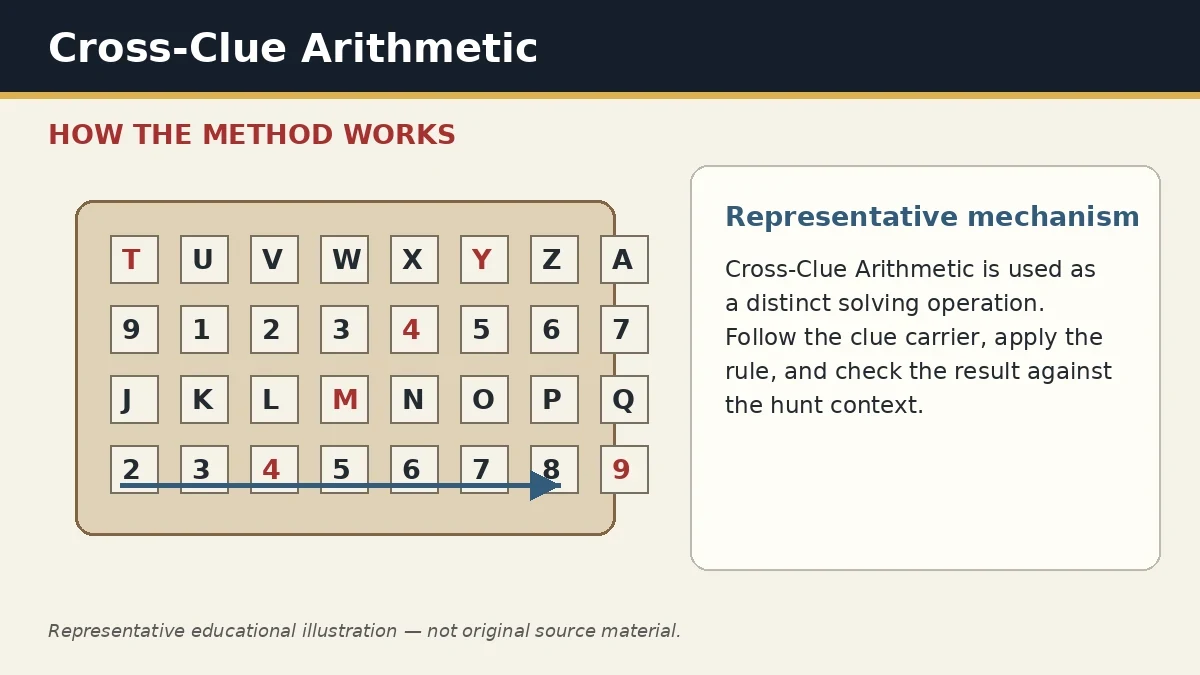
Numbers derived from the clue chain are combined arithmetically.
Read Article
The stage phrase strongly evokes a New Testament verse.
Read Article
The translated and assembled clues converge on a named real garden.
Read Article
Separate visual pieces in the book must be recognized as parts of one literal puzzle.
Read Article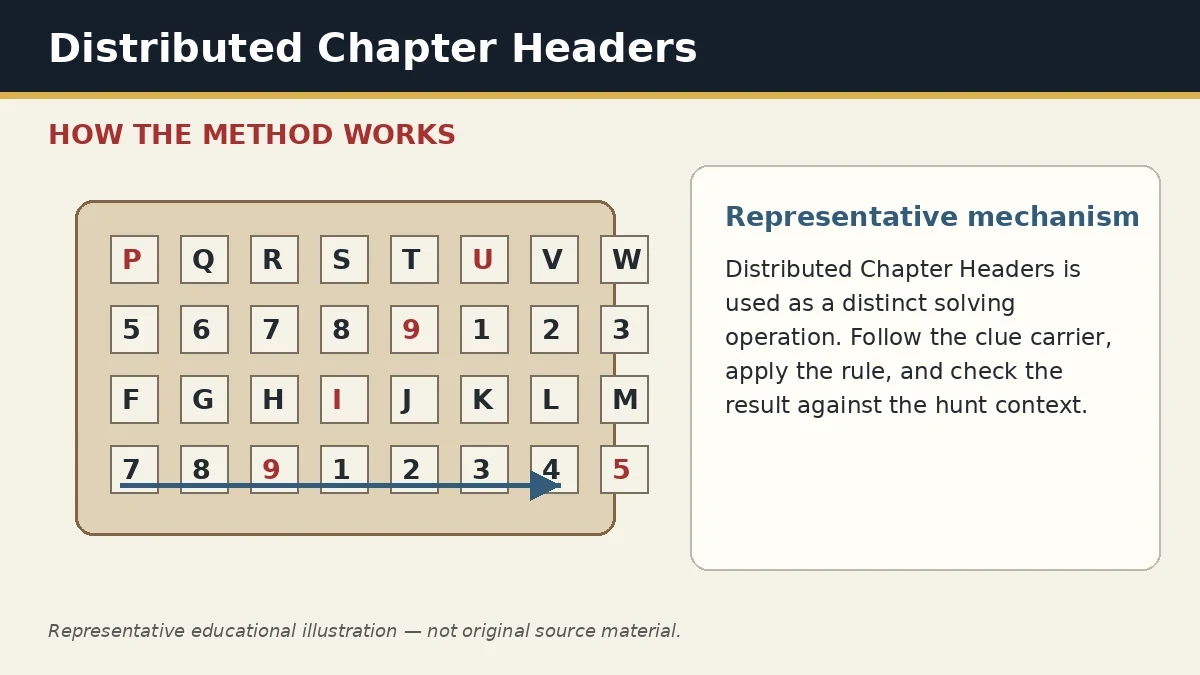
The hieroglyphic material is distributed across section openings rather than presented in one block.
Read Article
Section headers contain hieroglyphic messages.
Read Article
The hunt’s number-string method resembles a code used by a character in the story.
Read Article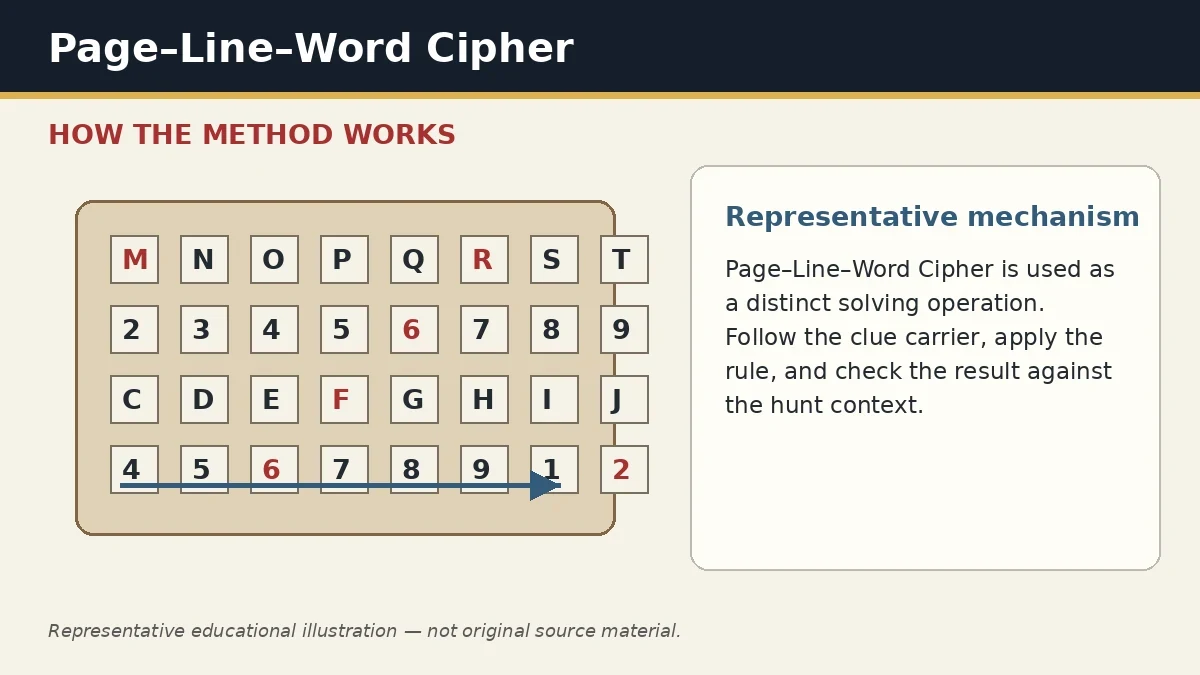
Number strings break into page, line and word positions.
Read Article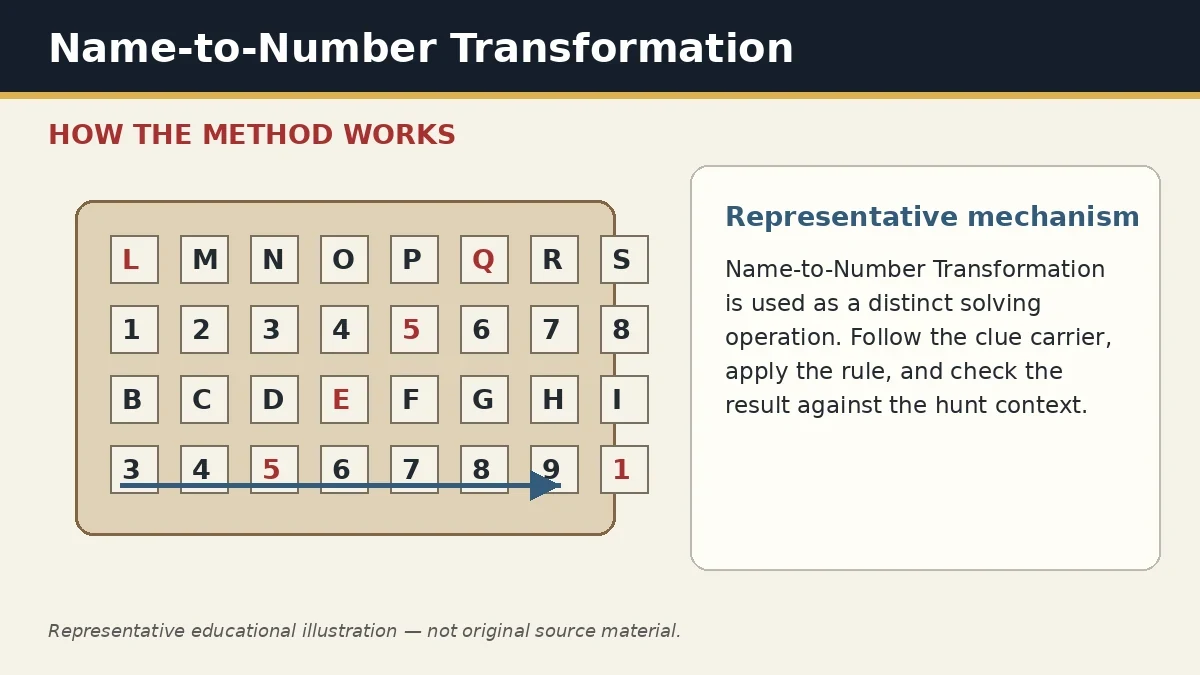
The first answer is a numeric transformation associated with Isis.
Read Article
The online hunt required correct answers to unlock successive stages.
Read Article
Additional clues were released over time through the hunt’s channels.
Read Article
After the main treasure was found, a new riddle challenged solvers to identify a tiny area and offered another prize.
Read Article
The hunt was explicitly designed with clues woven through a novel.
Read Article
The text extraction independently pointed to Hot Springs after the cover/route work had already suggested that area.
Read Article
A companion line was processed in reverse to yield AT CEDAR LOT.
Read Article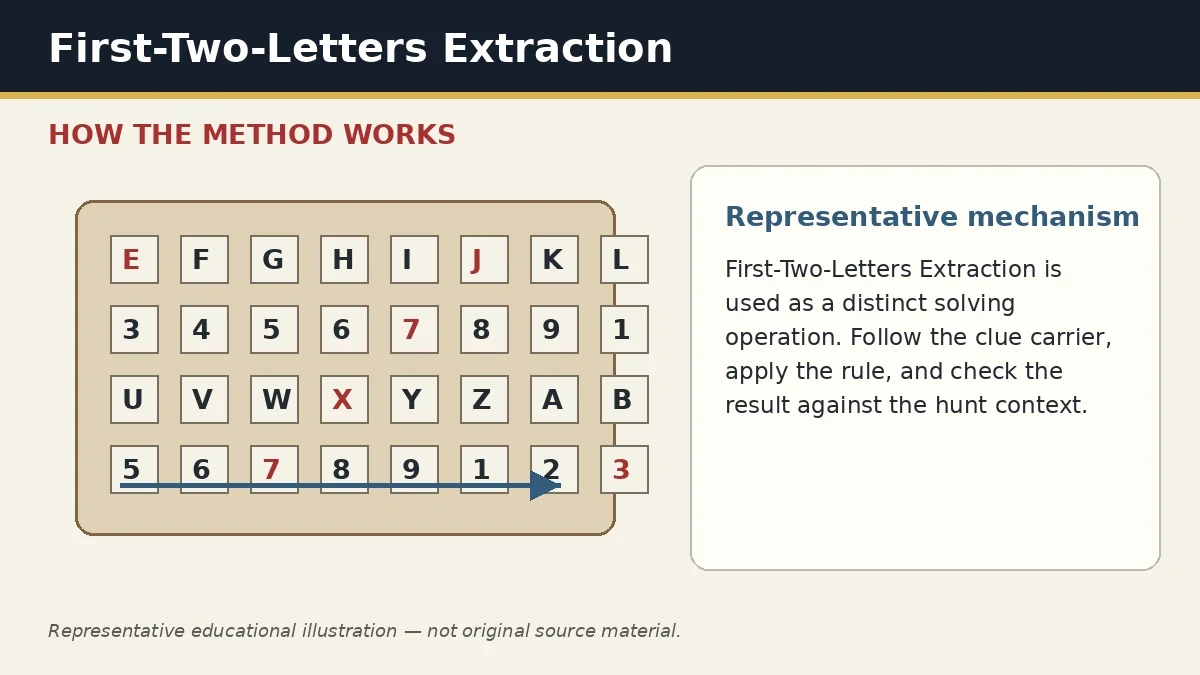
The winner interpreted the author’s repeated wording as an instruction to take two letters at a time.
Read Article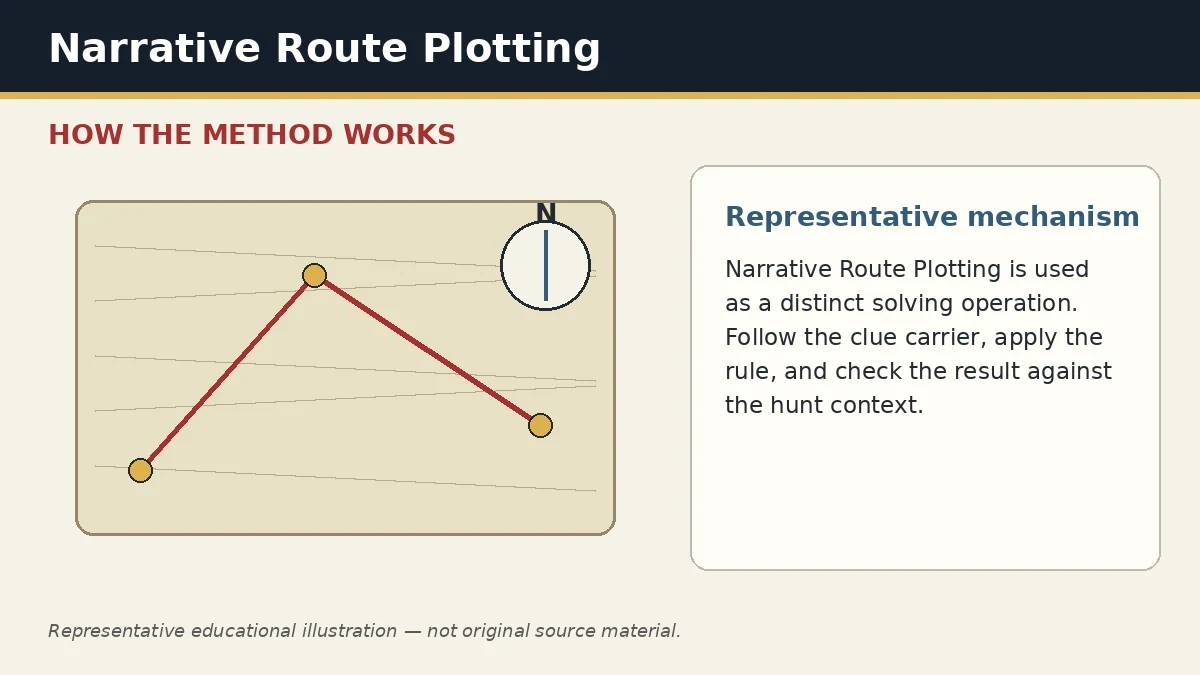
The winner plotted the characters’ movements and stated mileages on Google Maps.
Read Article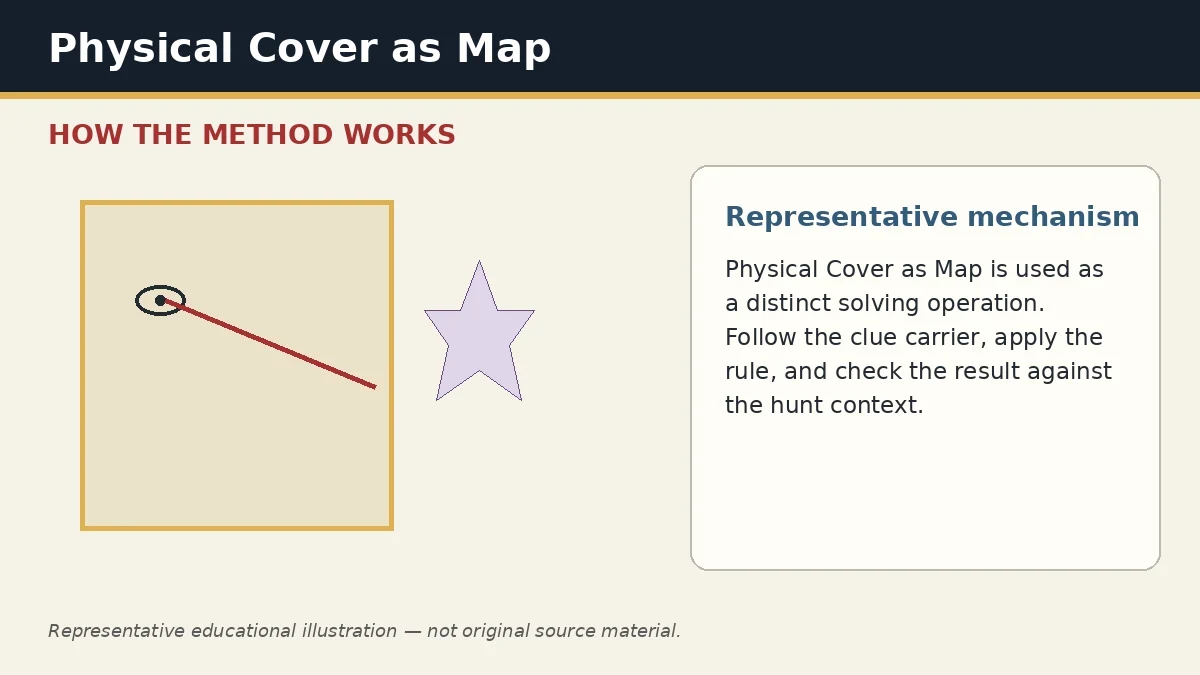
Winner Coy Lothrop treated the unusual embossed dot pattern under the dust jacket as purposeful.
Read Article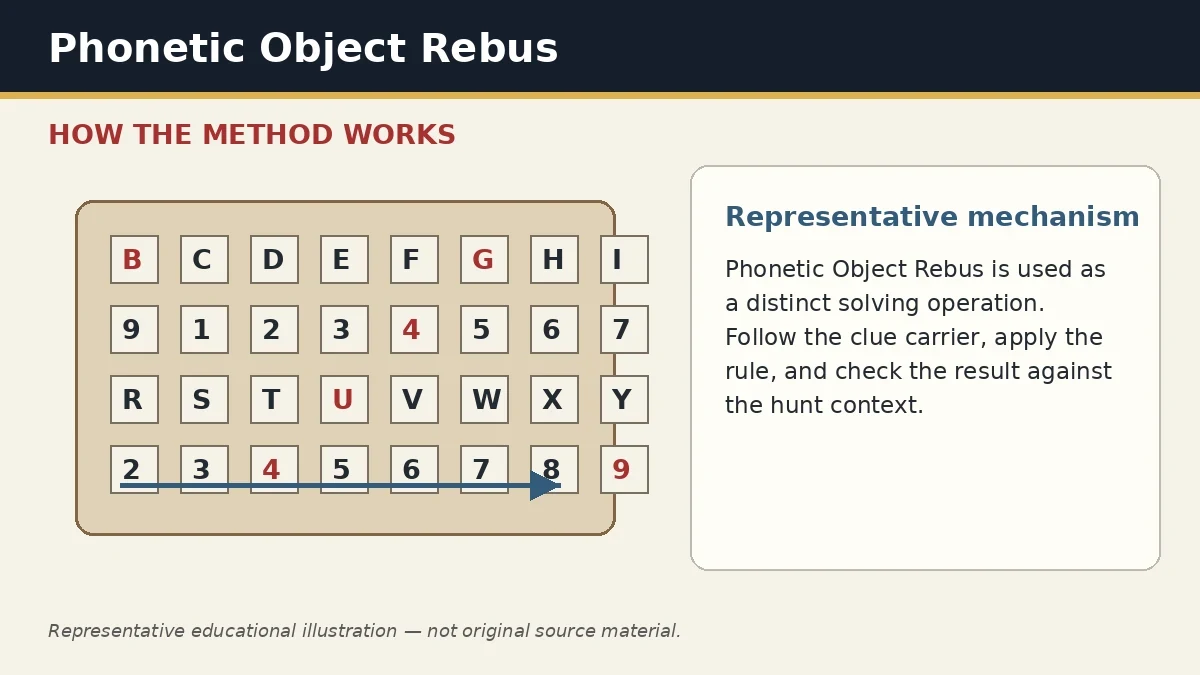
Four tea cups / T imagery encode “four-T,” sounding like forty.
Read Article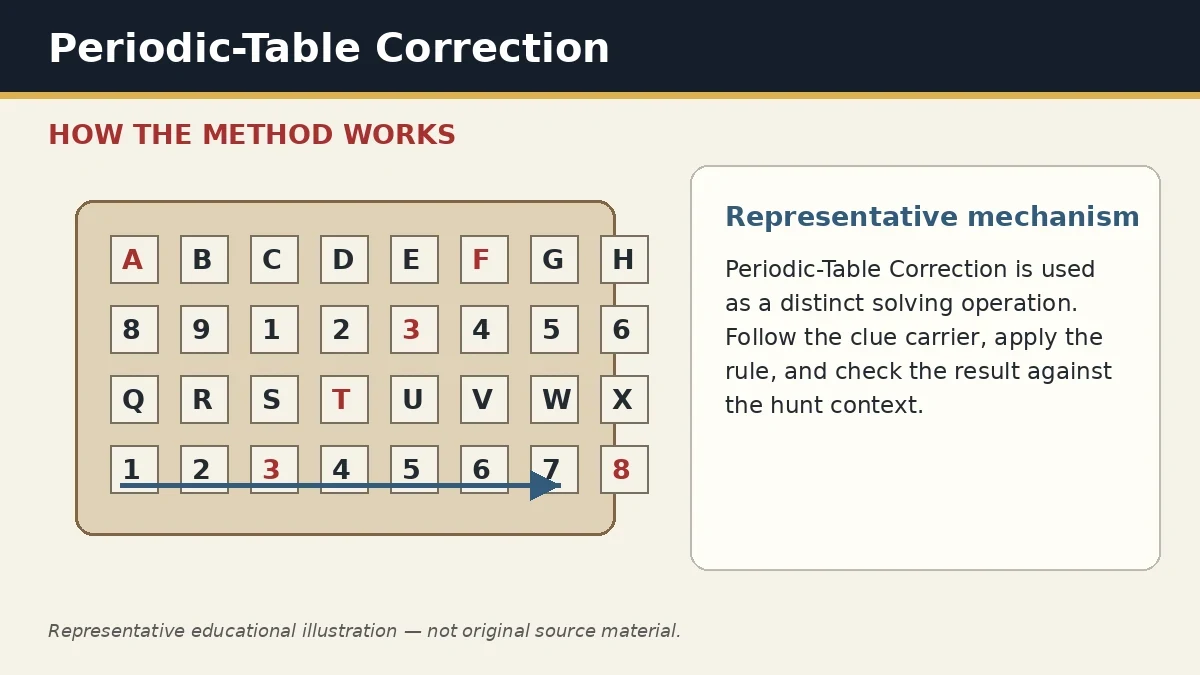
A periodic table shows “Mi” where Argon (Ar) should be.
Read Article
A dollar-bill portrait of George Washington identifies Washington.
Read Article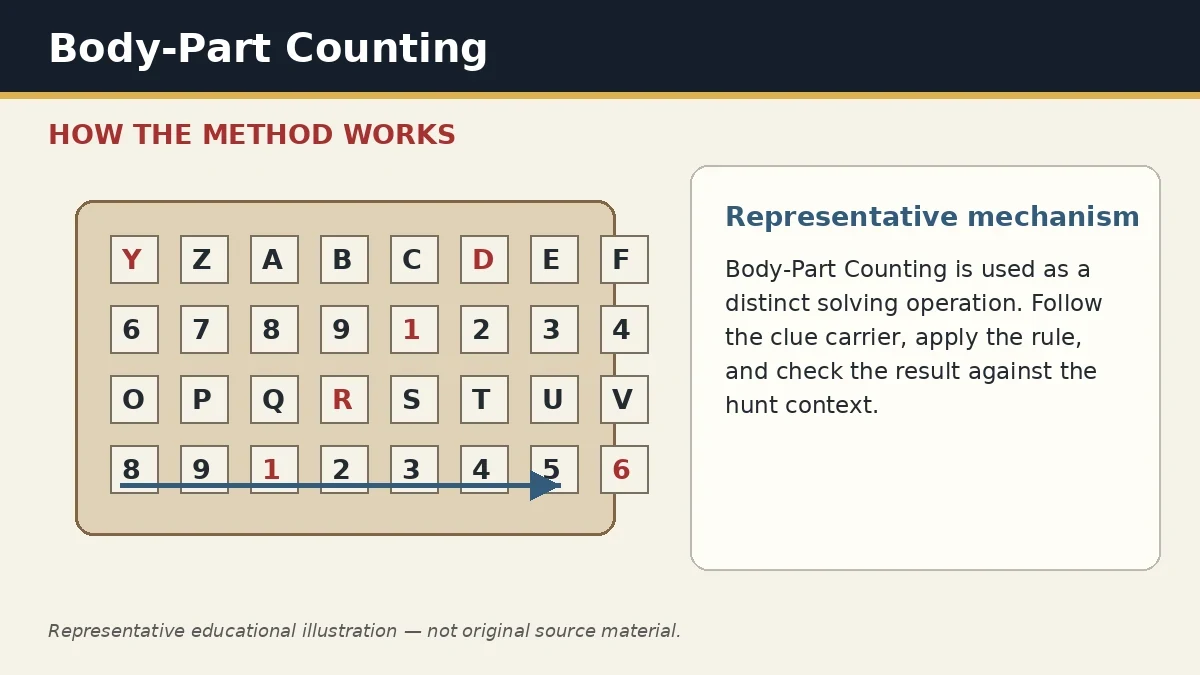
Counts of legs on three depicted objects form the mile value 307.
Read Article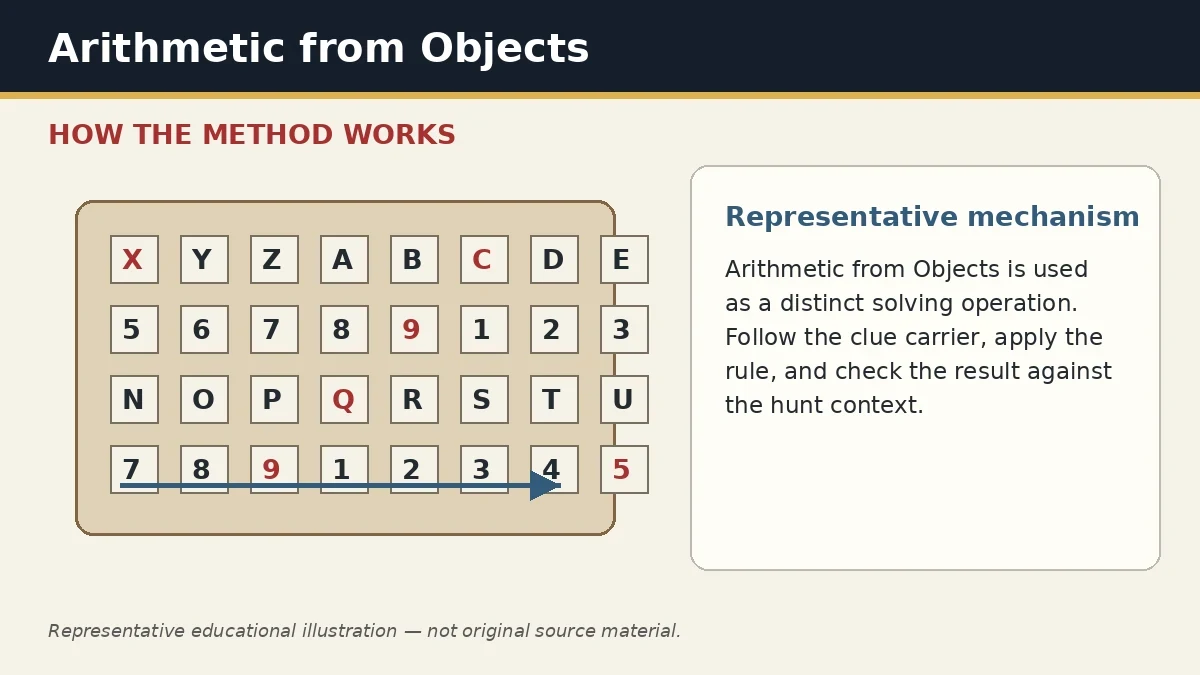
Numbers 24, 25 and 26 are combined to make 75.
Read Article
The binary string 1010100 converts to 84.
Read Article
A familiar Heinz 57 visual is altered to show 56, supplying the mile.
Read Article
Exactly 80 balloons provide the highway number.
Read Article
A U.S. map is obscured by balloons except for Indiana.
Read Article
Three pictured elements can be read phonetically as “Oh-hi-oh.”
Read Article
A copy/reference to The 39 Clues provides 39 for I-39.
Read Article
A magic-square result points to the 21st state, Illinois.
Read Article
The mile value appears reversed through a mirror.
Read Article
An unusual displayed time of 1:80 points to mile 180.
Read Article
Repeated hatch marks encode the highway number.
Read Article
Lone Star imagery on chili boxes indicates Texas.
Read Article
The mile value 262 appears in the paisley rug.
Read Article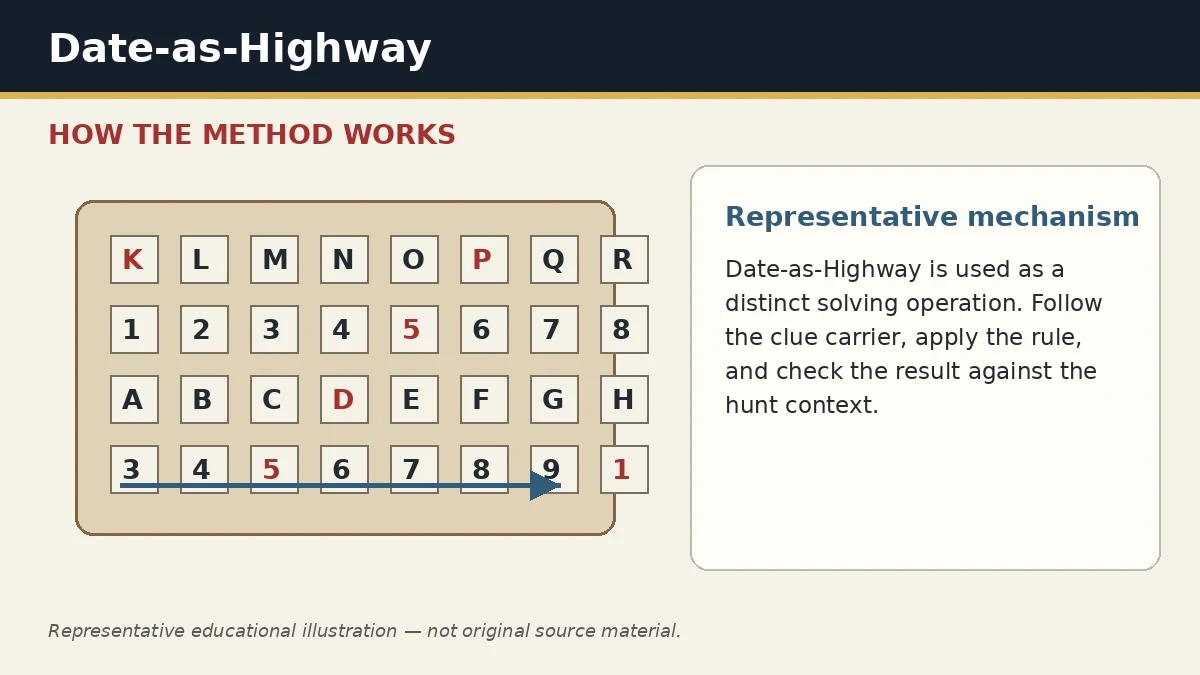
A newspaper date visually contains the digits needed for I-81.
Read Article
Portraits of Thomas Jefferson, Dave Matthews and Missy Elliott all connect to Virginia.
Read Article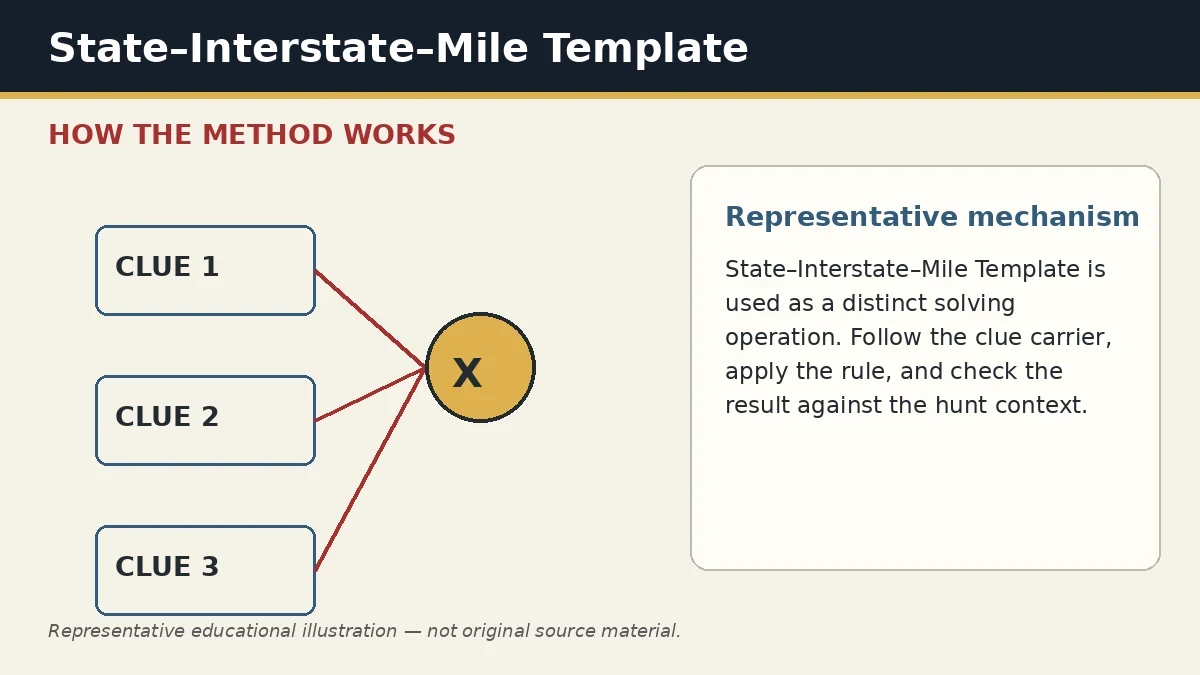
Each apartment hides data for a U.S. state, an Interstate highway and a mile position.
Read Article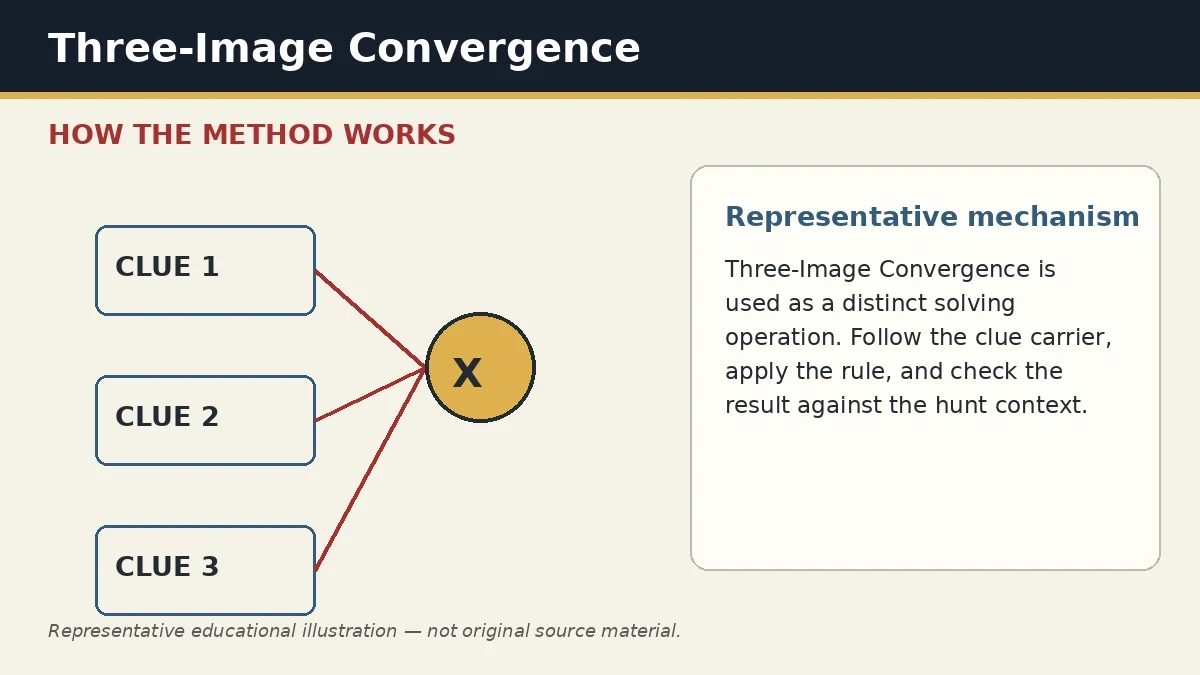
A typical solve uses one image for the place-name cipher, another for local geography, and another for the tree.
Read Article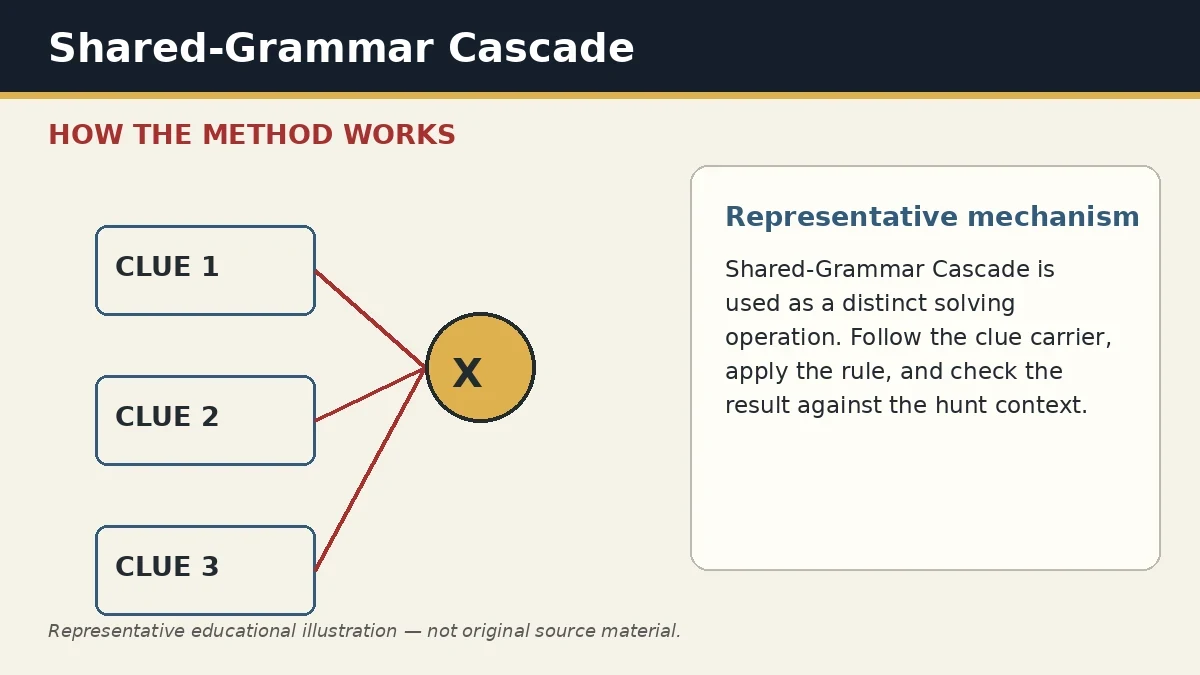
Once the common Polybius grammar became known, the remaining token puzzles became easier to attack.
Read Article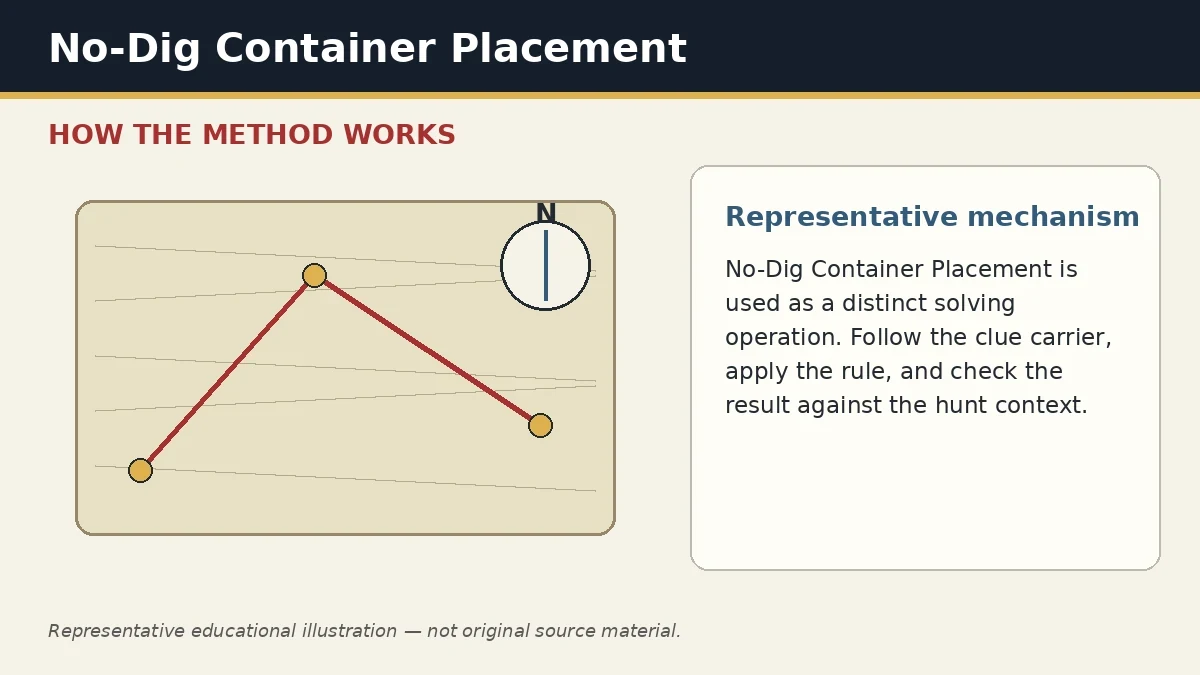
Tokens were placed in accessible tree knotholes rather than requiring excavation.
Read Article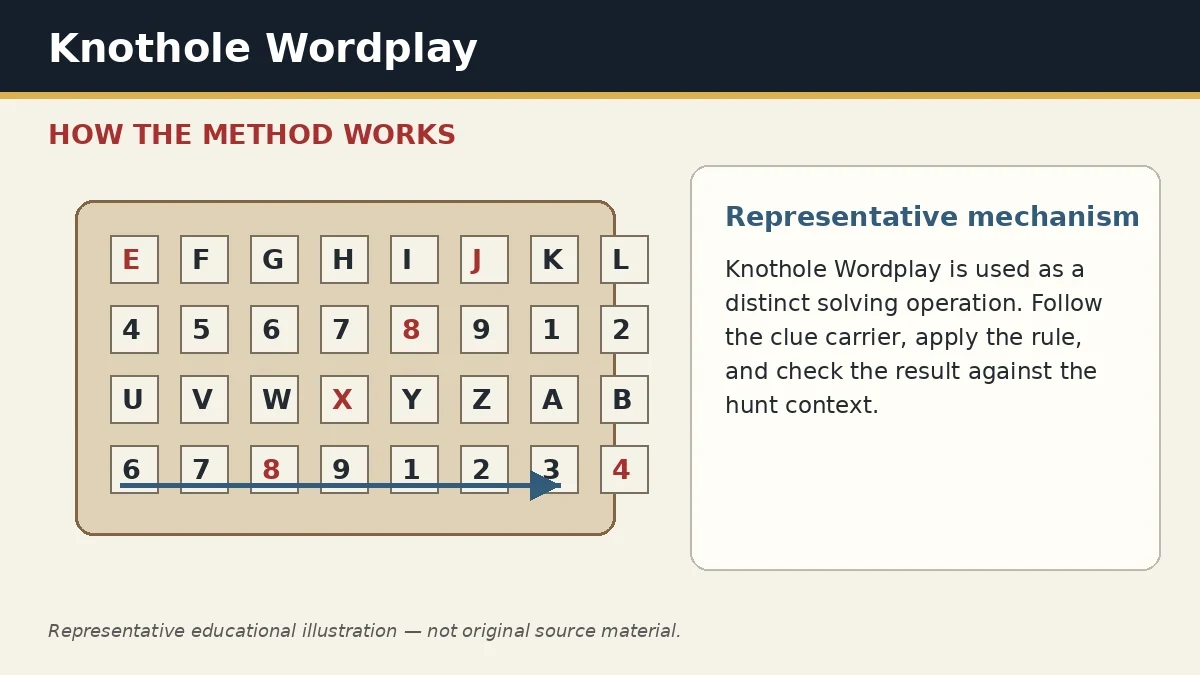
The metapoem uses wordplay that directs attention to holes in trees.
Read Article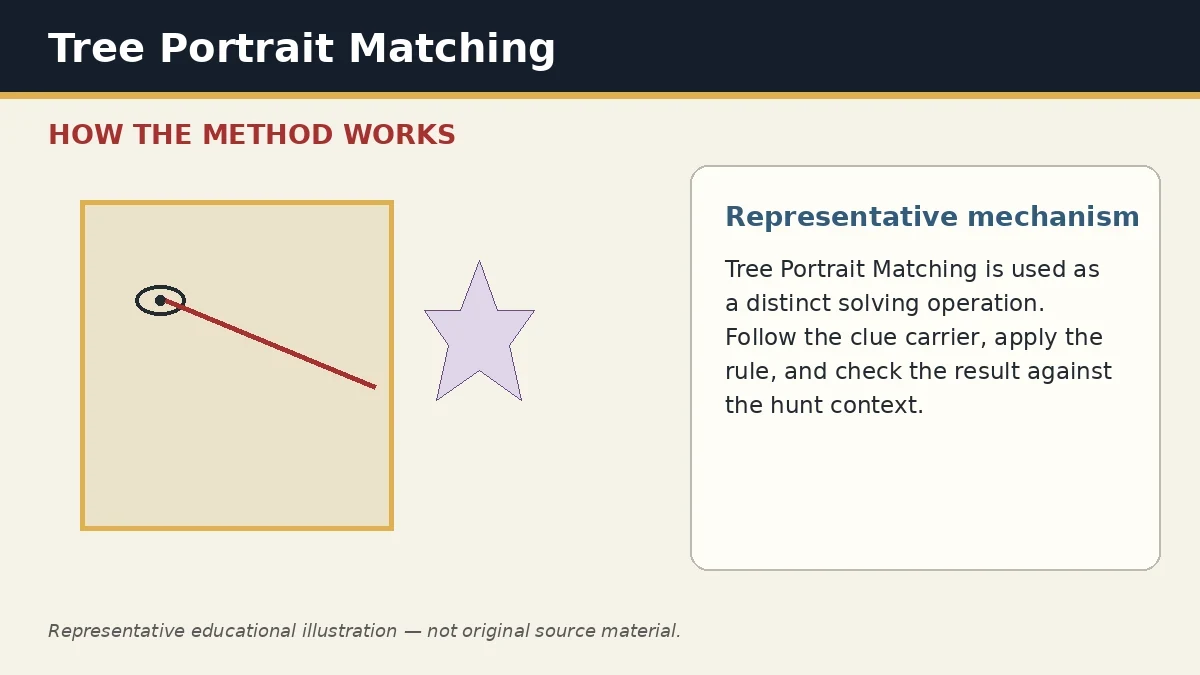
A separate image identifies the actual tree associated with a token.
Read Article
After decoding the park, a separate fairy/drop-cap image narrows the search inside it.
Read Article
The Butterfly carrier is read around the border in a defined direction.
Read Article
The Butterfly puzzle uses different break shapes around a border as the five symbol classes.
Read Article
Each jeweled creature uses a different visual way to generate the Polybius coordinate pairs.
Read Article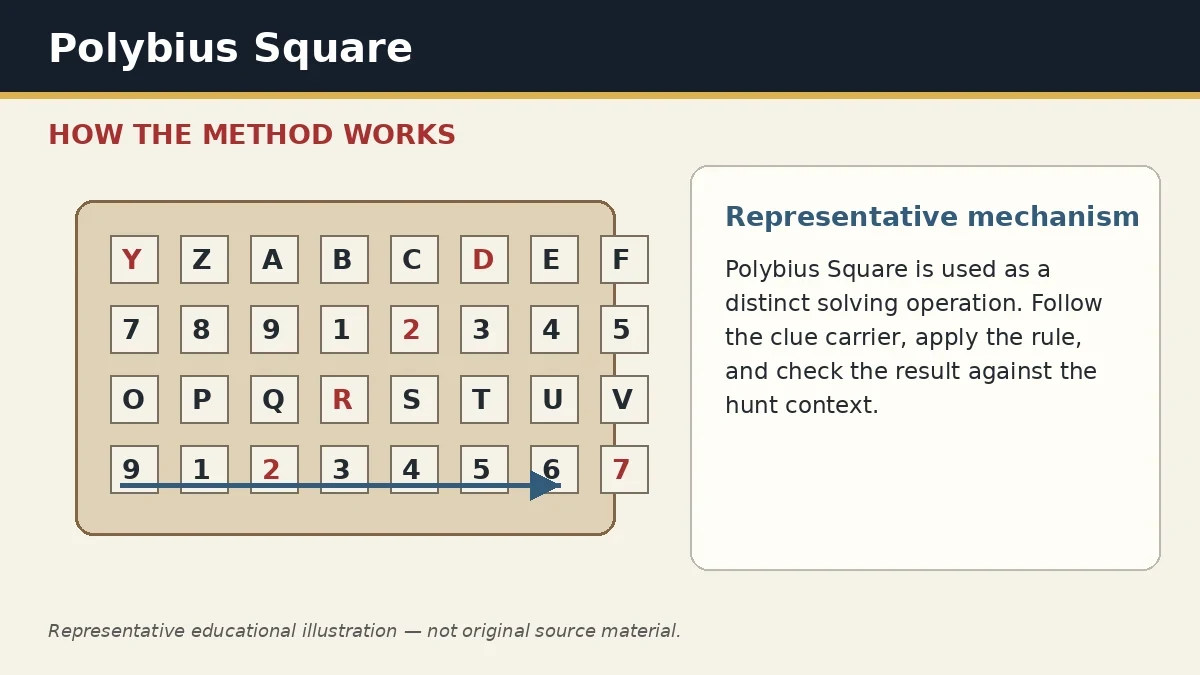
Every token puzzle ultimately feeds coordinate pairs into a shared 5×5 alphabet grid.
Read Article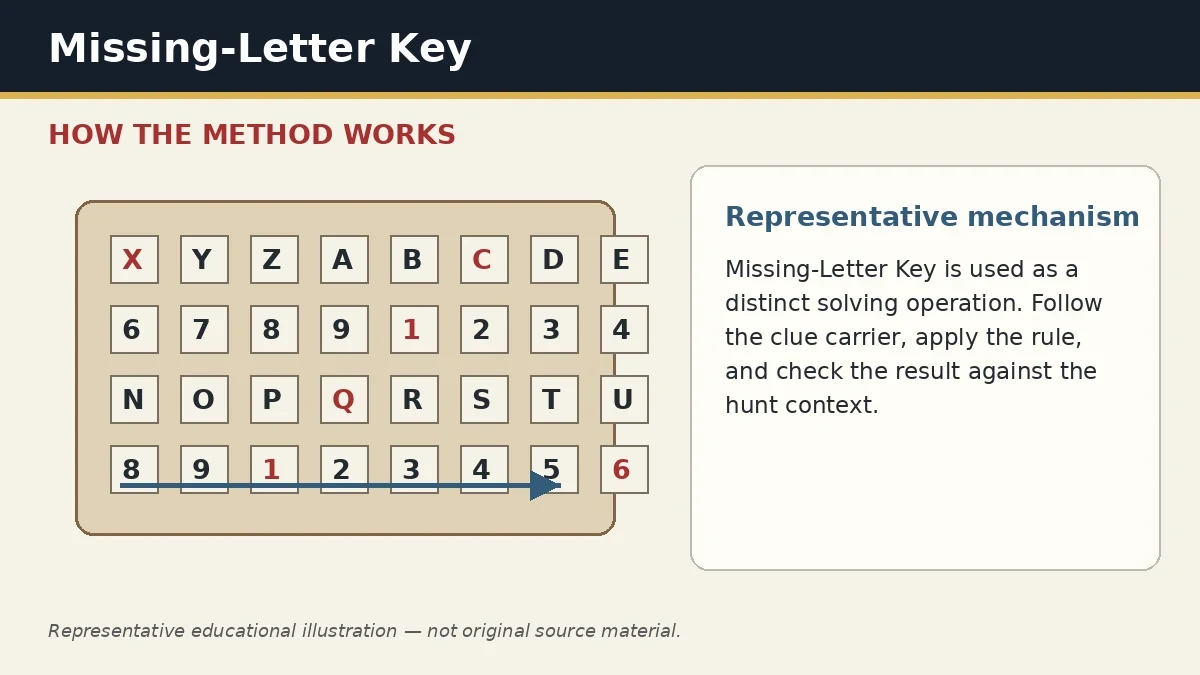
The book omits Q from the alphabetic key used by the hunt.
Read Article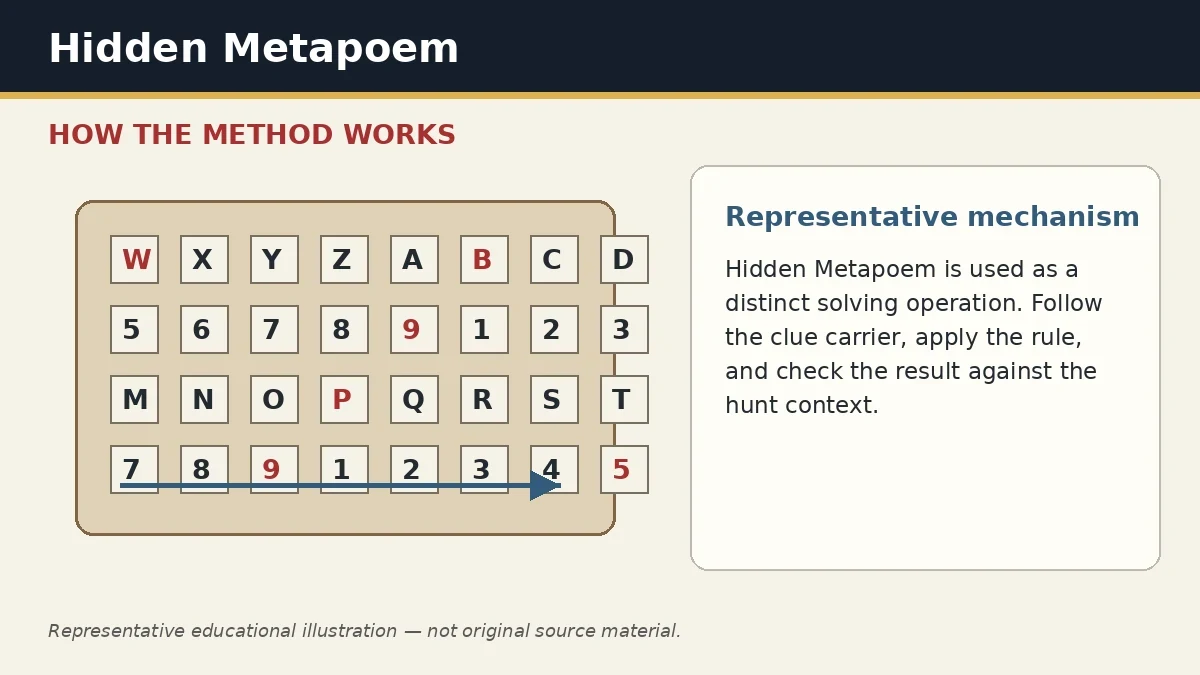
Camouflaged lines across illustrations form a metapoem explaining the shared puzzle grammar.
Read Article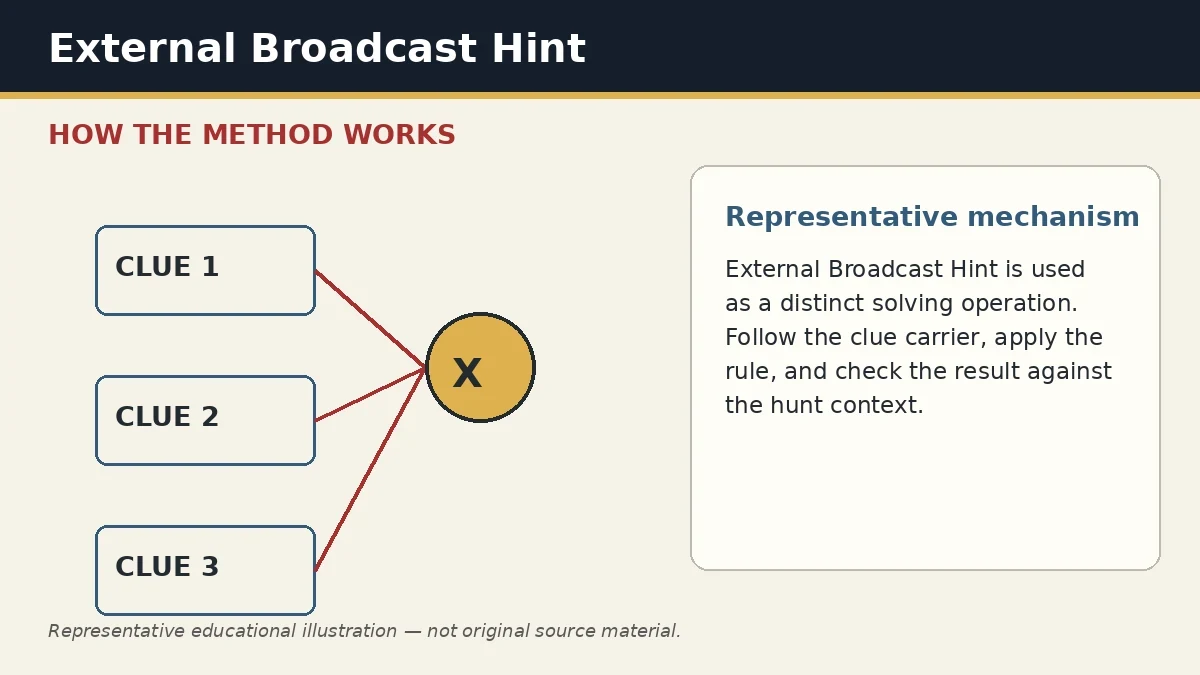
A later television clue was designed to be sufficient on its own to locate the treasure.
Read Article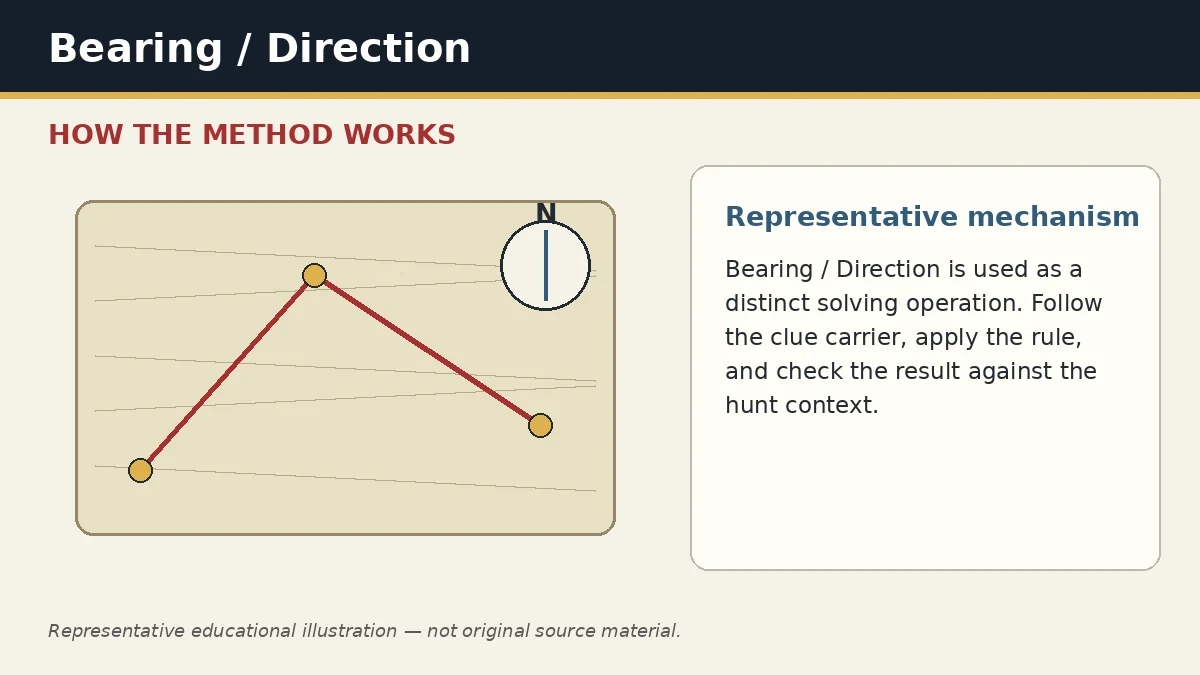
The reduced instruction includes a southeast directional component.
Read Article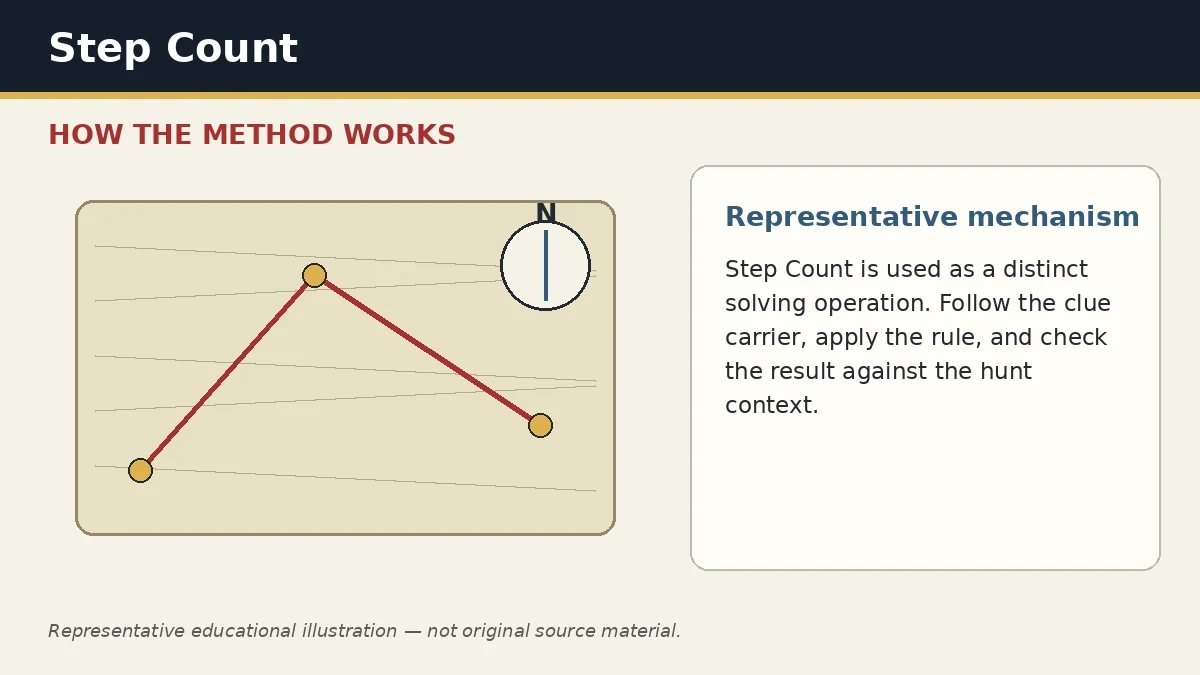
The final instruction set includes a count that maps to a staircase at the target area.
Read Article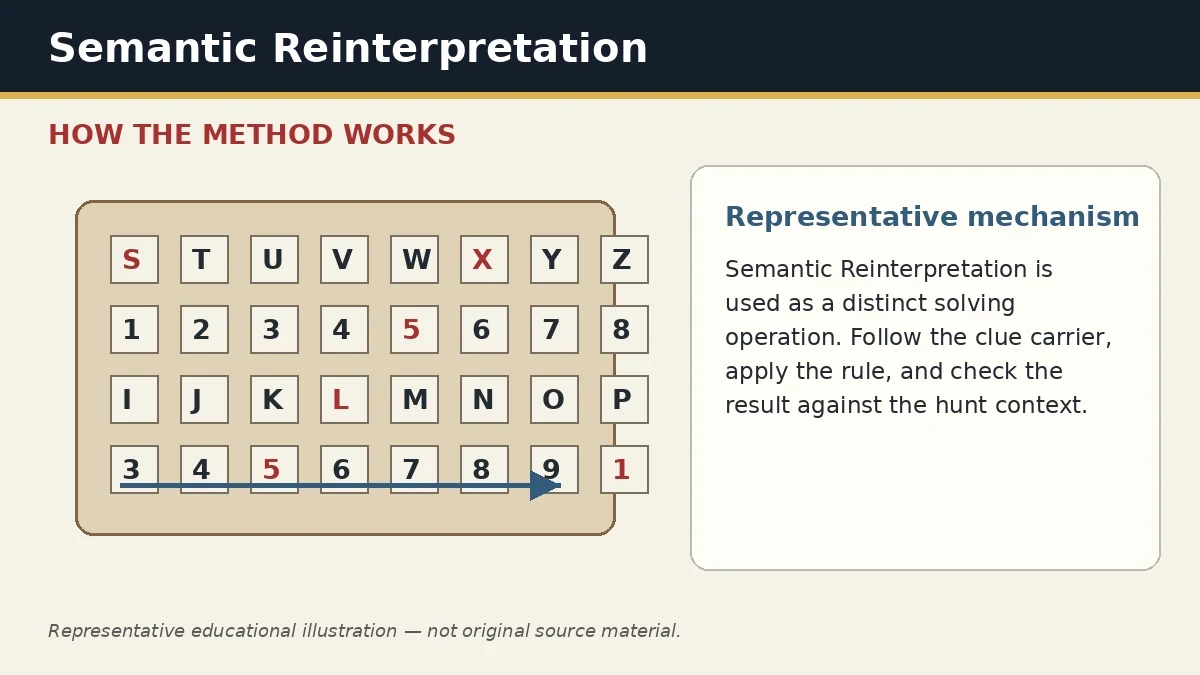
The transformed phrases are not always literal place names; they must be interpreted conceptually.
Read Article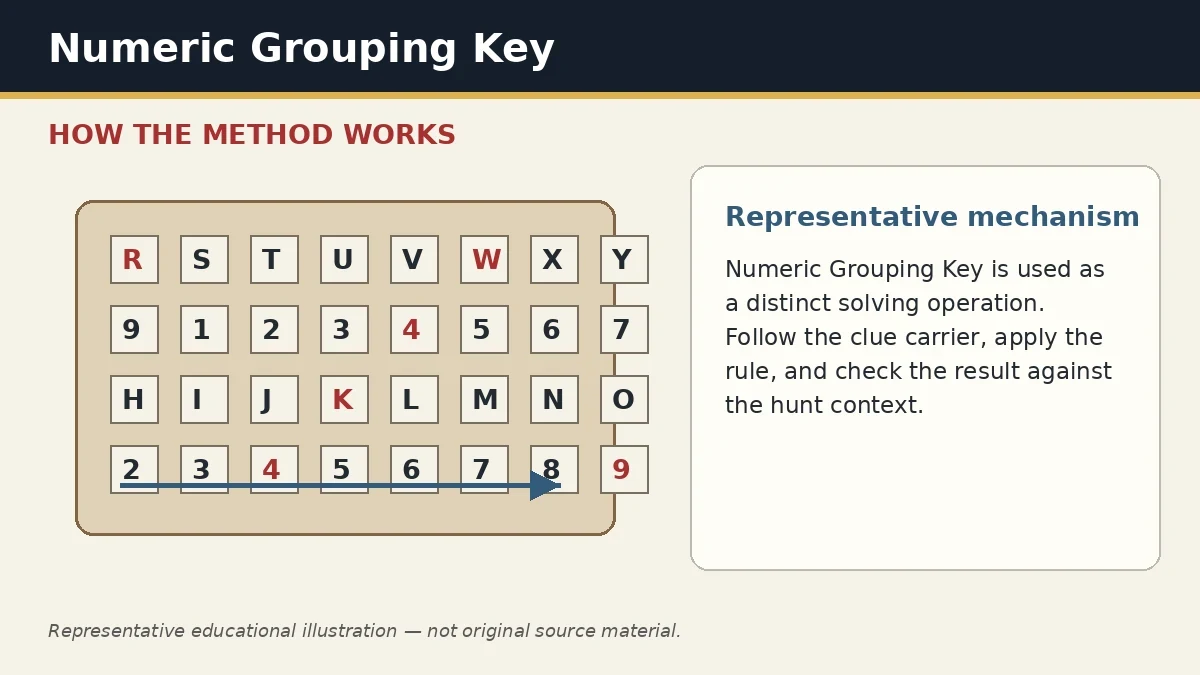
Number strings on the final page supply the grouping pattern used in the reduction.
Read Article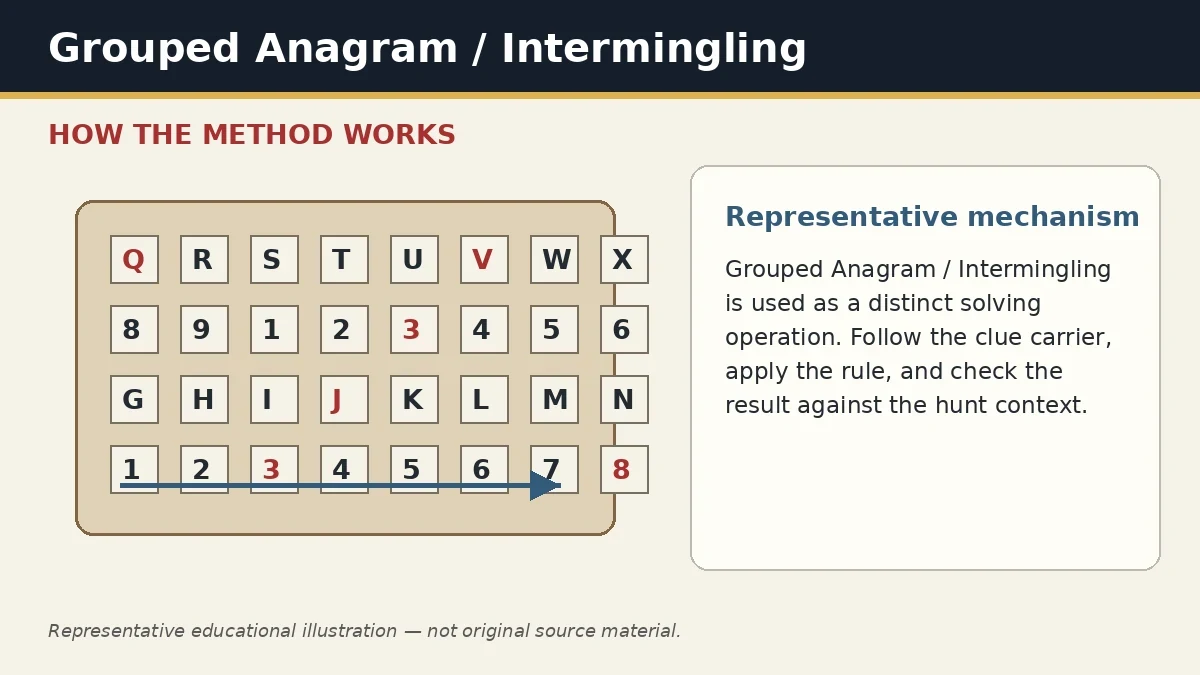
A clue about “intermingle” plus numerical grouping directs groups of words to be recombined.
Read Article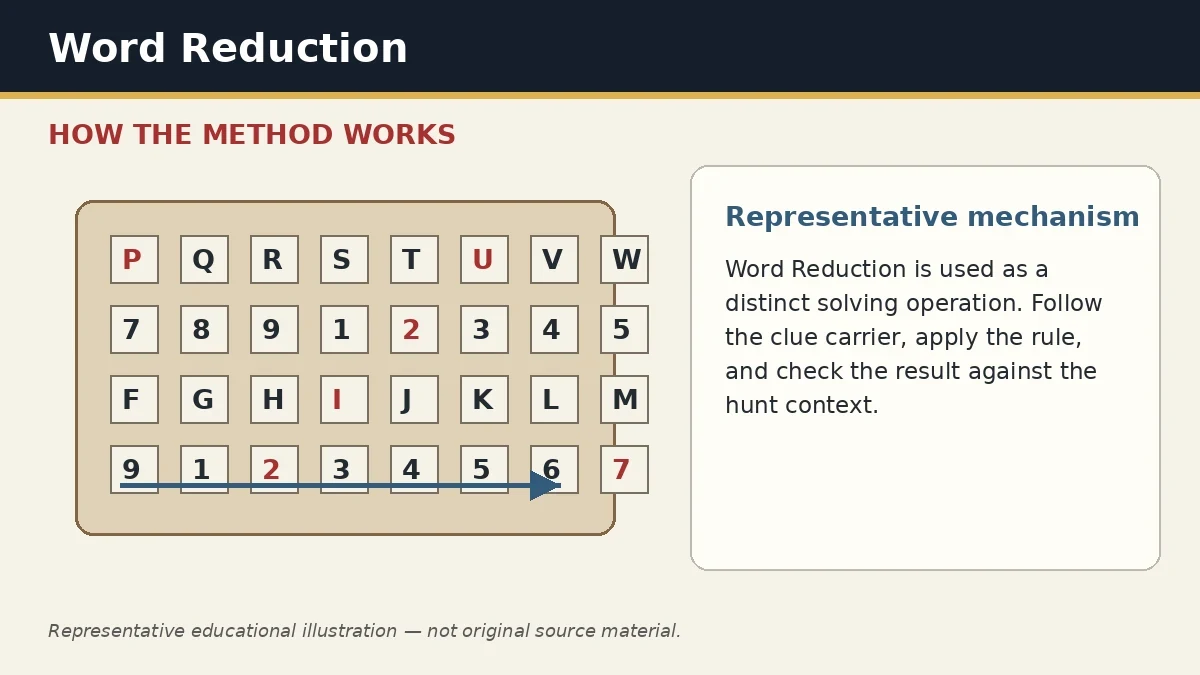
After following the embedded instructions, only selected words remain.
Read Article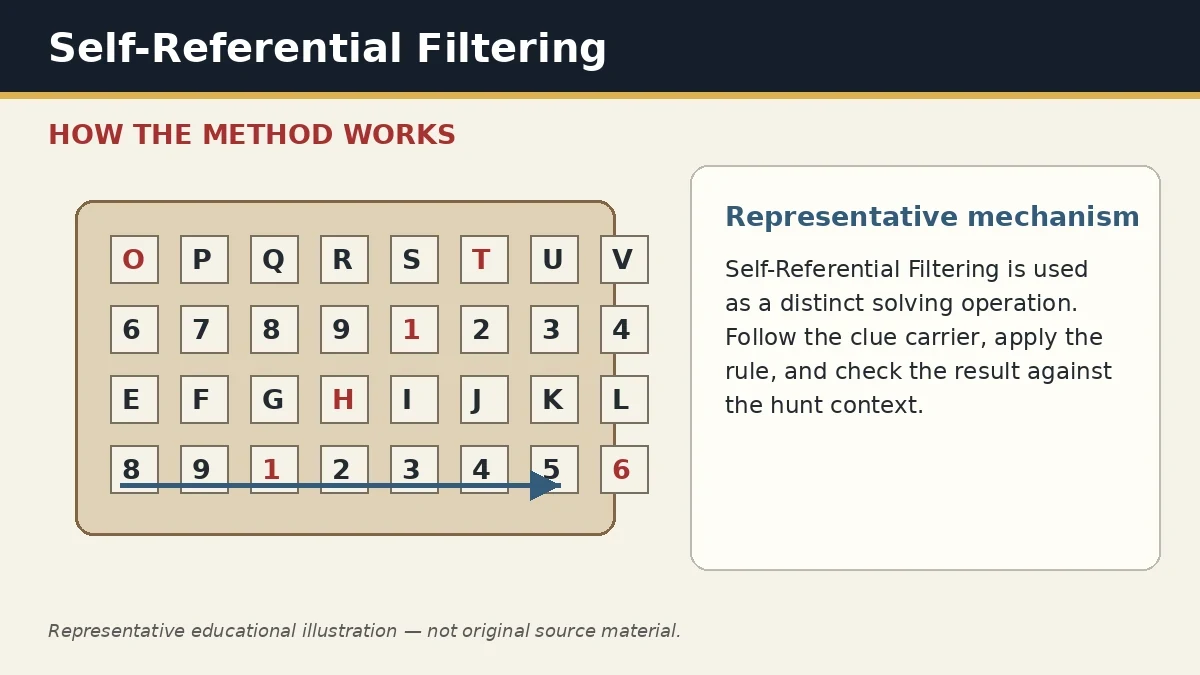
The decoded corpus includes statements that direct filtering and rejection.
Read Article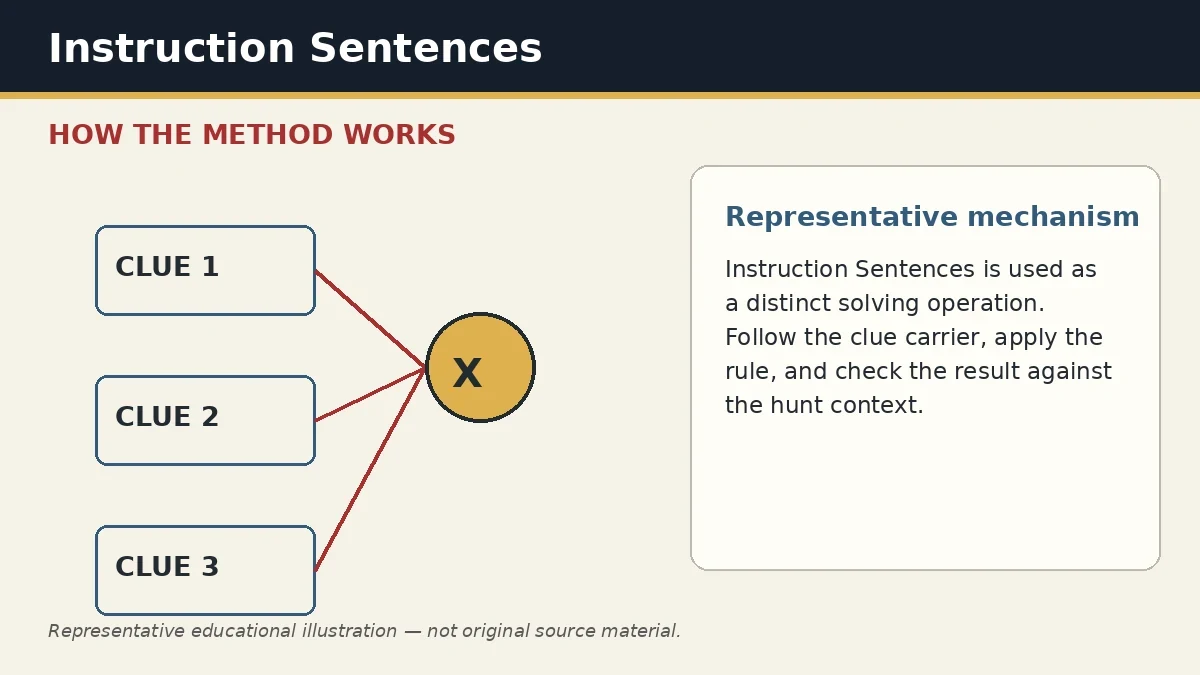
The first major decode yielded 41 strange sentences.
Read Article
Some codes required aligning separated visual pieces.
Read Article
Solvers had to distinguish small visual differences among repeated designs.
Read Article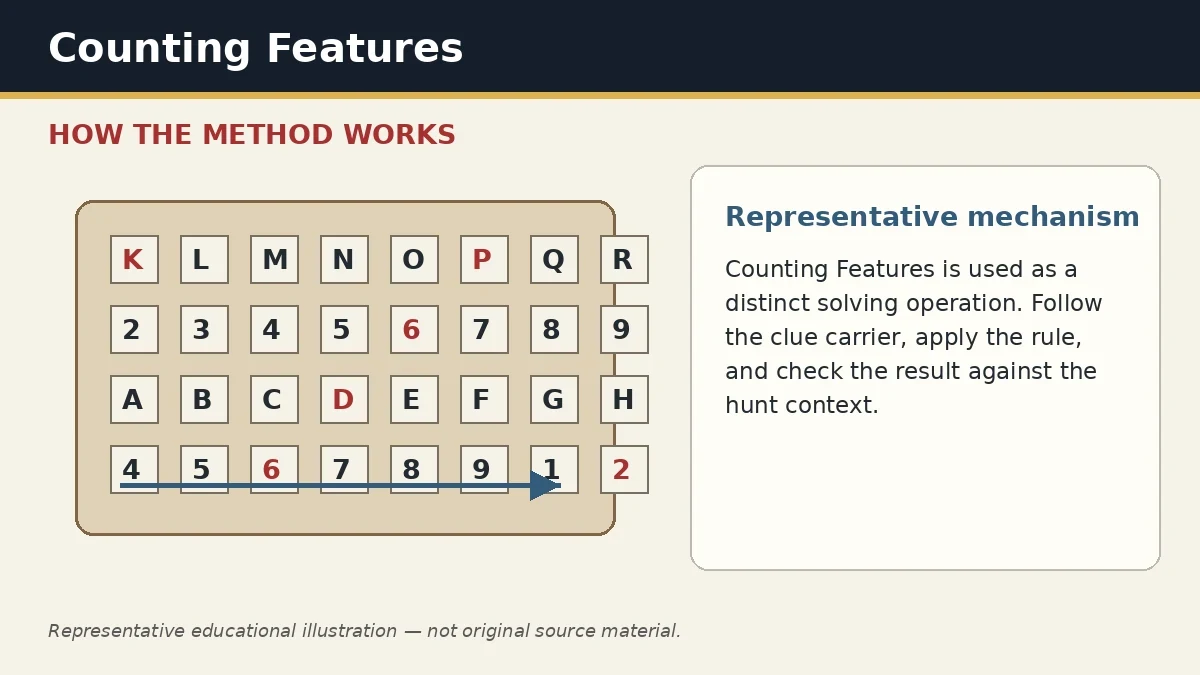
Some visual codes required counting repeated physical features.
Read Article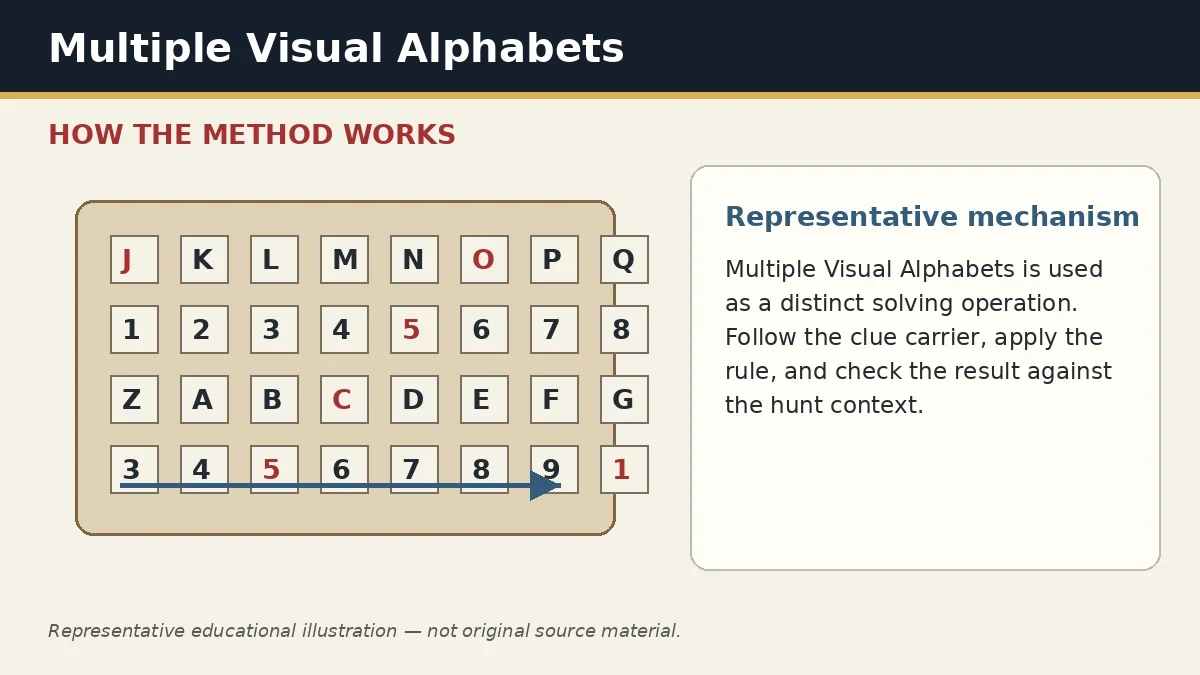
The hunt used 15 distinct visual code types rather than one repeated substitution alphabet.
Read Article
The essential puzzle material was distributed through decorative-looking marginal elements.
Read Article
The creator explicitly identified misspellings that were not intended as clues.
Read Article
Don Adams noted that modern internet access makes many of the old puzzles easier.
Read Article
The creator released two additional clue sets after one and two years.
Read Article
The final solution is described by the creator as unexpected and based on a general theme.
Read Article
The creator warns that solving the individual puzzles does not necessarily give the final answer.
Read Article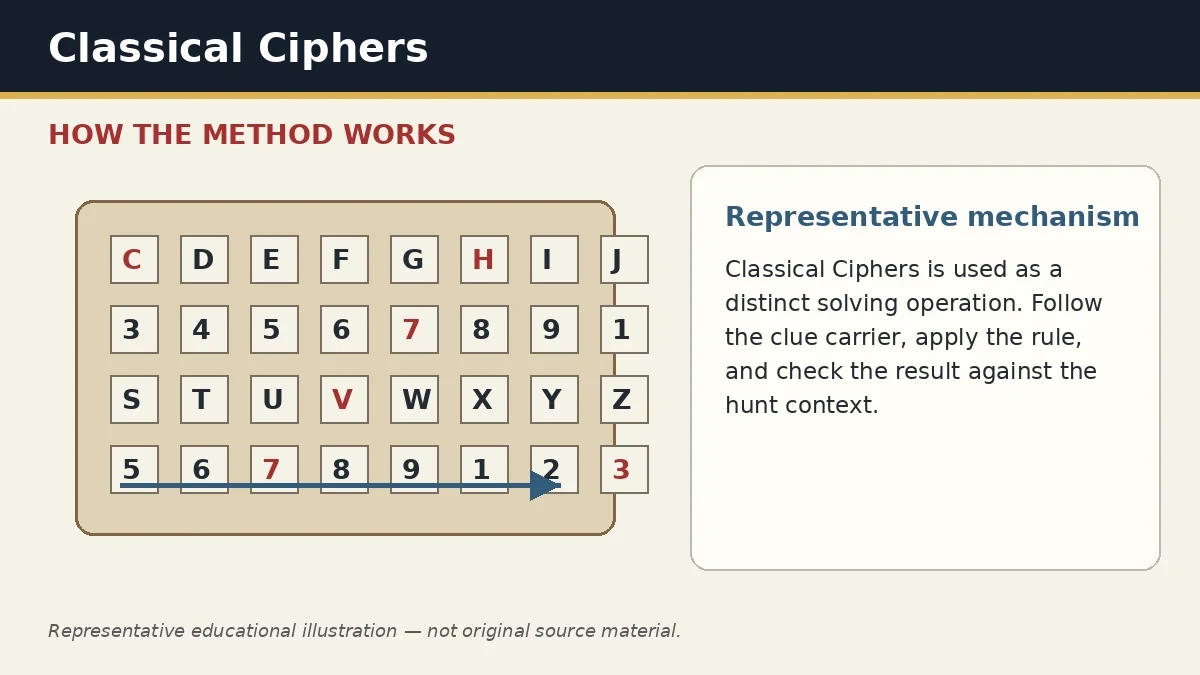
Don Adams explicitly describes solved cyphers within the hunt.
Read Article
The book organizes its challenge through fictional search narratives rather than presenting a naked puzzle sheet.
Read Article
A soldier’s grave and the way it lies help define the final area, while the actual cache remains outside sacred ground.
Read Article
A phrase sounding like “more gold” points to Maughold.
Read Article
A number in the verse corresponds to the height of Snaefell.
Read Article
The verse begins at Tynwald Hill and gives directional and place-based instructions across the Isle of Man.
Read Article
Figures in the illustration correspond to figures on a roadside painted sign near Misterton.
Read Article
The story draws on the Cuckoos of Crewkerne folktale.
Read Article
The story is written in West Country dialect.
Read Article
The obvious cave feature was private property, so the practical hiding point had to be nearby on accessible ground.
Read Article
The accompanying illustration reinforces a tall house with twin cave-like openings.
Read Article
A phrase in the story resembles the sound of a real Welsh mountain name.
Read Article
The story adapts the legend of the Wrekin and a giant carrying earth.
Read Article
The identified towns are joined on an Ordnance Survey map.
Read Article
The Professor Egghead story embeds names such as Ampthill, Roxton, Potton and Langford.
Read Article
Each golden egg was associated with its own illustrated story/verse puzzle.
Read Article
Masquerade contains attractive subsidiary patterns that can consume solver attention without advancing the core route.
Read Article
The last-mile location uses the monument and its shadow as a real-world geometric pointer.
Read Article
The master message invokes midday, light and equinox rather than only a static place.
Read Article
A historical name in the extracted instruction links the word puzzle to a real monument and place.
Read Article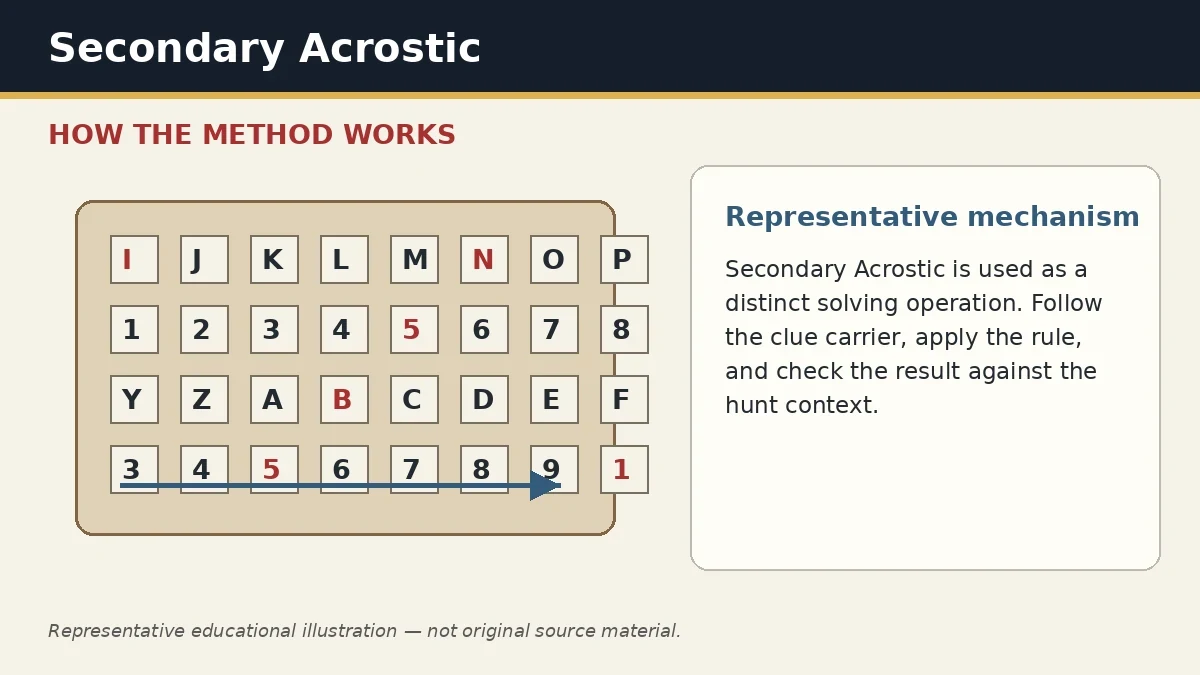
The initial letters of the extracted words/phrases form a geographic instruction.
Read Article
A final numerical grid confirms the lengths of words and phrases extracted from the paintings.
Read Article
The solver must know not only how to draw lines but which depicted figures to process first.
Read Article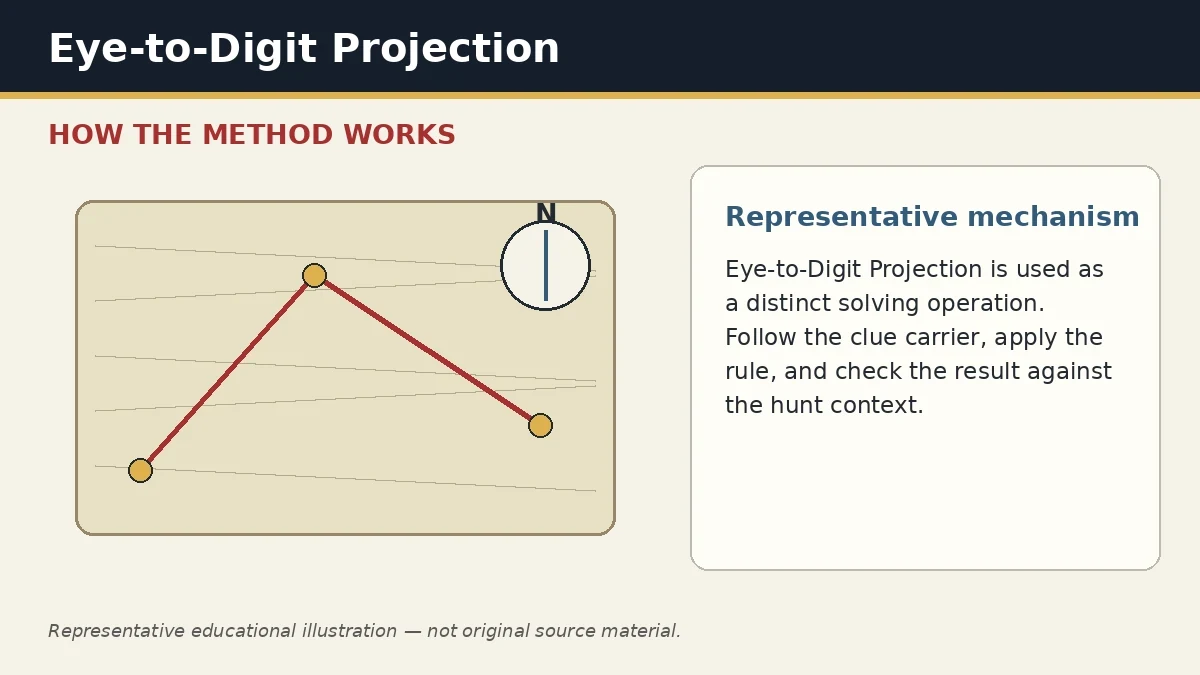
Eyes and visible fingers, toes, paws or equivalent digits act as geometric anchors.
Read Article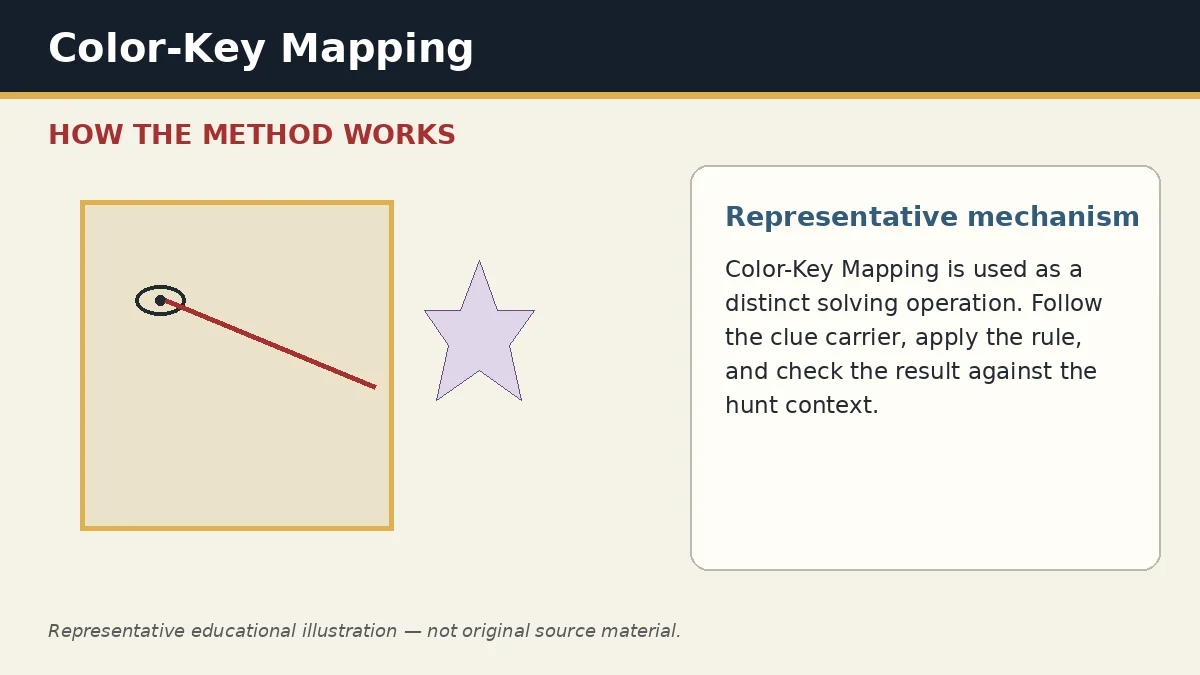
The Newton painting connects a repeating color sequence to the control rings of figures.
Read Article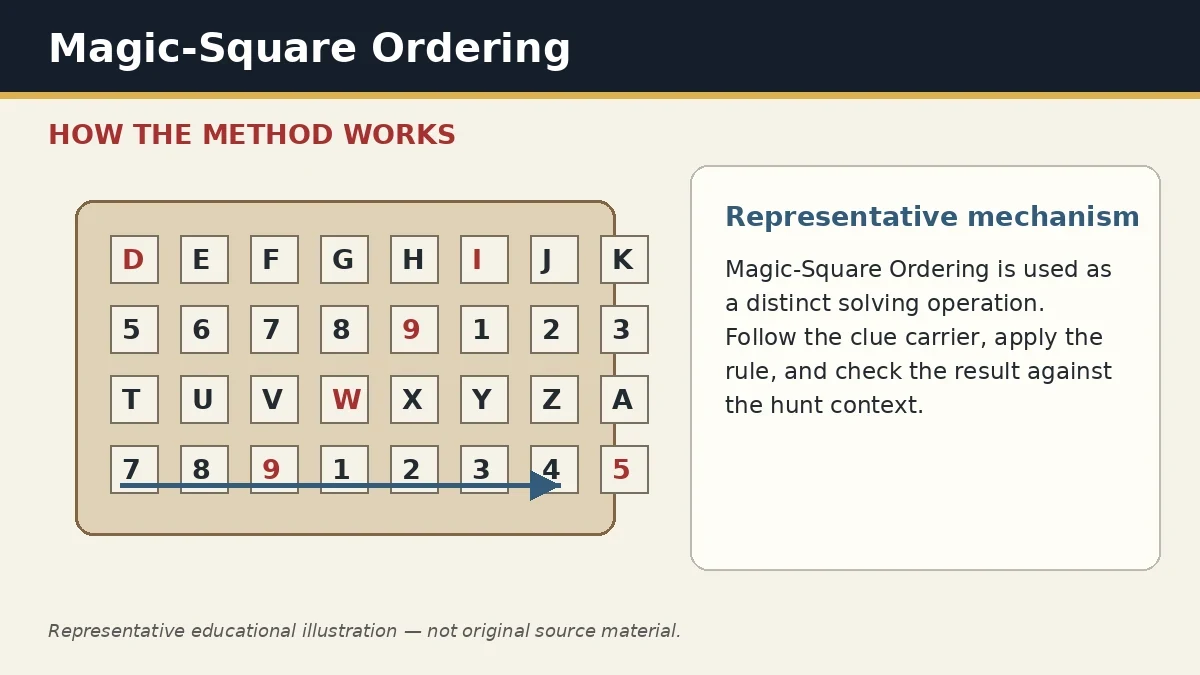
A numbered magic square supplies an order that is reused against another grid.
Read Article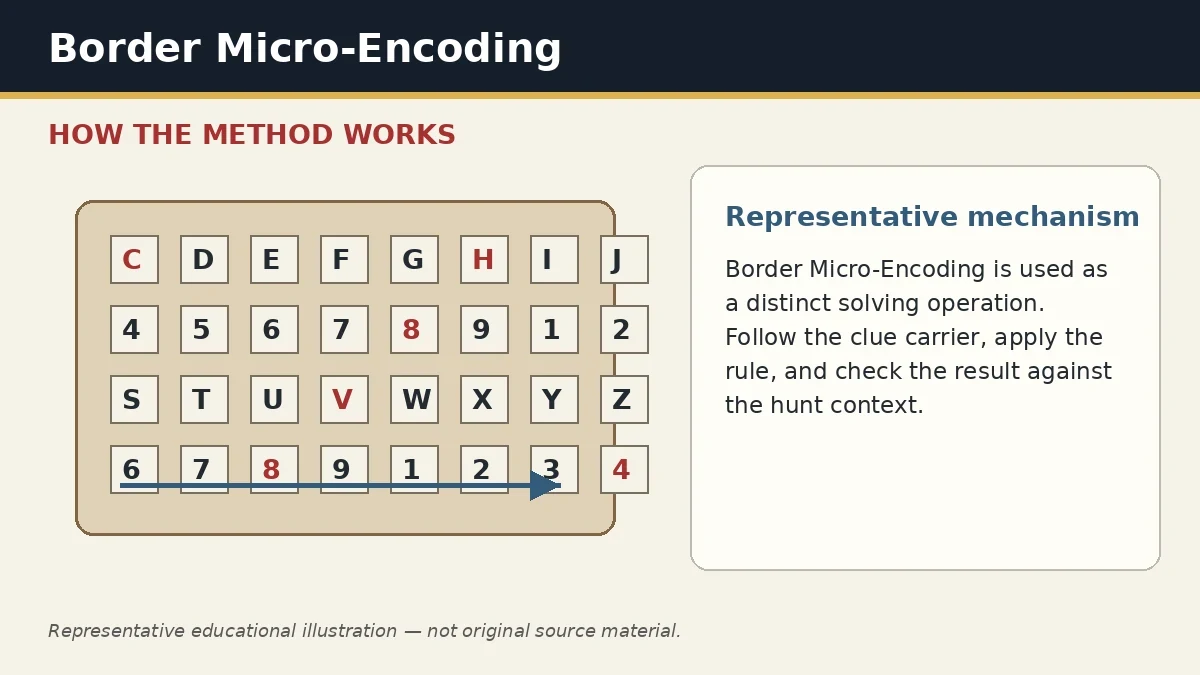
Specially treated letters around the paintings form short words independent of the main geometric extraction.
Read Article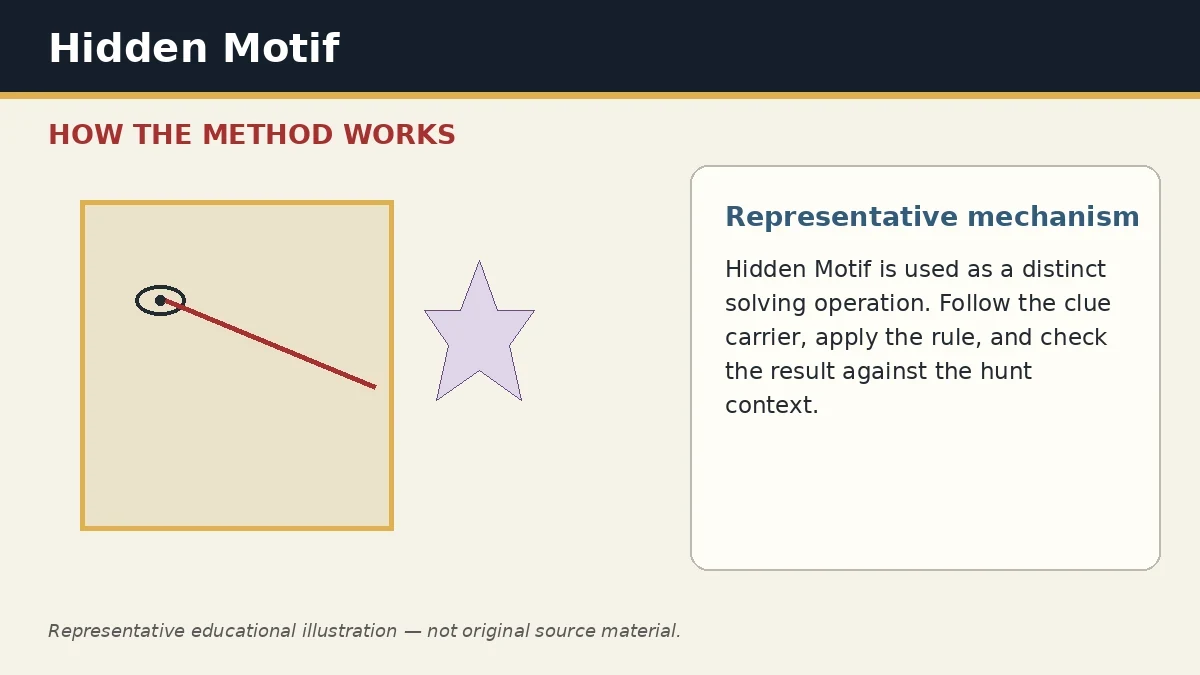
A hare is concealed in every painting, teaching solvers that the illustrations contain deliberately hidden forms.
Read Article
Chapter 5 accounts for four Art Smith treasure objects, but only three are identified. The full 2021 auction field leaves the fourth unresolved.
Read Article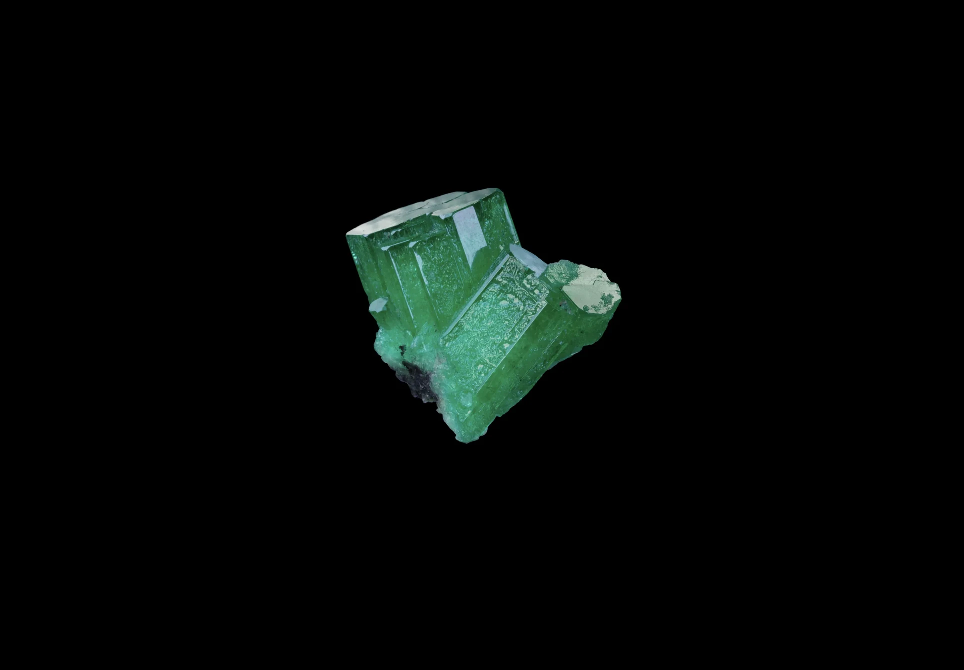
A 64-item provenance trail reveals a hidden acquisition timeline—and leaves open questions hunters may still be able to solve.
Read Article
Chapter 25 parallels Young Jon’s curiosity with Satoshi Tajiri’s collecting childhood, linking childhood interests to adult creations.
Read Article
The final purple image invites close inspection, but the strongest clues may be its strange presentation, wording, and ambiguity.
Read Article
The Five Gifts of Hathor is poorly attested oral tradition, not a well-documented daily practice shared by all ancient Egyptians.
Read Article
Alexander became known as “the Great” posthumously, but a formal bestowal by followers at his death is not documented.
Read Article
The buffalo story shifts Zimbabwe to Tanzania, ignores Kenyan tsavorite, and pairs African-buffalo text with bison-like art.
Read Article
The Star Trek quote is a hybrid: TNG’s “continuing mission” paired with the Original Series’ “where no man has gone before.”
Read Article
Carnegie transformed modern philanthropy, but he did not invent charitable endowments or create the first grantmaking foundation.
Read Article
1863 marks the founding of England’s Football Association; the first official England international came in 1872.
Read Article
Tiffany’s enamelwork was shown in London before 1900, making the chapter’s claim of a first exhibition in Paris incorrect.
Read Article
Jordan’s 1987–88 achievement checks out, but the chapter points to page 112 for a card even though page 112 is in Chapter 12.
Read Article
The $15 million payment accompanied the much larger Mexican Cession, not a purchase of California alone.
Read Article
Chapter 11 shifts four details: the Spanish king, Montevideo’s country, the recovery year, and the salvager’s name.
Read Article
Chavín was influential, but humans occupied the high Andes thousands of years earlier; Chapter 9 also skips page 90.
Read Article
Old Oraibi’s antiquity holds up, but the “oldest tribe” label and a single 500 BC migration from Mexico oversimplify Hopi history.
Read Article
Earhart pioneered celebrity-branded practical fashion, but women’s activewear existed well before her 1933 clothing line.
Read Article
Rubies are exceptionally valuable, but fancy colored diamonds have achieved much higher auction prices per carat.
Read Article
Chapter 5 shifts several Art Smith details, including an ASPCA win, Talley Beatty chronology, and the “first” jeweler claim.
Read Article
Several Chapter 4 claims break down under scrutiny, including the statement that Columbus found South America in 1492.
Read Article
The Third Imperial Egg is dated 1886 instead of 1887—an intriguing one-year shift beside the chapter’s repeated 87-year framing.
Read Article
Chapter 1 mixes verified obscure facts with ambiguous numbers and one especially intriguing floppy-disk discrepancy.
Read ArticleTRUE may function as an attention marker when it appears near material that independently attracts clue interest.
Read ArticleThe final paragraph clusters language of singularity and oddness, suggesting ONE may mean more than the surviving photograph.
Read ArticleThree closely grouped uses of “might” appear as adult Jon works out how and where to hide the Pokémon treasure.
Read Article
The chapter opens with a remembered journey and closes with another journey whose language repeatedly bends back toward the beginning.
Read ArticleChapter 25 may contain three linked stories whose transitions reveal clue relationships easily missed when read as one narrative.
Read Article
The Comer family’s Texas history gives Houston a plausible family context that Chapter 25 never explains outright.
Read Article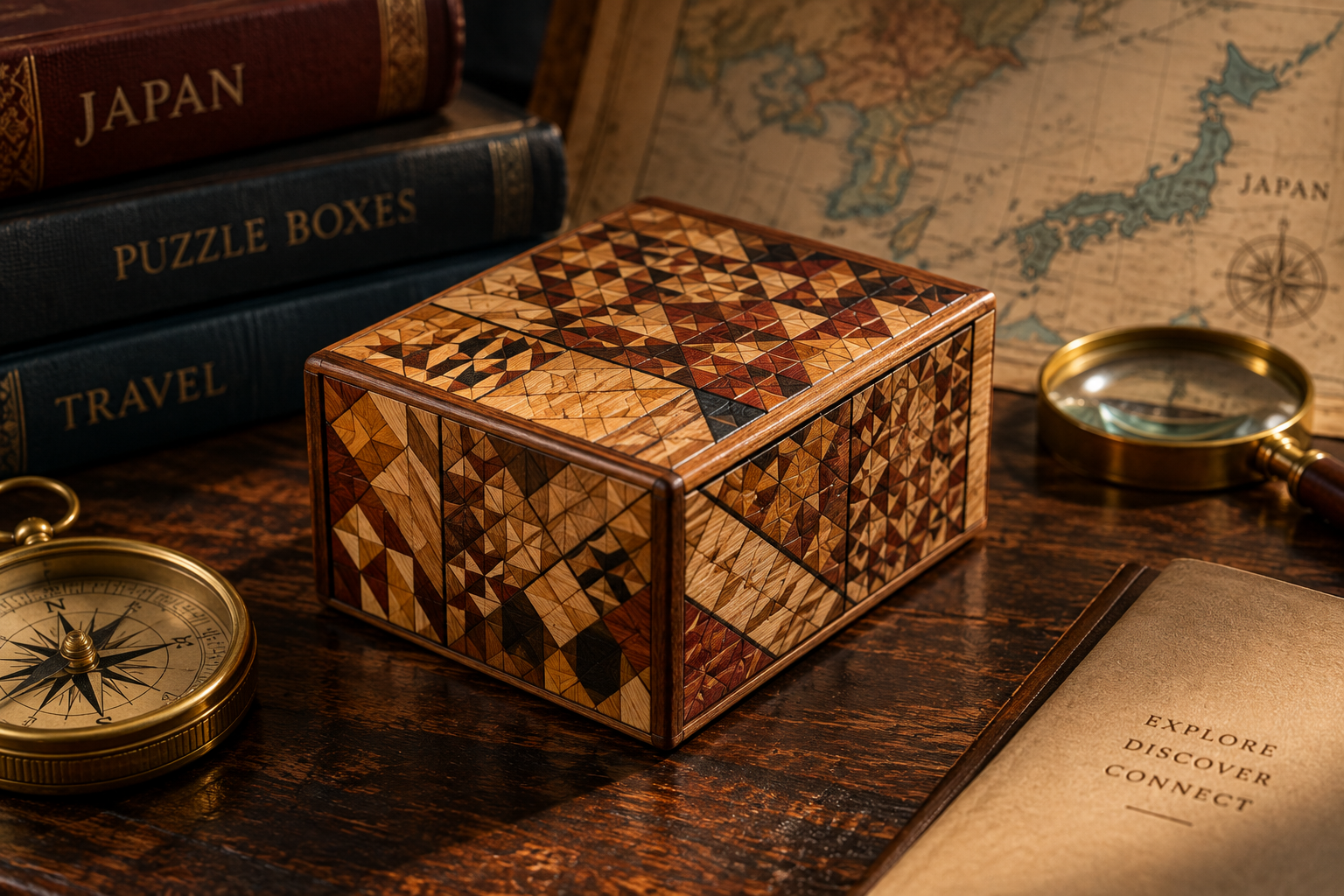
The Japanese puzzle box may model how Chapter 25 itself should be solved: study the surface, find the right movements, and discover the opening.
Read Article
Young Jon's creature-hunting childhood and Adult Jon's Froakie journey may be two versions of the same experience told in different languages.
Read Article
Chapter 25 ends by undermining its own evidence, raising the possibility that the surviving photograph is meant to be interpreted, not merely viewed.
Read Article
Froakie stays where the treasure stays, inviting the possibility that the companion represents something Jon deliberately leaves behind.
Read Article
Dream, sleep, rest, and idea frame Chapter 25 around states of mind, raising the possibility that its fantasy operates as meaningful metaphor.
Read Article
Five chapter-opening images break the book’s normal visual pattern; their chapter numbers convert to letters that anagram to LUCKY.
Read Article
Jon defines Pokémon as treasure, then fills the hiding story with Pokémon that repeatedly guide, correct, and redirect him.
Read Article
Chapter 3 contains the clearest echoes of Chapter 25, while other chapters add recurring language, images, and ideas worth tracking.
Read Article
A recurring D/T pattern appears in Chapter 25 through both word-internal letter order and phrase initials, but its purpose remains unresolved.
Read Article
No. In 2008, Wikitude used smartphone features to overlay location information onto the user's view of the real world.
Read Article
While studying Chapter 25, the Pokémon chapter of There’s Treasure Inside, one pattern began appearing often enough that I stopped treating each occurrence as an isolated coincidence: the repeated presence of P and M, sometimes in the order P/M and sometimes reversed as M/P. At this point, I don't claim to know exactly what the pattern means. What interests me is its persistence—and the possibility that the reversal itself matters.
Read ArticleResearch Tools
Tools built to help explore, analyze, and work with treasure-hunt research and source material.
Jon Collins-Black Interview Search
Search interview transcripts by word or phrase, open the surrounding context, and jump to supported source video.
Search Interviews
Seeking Treasure Con 2026 Jon Collins-Black Q&A Session
Search the complete Q&A session, review Jon's full responses, and jump directly to supported moments in the source video.
Search the Q&A
Word & Phrase Analysis
Search and compare words and short phrases across book sections, examine patterns, and inspect page and line references.
Analyze Words & Phrases
Anagram & Caesar Lab
Test words and phrases against derived first-letter streams using anagrams, Caesar shifts, or both.
Open the Lab
Treasure Collection Explorer
Browse documented treasure items by acquisition timing, value, known box, research notes, and source records.
Explore the Collection
Clue Solve Method Explorer
Explore real-world examples from armchair treasure books, movies, and music to see how clue-solving methods actually work.
Explore Clue Methods
 MW Treasures, Puzzles, and Games
Discuss treasure hunts, puzzles, and games in focused channels with a large, active community of fellow hunters.
Explore the Community
Browse by Subject
A quick way into the parts of the research that interest you most.