A letter can contain a message, but so can the envelope.
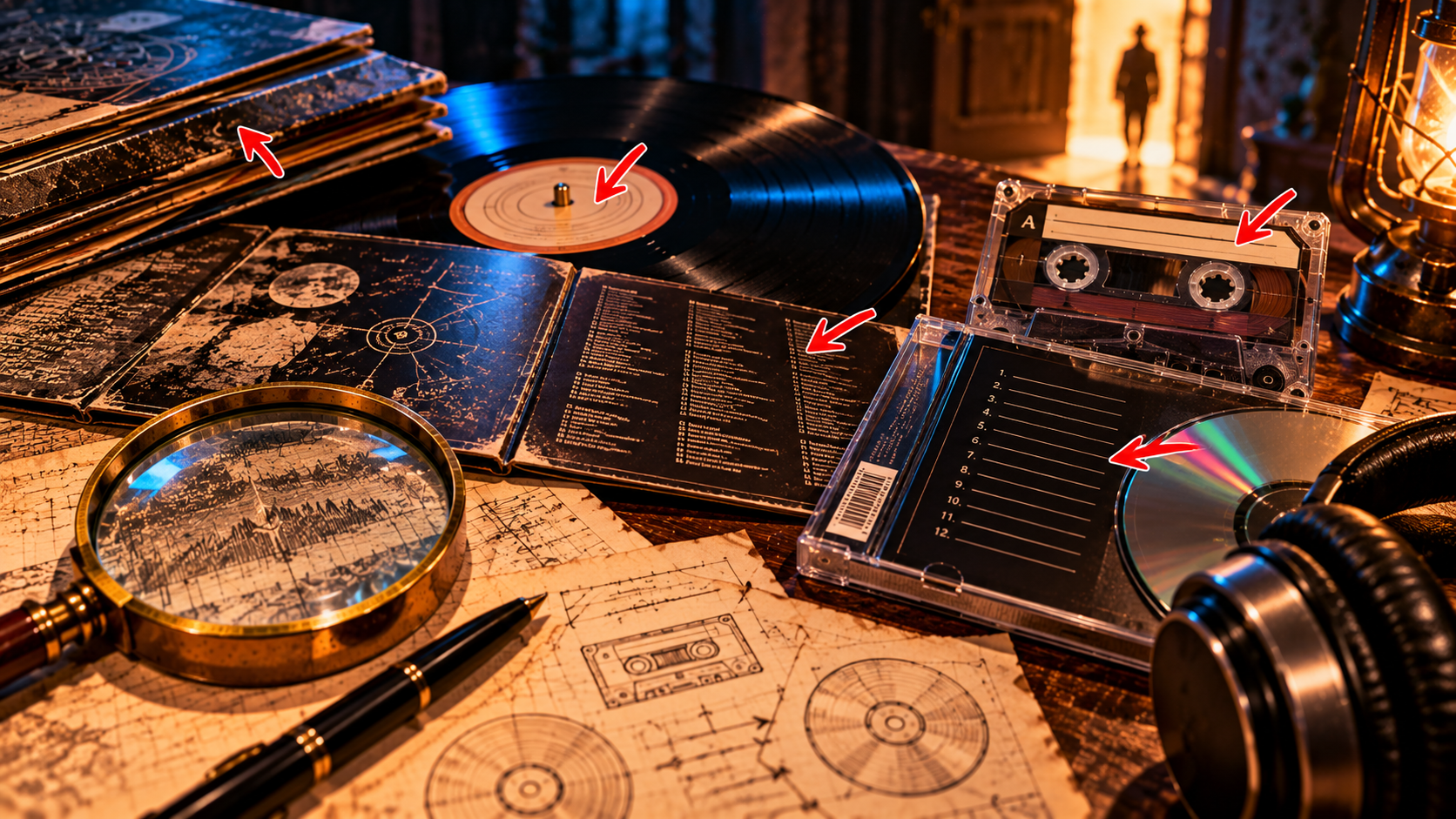
Recorded music can arrive as vinyl, cassettes, CDs and digital files. Those formats have different capabilities and limitations, and musicians have exploited them.
1. Jack White — Lazaretto: the record itself has secrets
Album: Lazaretto (2014)
Jack White's Lazaretto may be one of the clearest demonstrations that the object carrying the music can become part of the experience.
The vinyl edition was released as what Third Man Records called an ULTRA LP. It includes two vinyl-only hidden tracks beneath the center labels: one plays at 78 RPM and another at 45 RPM, while the main record plays at 33⅓ RPM.
Side A plays from the inside outward. The song “Just One Drink” uses parallel grooves so the needle can land on either an acoustic or electric introduction before the grooves merge into the same song. Both sides terminate in locked grooves, and the dead-wax area contains a hand-etched hologram.
The music isn't merely stored on the record. The construction of the record determines what you can discover and what you hear.
Clue-solving lesson: Before assuming you've extracted everything from a clue, examine the object or format carrying it. Direction, layers, boundaries, physical movement and even apparently unusable areas may have been deliberately chosen.
Verify this: Third Man Records — Introducing the Lazaretto ULTRA LP
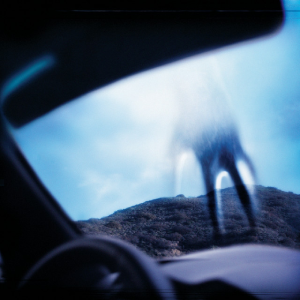
2. Nine Inch Nails — Year Zero: playing the CD reveals another clue
Album: Year Zero (2007)
Nine Inch Nails took the idea in a completely different direction with Year Zero.
The CD was manufactured with a heat-sensitive surface. As the disc spun and warmed during playback, its appearance changed and binary digits became visible on the disc. Those digits pointed toward a website connected with the alternate-reality experience surrounding Year Zero.
You could listen carefully to every second of the album and still miss this clue. The act of using the container for its intended purpose—playing the CD—physically changed the container and exposed new information.
Clue-solving lesson: Pay attention when an object changes as you interact with it. Folding, opening, heating, rotating, illuminating or otherwise using something may expose information that isn't visible in its resting state.
Verify this: Year Zero — heat-sensitive CD and hidden binary code
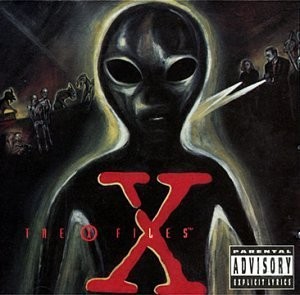
3. Songs in the Key of X: Track 0 really exists
Album: Songs in the Key of X: Music from and Inspired by The X-Files (1996)
The soundtrack associated with The X-Files found an especially appropriate place to hide music: before the album begins.
The CD contains two hidden recordings performed by Nick Cave and the Dirty Three in the pregap before Track 1. To reach them, listeners had to begin at Track 1 and rewind backward for roughly nine minutes into what effectively became Track 0.
The liner notes even hinted that “0” is also a number. The words in the booklet point toward a property of the CD format itself. The clue and the container work together.
Clue-solving lesson: When a clue emphasizes an apparently impossible position—before the beginning, after the end, zero, outside, underneath—consider whether the medium provides a place where that position can literally exist.
Verify this: Songs in the Key of X — hidden Track 0 recordings
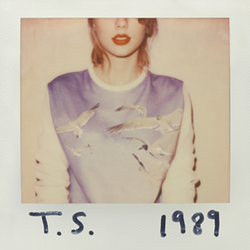
4. Taylor Swift — 1989: the booklet carries another story
Album: 1989 (2014)
Sometimes the container doesn't change how the recording plays at all. Instead, it supplies another layer of information.
Taylor Swift had already established a practice of embedding secret messages in printed lyric sheets. With 1989, particular lowercase letters appeared among capitalized lyrics. Reading the selected letters produced additional messages associated with the songs.
Someone listening digitally receives the music. Someone examining the physical album booklet receives the music plus another information layer. Something has been added to its container.
Clue-solving lesson: Treat captions, labels, indexes, liner notes, margins and other supporting material as potential information channels. Something that appears merely to describe the primary object may contain an independent message.
Verify this: The Guardian — hidden messages in Taylor Swift's 1989 album notes

Community research
Community Contributions
Approved research contributions appear here after review.