
A clue can remain perfectly intact while the solver changes the way it is observed: reverse it, slow it, speed it, isolate a channel, visualize the frequencies or run it through the right machine.
Quick Take
Analysis
One of the most useful puzzle-solving habits is separating the clue or object from the viewing method. If something appears meaningless, the content may not be corrupt; your instrument may simply be wrong.
Music provides dramatic examples because the same audio can be heard, reversed, graphed as a spectrogram or interpreted as computer data.
1. The OKNOTOK cassette computer tones — Radiohead
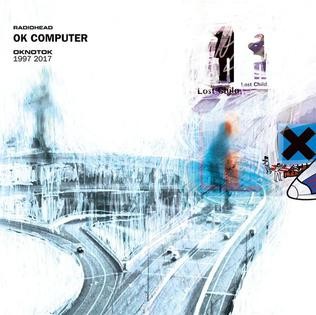
Album: OK Computer OKNOTOK 1997 2017 (2017)
To ordinary ears, the cassette ending is a burst of archaic computer noise. Interpreted by a ZX Spectrum emulator, however, the tones become executable data and reveal a program with names and a message.
Nothing about the recording has changed. Only the decoder has. This is a textbook example of selecting the correct instrument.
Clue-solving lesson: If information resembles the output of a particular technology, try the technology that would naturally consume it.
Verify this: Pitchfork — ZX Spectrum decoding
2. “The Warning” / “My Violent Heart” — Nine Inch Nails

Album: Year Zero era (2007)
Audio associated with Nine Inch Nails’ Year Zero project contains images that become visible when the sound is displayed as a spectrogram. What sounds like noise in the the ordinary sound over time becomes shape in the a visual view of the sound's frequencies.
That is a profound clue-solving idea: the hidden information may exist in a dimension the default representation does not show.
Clue-solving lesson: Change representations. Text can become numbers, sound can become an image, coordinates can become a map, and a list can become a graph.
Verify this: Spectrogram example — “The Warning”
3. “Fire on High” — Electric Light Orchestra
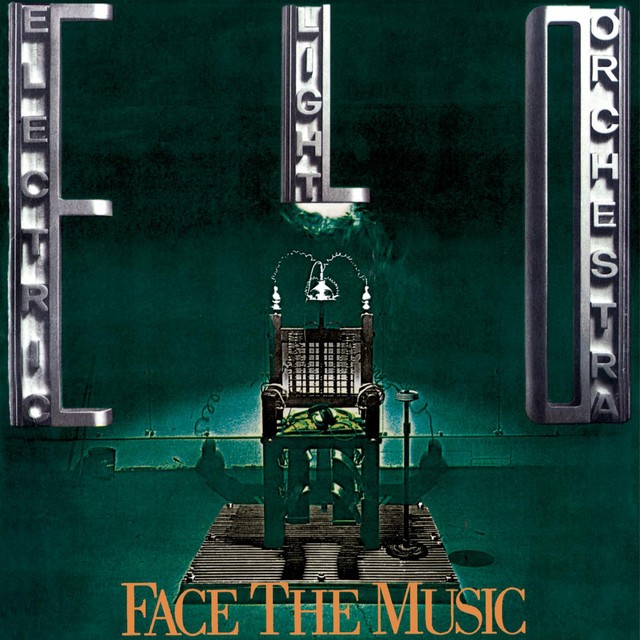
Album: Face the Music (1975)
The reversed speech is unintelligible under normal playback and clear under backward playback. Here the ‘tool’ is merely a direction change, but the principle is identical.
The transformation succeeds because it converts an anomalous passage into coherent information without requiring the solver to alter the source.
Clue-solving lesson: Prefer reversible, evidence-preserving transformations before methods that require arbitrary deletion or substitution.
Verify this: Jeff Lynne Song Database — “Fire on High”
Deep Dive
Puzzle solving is full of representation changes: anagrams rearrange letters; Caesar ciphers reinterpret alphabet positions; maps convert coordinates to space; spectrograms convert frequency over time into an image.
The practical safeguard is to make transformations testable. Write down exactly what you changed. If you cannot reproduce the result from the original clue or object, you may be unconsciously steering the data toward the answer you want.
A good transformation usually increases order. Noise becomes a recognizable picture. Gibberish becomes a sentence. Coordinates land on a relevant feature. The method should reduce ambiguity, not manufacture it.
Bottom Line
When a clue refuses to make sense, do not immediately assume missing information. Ask whether you are using the wrong representation.
The right transformation often makes the result simpler and more coherent than the source appeared to be.
Sources & References
Keep investigating
Open Question
What tool or representation would treat the strange part of the clue as normal input rather than as an anomaly?
Community research
Community Contributions
Approved research contributions appear here after review.