
Music does not have to hide words as words. Rhythm, pitch and repeated tones can carry an entirely separate symbolic language—Morse code being the clearest example.
Quick Take
Analysis
A listener naturally asks what a melody sounds like. A code solver asks a second question: what else could those short and long sounds represent?
That shift—from hearing sound as music to treating sound as symbols—is exactly the kind of category change that solves puzzles. The same marks can be decoration in one context and data in another.
1. “Better Days” — Natalia Gutiérrez and Angelo
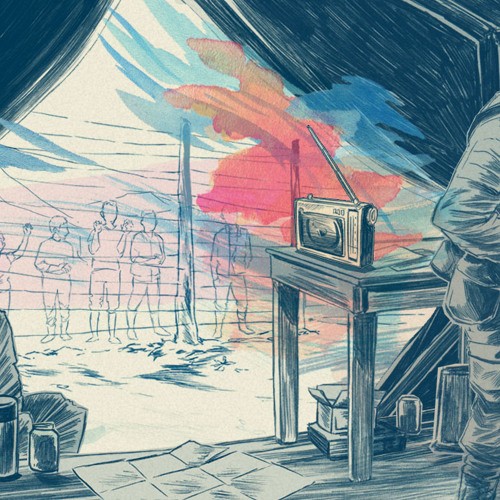
In 2010, a Colombian military communications project embedded Morse code into the chorus of a pop song intended to reach soldiers being held by FARC. The coded message told captives that nineteen people had been rescued, that they were next, and not to lose hope.
The design challenge was extraordinary: the signal needed to be understandable to trained soldiers while blending naturally enough into a pop arrangement that captors would not recognize it as a covert communication. The result demonstrates a hidden message carried inside something that still works normally in its purest form—the existence of the message is concealed inside an innocent-looking thing carrying the hidden message.
Clue-solving lesson: Sometimes the cover story is not a false statement; it is a perfectly functional object carrying a second information layer.
Verify this: Background and production history of “Better Days”
2. “Amarok” — Mike Oldfield
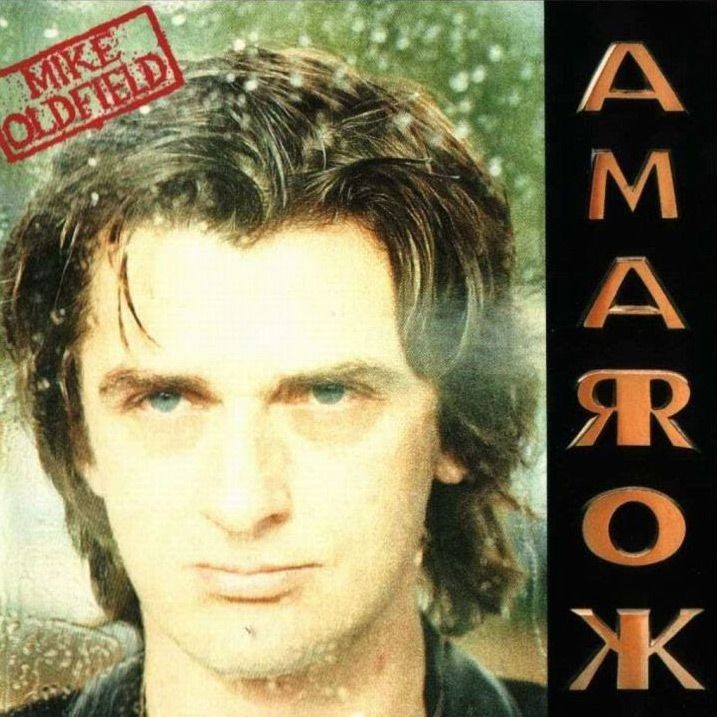
Album: Amarok (1990)
Near the forty-eight-minute mark, bright synthesized tones form a Morse-code message aimed at Richard Branson. Oldfield publicly turned discovery into a puzzle by offering a cash prize for finding the hidden message.
The key observation is that the sounds do not need to resemble speech. Once the solver recognizes a a pattern with two repeating kinds of signals—short/long, on/off, high/low, light/dark—the material can be tested against binary-style encodings.
Clue-solving lesson: When information repeatedly alternates between two distinguishable states, consider whether the states are symbols rather than aesthetics.
Verify this: Dark Star / Mike Oldfield — Amarok notes
3. X&Y — Coldplay

Album: X&Y (2005)
The album artwork uses colored blocks based on Baudot code, an early telegraphic system. The cover encodes the album title, while the booklet provides the alphabet and uses the system elsewhere, including a coded ‘Make Trade Fair’ message.
This is especially useful for treasure hunters because the code key is effectively supplied by the clue or object itself. The challenge is recognizing that the decorative blocks belong to a communication system.
Clue-solving lesson: Before searching for an external cipher key, inspect the surrounding material. A puzzle may teach you its alphabet before asking you to read it.
Deep Dive
Morse and Baudot work because they reduce language to a limited set of states. Treasure clues often do the same thing with colors, shapes, capitalization, long and short words, left and right turns, filled and empty boxes, or repeated object types.
The trap is assuming that visible variety equals meaningful variety. Coldplay’s colored blocks are a good example: the colors attract attention, but the underlying presence/absence pattern is what carries the code. In puzzle solving, the most conspicuous feature may be camouflage for the feature that actually varies systematically.
A practical method is to inventory the states before decoding them. How many distinct states exist? Two suggests binary or Morse-like thinking. Three may suggest ternary, traffic-light logic or grouped categories. Five-bit groups suggest systems such as Baudot. The structure can narrow the code family before you translate a single symbol.
Bottom Line
Music shows that a code can hide in plain hearing because the thing carrying the hidden message still performs its ordinary job. A melody remains a melody while also functioning as a transmission.
When a clue contains conspicuously regular pulses, pairs of states or grouped symbols, first ask whether you are looking at language translated into another alphabet.
Sources & References
Keep investigating
Open Question
What features in an ordinary-looking clue could be doing double duty—serving the surface design while also functioning as a symbolic alphabet?
Community research
Community Contributions
Approved research contributions appear here after review.