At first glance, the treasure collection looks like a dazzling assortment: ancient gold, rare gemstones, sports memorabilia, historic documents, Fabergé, a piece of the Moon, physical Bitcoin and objects once hidden in Forrest Fenn’s famous chest.
But when the items are placed in best-known acquisition order, a second story begins to appear. The collection stops looking like a static catalog and starts looking like a journey—one that can be followed through auction dates, dealer listings, archived pages, provenance trails and a few stubborn mysteries.
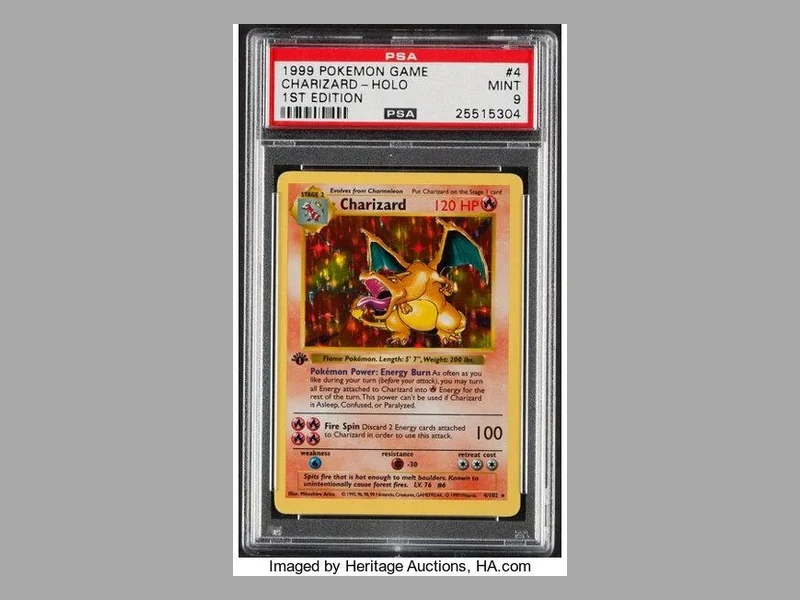
The April 2021 Charizard sale gives the reconstructed timeline one of its earliest firm dates.
This research pass followed all 64 items currently represented in the Treasure Collection Explorer. The goal was not to force every object into a neat date or price. It was to separate what can actually be demonstrated from what is merely plausible, and to make the trail easier for other hunters to inspect for themselves.
One of the earliest firm anchors is the 1999 First Edition Charizard, sold by Heritage on April 15, 2021 for $31,200. From there, the trail accelerates rapidly through the summer and fall of 2021.
Analysis
A collection begins to take shape
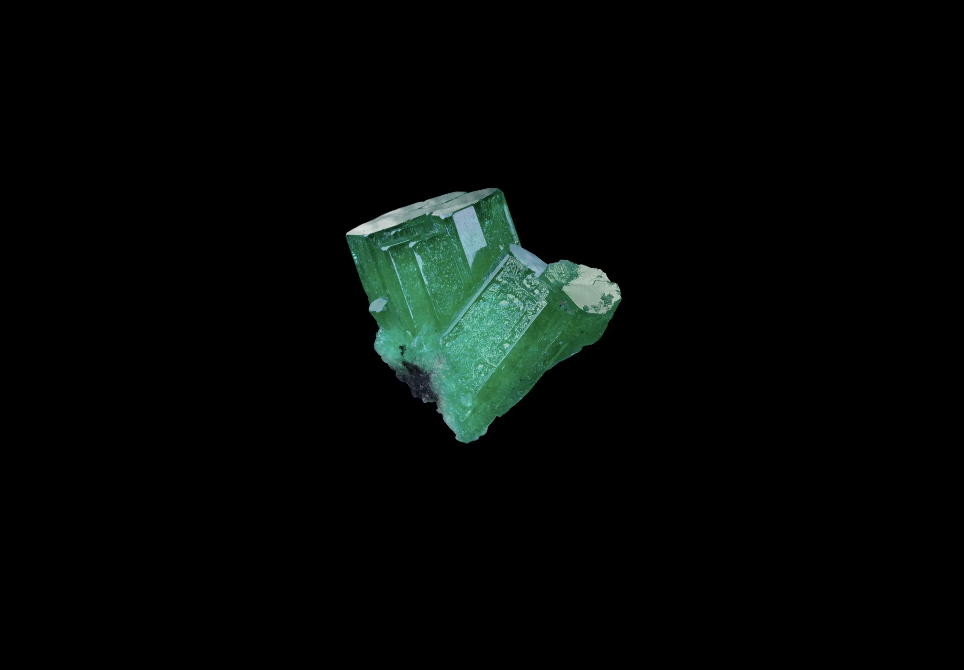
The earliest portion of the reconstructed timeline is a mixture of exact auction dates and bounded dealer evidence. A Costa Rican necklace appears after a March 2021 listing point. The Charizard follows on April 15. A 120-carat Sri Lankan sapphire can be bounded to after May 7, while the 96-carat Chivor emerald has a much wider window because the surviving web evidence does not reveal the exact transaction date.
That distinction matters. A dealer page changing to Sold can establish a useful boundary without proving the day Collins-Black bought the object. The Explorer now labels those cases differently from confirmed auction transactions rather than pretending the evidence is equally precise.
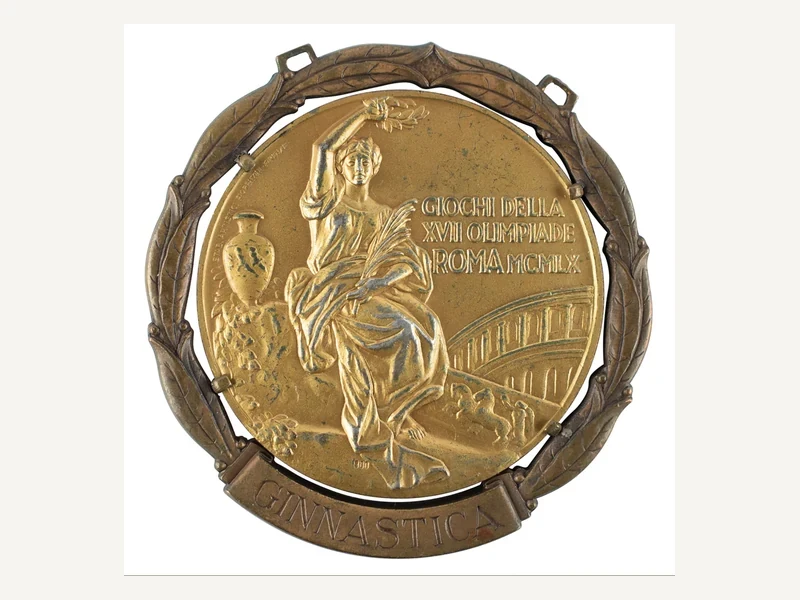
Auction records place both Olympic medals on July 22, 2021.
July 2021: the pace changes
By July, the record becomes much sharper. The Michael Jordan Fleer rookie card is tied to July 17. On July 22, auction records place both the 1960 Rome Olympic gold medal and the 1996 Atlanta Olympic gold medal in the acquisition stream, along with the Chavín gold cup.
Then comes one of the most revealing clusters in the entire collection: the Tuyet Nguyet and Stephen Markbreiter collection sold through Sotheby’s Hong Kong.
The Tuyet Nguyet group became one of the clearest acquisition clusters once the Hong Kong auction timing was reconciled.
The Treasure Collection includes twelve rings from that group plus the gold deer-and-bird box. Earlier working data placed the rings on July 27 and the box later in August. The Sotheby’s catalog resolves the apparent mismatch: the Hong Kong lots closed July 28 local time, which was still July 27 in Central Daylight Time. The box belonged to that same sale. That makes the thirteen objects a single, coherent acquisition event rather than two unrelated purchases.
This is exactly the kind of correction that becomes visible only when source records are compared rather than copied at face value.
Shipwreck gold added another source-rich cluster in August 2021.
August through October: shipwreck gold, design and history
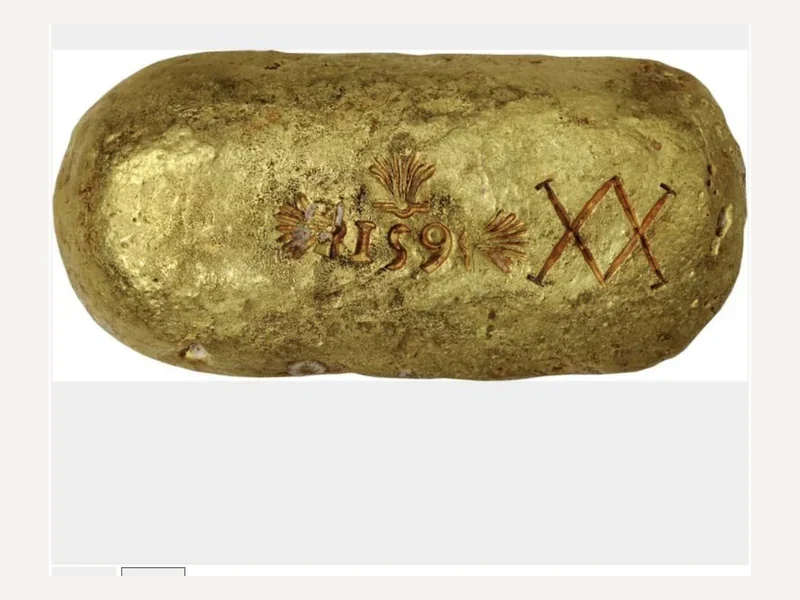
August 20 adds two substantial pieces of gold recovered from Nuestra Señora de la Luz: a gold disc and a 735.6-gram Spanish colonial oblong bar. Stack’s Bowers preserves unusually rich provenance for the bar, including an earlier Sotheby’s appearance in 1993.
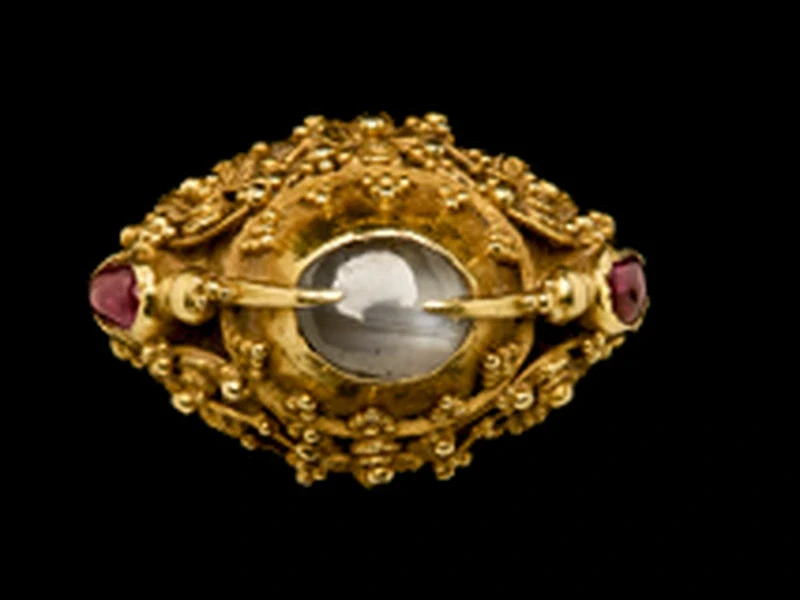
The autumn becomes a remarkably varied run. A Jackie Kennedy bow brooch can be bounded to after September 21. Mark Oros’s 200-carat smoky quartz follows on October 1. October 7 brings a Neolithic jade bracelet and a Viking gold ring. October 12 then produces a dense group spanning Native American jewelry, Art Smith designs and ancient Mediterranean gold.
Those October records also show why a single number labeled “price” can be misleading. Depending on the item, the surviving figure may be a realized auction price, an asking price, a book estimate or a later comparable. The research notes now preserve that context instead of flattening unlike numbers into the same category.
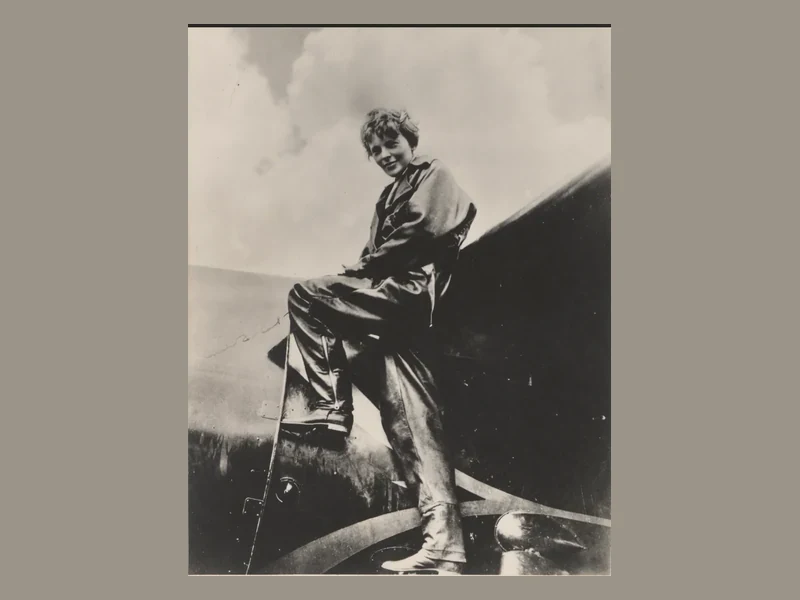
RR Auction preserves a precise October 21, 2021 sale record for the Earhart photograph.
Objects with unusually clean paper trails
Some treasures leave almost no ambiguity. RR Auction’s Amelia Earhart photograph record identifies the exact lot, closes the sale on October 21, 2021, describes the 7-by-9-inch signed photograph and records a $2,069 realized price including buyer’s premium.
The Nuestra Señora de la Luz 8-escudos coin is another useful correction. The earlier working date was November 2, but Daniel Frank Sedwick’s original auction record places the sale on November 4, 2021 and preserves certification and earlier pedigree information.
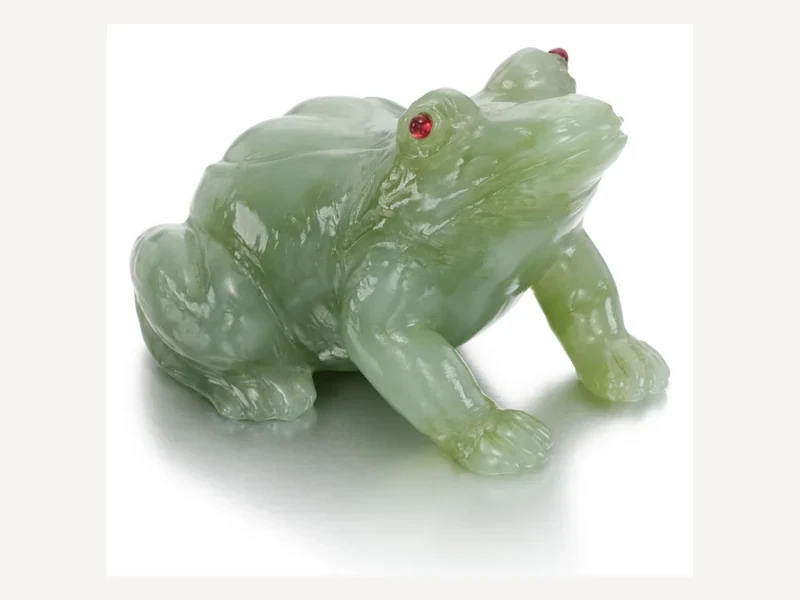
The Fabergé frog is unusually well documented, down to maker context, dimensions, materials and exhibition history.
On November 30, two Fabergé pieces appear together: the jeweled bowenite frog and a gold-mounted nephrite magnifying glass. Sotheby’s records add far more than dates and prices. The frog is identified as St. Petersburg work from circa 1900, with cabochon-ruby eyes and documented exhibition history. The magnifying glass is attributed to Michael Perkhin and carries an inventory number.
Those details matter because they turn a treasure image into a traceable historical object. They also make it easier to distinguish the exact piece from similar Fabergé examples elsewhere on the web.
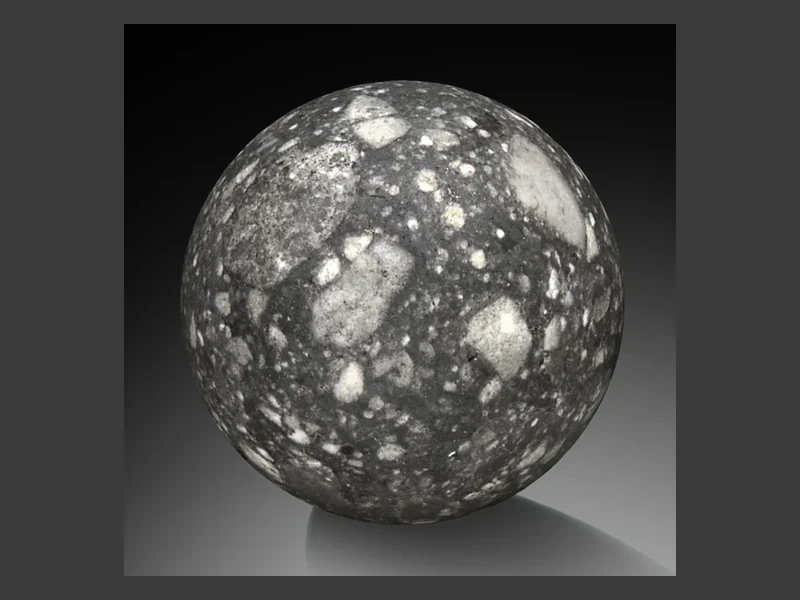
Sotheby’s identifies the lunar sphere as NWA 12691 and records its December 3, 2021 auction date.
December 2021: from the Moon to Tiffany glass
December opens with one of the collection’s most memorable objects: a sphere fashioned from lunar meteorite NWA 12691. Sotheby’s identifies it as a lunar feldspathic regolithic breccia, 30 millimeters in diameter and 37.73 grams—about 188 carats. The lot closed December 3, 2021.
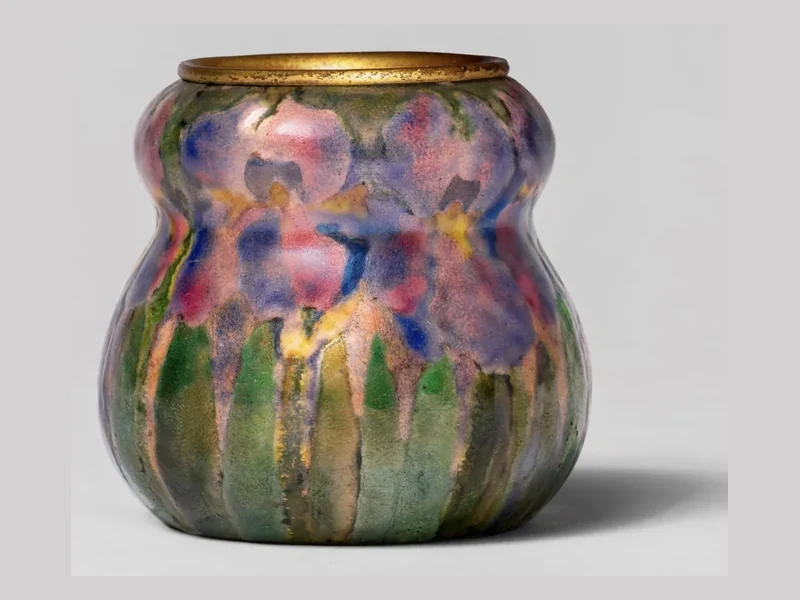
Six days later comes Michele della Valle’s citrine-and-diamond necklace. On December 10, the Tiffany Studios Iris vase follows. Together they illustrate how quickly the collection jumps between categories: extraterrestrial material, contemporary jewelry and turn-of-the-century decorative art, all within a single week.
The Tiffany Iris vase closes another well-documented stretch of the 2021 acquisition trail.
2022: commissions and the Forrest Fenn connection
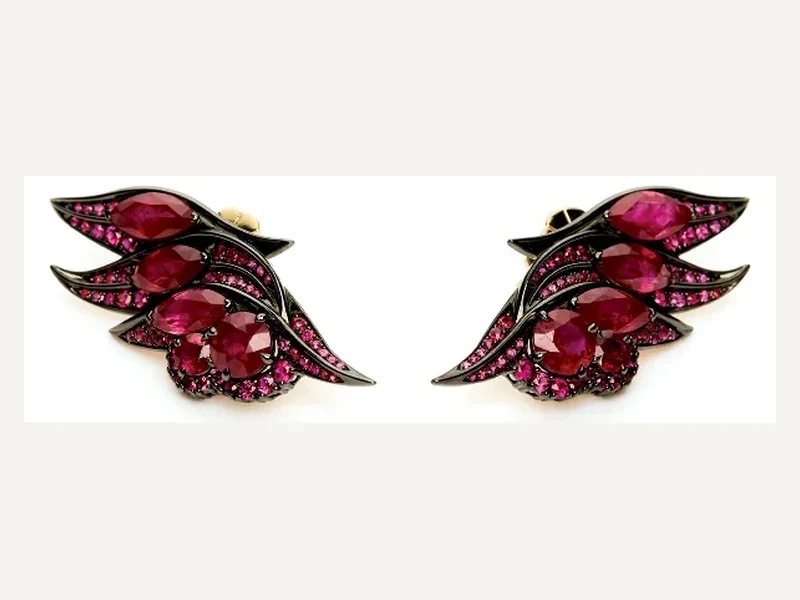
The Angie Marei ruby earrings were previously sitting in the undated portion of the collection. Designer evidence now supports a 2022 commission window. That does not give us an exact transaction day, so the Explorer treats the date as bounded rather than confirmed.
Designer evidence moves the ruby earrings from an undated mystery to a 2022 commission window.
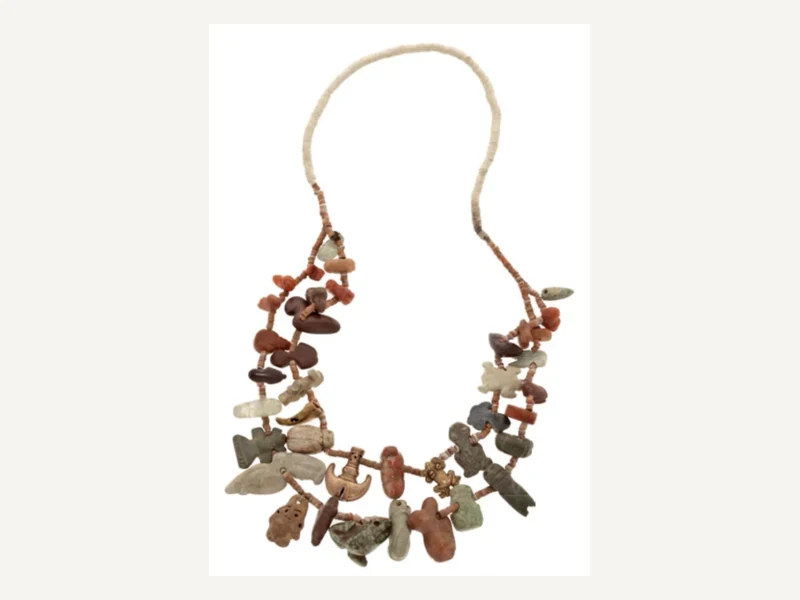
Later that year, four objects create another unmistakable cluster. Heritage’s December 12, 2022 sale of material from Forrest Fenn’s treasure ties the Tairona necklace, autobiography jar, gold beads and Alaska gold nugget to the same day. Their realized prices ranged from $6,600 for the beads to $48,000 for the autobiography jar.
Four Forrest Fenn objects form a firmly dated December 12, 2022 acquisition cluster.
The research also changed what some objects actually are
Chronology was only part of the job. In a few cases, identifying the transaction meant first identifying what had actually been purchased.
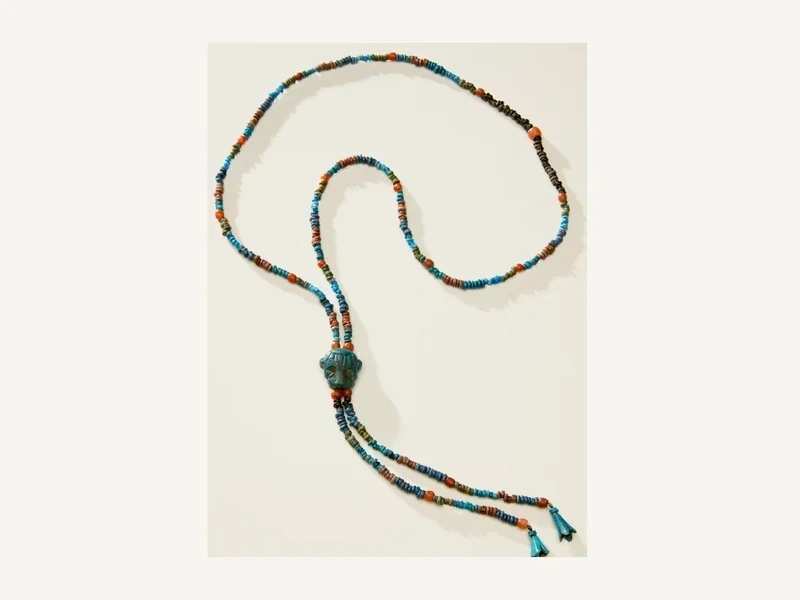
The Egyptian faience and carnelian necklace is the clearest example. The surviving Medusa Ancient Art record is not a listing for the finished necklace shown in the treasure collection. It is a sold group of ancient components: a faience leopard spacer bead, two lotus amulets and loose multicolored faience and carnelian beads. The finished treasure necklace was subsequently assembled by Collins-Black.
Research separated the ancient purchased components from the finished necklace later assembled by Jon Collins-Black.
That changes how the record should be read. The ancient components have their own archaeological history and dealer provenance; the final necklace has a later design history. Treating those as the same event would blur the evidence.
And then there are the mysteries
Fifteen items still lack a defensible acquisition date. They include Cleopatra’s Tear, the 21-ounce California nugget, the Thoreau journal pages, George Washington’s jelly glass, the Andrew Carnegie emerald, an Aguas Zarcas meteorite fragment, the 12-carat tsavorite, the Greek amethyst necklace, the Picasso pendant, the Egyptian component group, two physical Bitcoins, the 116.7-carat tanzanite, the 9.65-carat octahedral diamond and the 351.61-gram Australian nugget.
Some objects still resist exact acquisition dating; comparable sales are useful context, but not substitutes for transaction evidence.
Several of these have tempting clues. Comparable auction sales exist for physical Bitcoins. Scientific sources can tell us when Aguas Zarcas fell to Earth. Dealer pages can establish specifications and asking prices. The Arkenstone has publicly confirmed helping source major mineral specimens for the hunt. But none of those facts automatically proves when Collins-Black acquired the exact object.
So those records remain at the end of the acquisition sequence as Unknown / research pending. That is not a failure of the database. It is the database doing its job.
Deep Dive
What “best-known acquisition order” really means
The order in the Explorer is an evidence-based reconstruction, not a claim that every position is known to the day. The sequence follows a simple hierarchy:
Confirmed transactions first. When an auction house or other strong source gives an exact sale date for the exact object, that date controls.
Bounded evidence next. When archived dealer pages, commission information or other evidence establishes only “after,” “before,” or a year-level window, the item is placed as carefully as the evidence permits and labeled accordingly.
Unknowns stay unknown. A later comparable sale, current asking price or general history of the object does not become an acquisition date merely because it would make the timeline look complete.
Why source type matters
The research repeatedly exposed three different kinds of evidence. Treasure-specific evidence connects Collins-Black to the exact object or transaction. Object-history evidence tells us authoritative facts about the artifact, mineral or maker without proving his purchase. Comparable evidence shows what a similar object sold for or how it was described elsewhere.
All three can be useful. Only the first can independently establish an acquisition.
A collection with a visible rhythm
Even with the unresolved tail, the known dates reveal a striking rhythm. The collection builds through spring 2021, accelerates in July, moves through concentrated auction activity in the fall, continues into December, and then picks up a smaller number of identifiable additions in 2022. That pattern is much easier to see in acquisition order than in chapter order.
It also gives hunters a new way to explore the material. Instead of asking only, “Which chapter contains this object?” we can ask, “What else was being acquired at the same time?” Clusters can expose shared auction houses, geographic markets, dealers, collecting themes and research trails that are almost invisible when every item is studied alone.
The questions still on the table
The unresolved end of the timeline is not just a list of blanks. It is an open research challenge. Several questions could materially improve the Explorer if a hunter turns up the right auction catalog, archived dealer page, dated photograph, interview, certification record or other reliable source.
When were the remaining undated treasures actually acquired? Fifteen records still lack a defensible acquisition date. To make the open work easier to scan—and easier for another hunter to tackle—the outstanding needs are listed item by item below.
Open research checklist
☐ Cleopatra’s Tear Ruby Pendant Necklace — Find the actual acquisition date and, if possible, the transaction price paid rather than a later/current reference value.
☐ 21-Ounce California Gold Rush Nugget — Identify the acquisition date and the original dealer, auction, or transaction record.
☐ Two Original Pages from Henry David Thoreau’s Journal — Identify when the pages were acquired and the transaction price or original sale record.
☐ George Washington’s English Rose-Patterned Jelly Glass — Establish the acquisition date and connect the known dealer/provenance trail to Collins-Black’s transaction.
☐ Andrew Carnegie Emerald — Find the acquisition date, transaction price, and exact sale/dealer record for the specimen.
☐ Aguas Zarcas Meteorite Fragment — Match the exact specimen to an acquisition record and date; scientific information about the meteorite alone does not establish the purchase.
☐ 12-Carat Tsavorite Garnet — Find the acquisition date and replace the current estimate/comparable context with transaction-specific evidence if available.
☐ Greek Amethyst and Gold Bead Necklace with Hercules Pendant — Identify the acquisition date and exact transaction record; the known dealer material does not yet date Collins-Black’s purchase.
☐ Pablo Picasso — Jacqueline au Chevalet Gold Pendant — Find the acquisition date and exact sale record for Collins-Black’s example rather than relying on edition documentation or comparables.
☐ Egyptian Faience Leopard Bead / Necklace Components — Determine when Medusa item M9766 sold and, if possible, confirm the component purchase price before the pieces were assembled into the finished necklace.
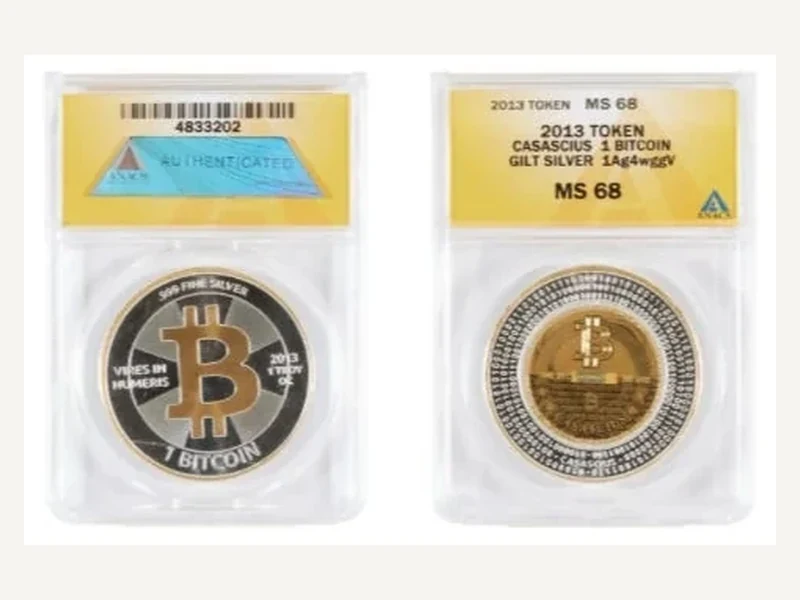
☐ 2013 Casascius “Gold Rim” 1 Bitcoin — Match the exact certified coin to its original transaction using certification number, firstbits, archived listing, photographs, or equivalent evidence.
☐ 116.7-Carat Pear-Cut Tanzanite — Identify the acquisition date and exact dealer/transaction record for the stone.
☐ 9.65-Carat Natural Octahedron Diamond — Identify the acquisition date, transaction price, and exact dealer/transaction record for the crystal.
☐ 351.61-Gram Australian Gold Nugget — Find the acquisition date and original transaction record; replace bullion/reference valuation with the actual purchase price if it can be established.
☐ 2016 BTCC Mint V Series Titanium 1 Bitcoin — Match the exact coin to its original transaction and acquisition date; later sales of similar BTCC coins remain comparables only.
Some objects still resist exact acquisition dating; comparable sales are useful context, but not substitutes for transaction evidence.
Can the physical Bitcoins be matched to their exact transaction records? Comparable sales help establish context, but certification numbers, firstbits, archived listings or photographs could potentially connect the specific coins to an original sale.
When did Medusa item M9766 sell? The surviving listing identifies the ancient Egyptian component group used in the necklace, but the date on which that listing changed hands remains unresolved. Finding an archived version could help place the necklace’s construction more precisely.
Can broad acquisition windows be narrowed? The 96-carat Chivor emerald is a good example: the surviving evidence provides boundaries, but not the exact transaction date. Similar archival discoveries could tighten other records.
Which recorded values are actual purchase prices? Some entries still rely on asking prices, book estimates, bullion calculations or comparable sales. Original invoices or exact auction records could replace those reference values with transaction-specific evidence.
Can an exact dealer or auction record be found for the remaining mineral and jewelry pieces? Knowing the maker, dealer or specimen history is useful, but the strongest evidence would connect the exact treasure object to Collins-Black’s acquisition.
A standing invitation to hunters
If you can answer one of these questions, consider it an invitation to help improve the record. An original auction listing, archived dealer page, catalog entry, dated photograph, interview, receipt reference or other reliable source may be enough to move an item from Unknown into the dated acquisition sequence—or to replace an estimate with something firmer.
The goal is not to reward the first plausible answer. It is to find evidence strong enough that another hunter can follow the same trail and reach the same conclusion. When a question is resolved, the research can be updated rather than frozen in place.
Leave your mark on the research
This article also accepts Community Contributions. That means a useful discovery does not have to disappear into a private message or get buried in a discussion thread. Hunters can submit evidence and research directly for review.
The strongest contributions may also earn a place in the article’s Top 10 Community Contributions section. That gives especially valuable research a prominent, lasting home alongside the article it helped improve—with the contributor’s chosen display name attached for readers to see.
If this page becomes a regular reference point for hunters following the collection, that Top 10 becomes more than a comment section. It becomes a visible record of the people who helped move the research forward. Solve a stubborn provenance question, uncover a missing auction record, narrow an acquisition date, or find evidence that changes our understanding of an item, and your contribution could become part of the documented history of the hunt.
And, of course, there is one unusually direct source who could someday make several of these mysteries much easier: Jon Collins-Black himself. If he ever chooses to clarify an acquisition date, dealer, price or provenance detail, those answers can be compared with the documentary trail and incorporated into the Explorer.
Bottom Line
The 64-item audit did not produce 64 perfect purchase receipts—and that was never the standard. It produced something more useful: a collection in which confirmed facts, bounded dates, object history, comparables and unresolved questions are kept separate.
The result is now reflected in the Treasure Collection Explorer’s default acquisition-order view. The most important corrections include the July 2021 Tuyet Nguyet cluster, the November 4 date for the Luz coin, the 2022 Angie Marei commission evidence and the distinction between the Egyptian components that were purchased and the necklace later assembled from them.
There is still room for the record to improve. An old dealer archive, auction receipt, interview, catalog scan or collector’s research could move one of the remaining unknowns into the dated sequence tomorrow. When that happens, the right response is not to defend the current order—it is to update it.
That is the point of keeping the source trail open. The Explorer is not meant to end the research. It is meant to give the next hunter a better place to begin.
Medusa Ancient Art — Egyptian leopard spacer bead and associated components.
1stDibs — George Washington English rose-patterned jelly glass.
The Treasure Collection Explorer contains additional item-level source records beyond this selected reading list.
Keep investigating
Open Question
Can you help close one of the remaining gaps? The checklist above identifies the specific evidence still needed for fifteen undated treasures, while several other records retain bounded dates, estimates or comparable values. Reliable source records can help improve the Treasure Collection Explorer. Submit a Community Contribution for review; especially valuable findings may be featured in this article’s Top 10 Community Contributions, preserving the contributor’s chosen display name alongside the research they helped advance.
Community research
Community Contributions
Approved research contributions appear here after review.
No approved community contributions yet.
Contribute to this Research
Share your strongest relevant evidence, correction, interpretation, challenge, connection, context, research lead, question, or editorial suggestion. This is for substantive research contributions rather than general conversation.
Email privacy: Your email address is private. It is not displayed publicly, used for marketing, sold, or shared at any time with anyone outside StaceyToon.com. It is used only for verification, contribution-limit/moderation controls, and necessary contribution-status communication.
Community research
Community Contributions
Approved research contributions appear here after review.