The evidence begins failing after the treasure is hidden
The placement matters. Greninja and Golem help Jon reach the hiding decision, the group circles back, the box is left behind, and Jon is glad he took photographs so he will not forget the day (Chapter 25, p. 219, lines 18–21). Froakie stays, Jon says goodbye, and he returns toward where the day began (p. 220, lines 1–5).
Only then does the chapter reveal that the photographs cannot perform the job Jon expected of them. Most are terribly overexposed (p. 220, lines 6–9). The memory-preservation tool has failed immediately after Jon tells us he wanted the pictures so he would not forget.
The one surviving image is itself uncertain
The exception is not reassuring. Jon says only one picture was preserved well enough to make sense of, yet he does not remember taking it. He can only reckon that it came from closer to the end of the day (Chapter 25, p. 220, lines 10–12).
So the chapter leaves us with a peculiar hierarchy of evidence: the photographs Jon knowingly took are largely unusable, while the one usable photograph is the photograph he cannot remember taking.
Then Jon explicitly calls it evidence
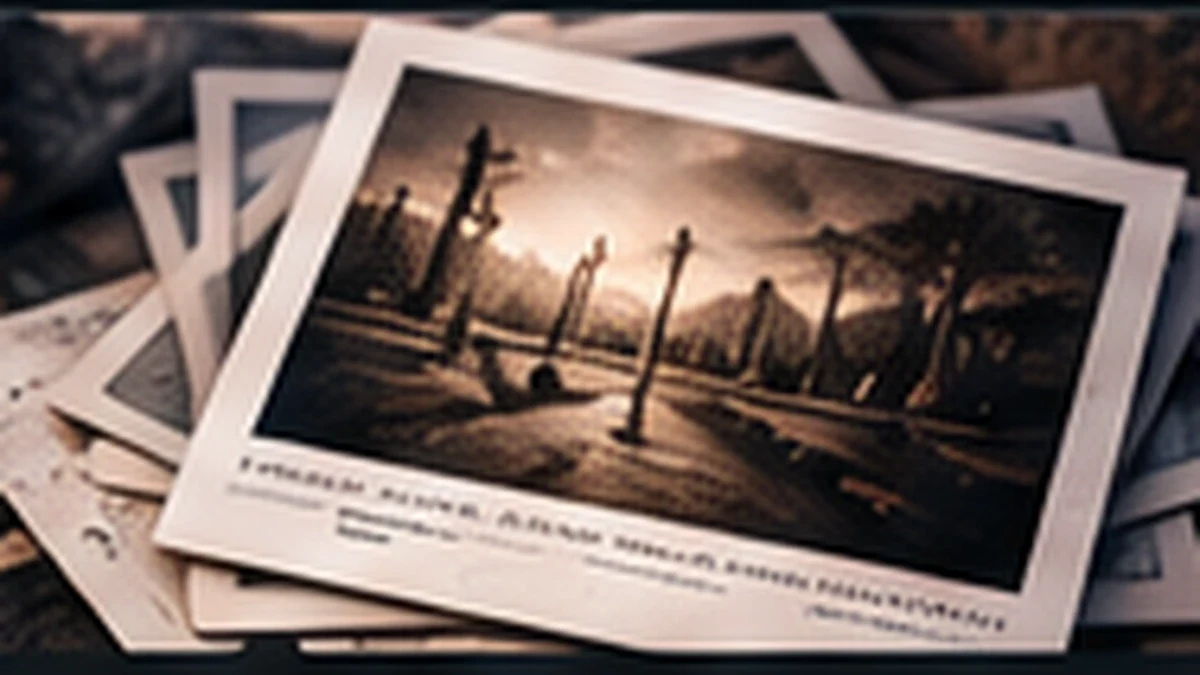
The final escalation is the word itself. Jon does not merely call the surviving image a souvenir or photograph. He says the snapshot is the only evidence that any of the adventure happened at all, and then says he is sharing it in the book (Chapter 25, p. 220, lines 12–14).
That wording turns the reader into something like an examiner. We are not just being shown an illustration; we are being handed an exhibit and told it is evidentiary.
What if “unreliable” is an instruction rather than a flaw?
The adult story is already openly fantastical. Pokémon talk, guide Jon, interpret animals, and help select a hiding place. The ending does not resolve that tension by returning to ordinary documentary certainty. It makes certainty even weaker.
This may be deliberate. If the story is a metaphorical overlay on a real hiding trip, then an unreliable surface narrative would be appropriate: the literal account is not the thing to reconstruct exactly. The hunter may instead need to identify which details correspond to real features, actions, objects, or instructions beneath the whimsical layer.
Community research
Community Contributions
Approved research contributions appear here after review.