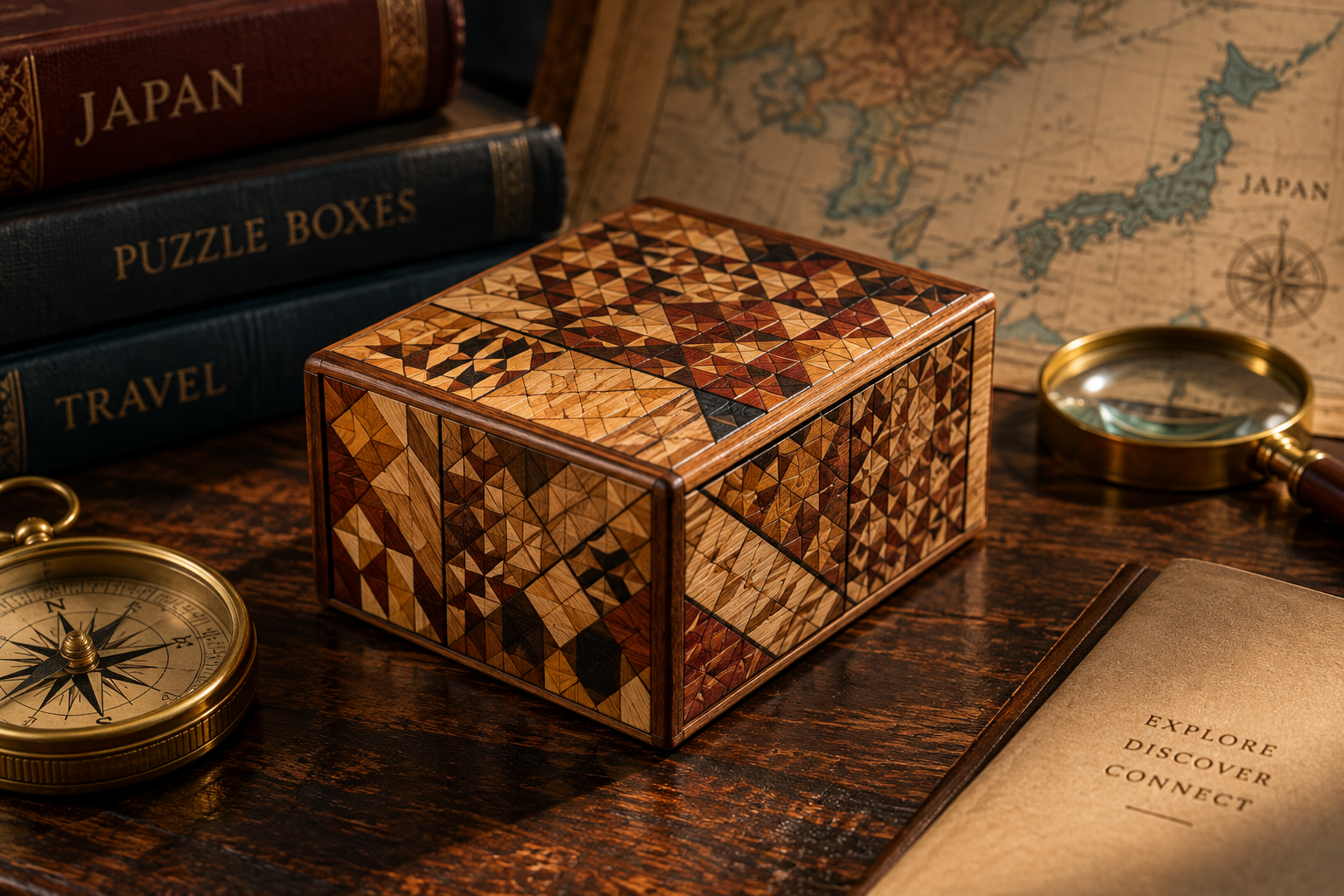
The Puzzle Box as a Possible Instruction Model
The Japanese puzzle box may model how Chapter 25 itself should be solved: study the surface, find the right movements, and discover the opening.
ReadTopic
Research centered on the Pokémon treasure chapter.
The Japanese puzzle box may model how Chapter 25 itself should be solved: study the surface, find the right movements, and discover the opening.
Read
Young Jon's creature-hunting childhood and Adult Jon's Froakie journey may be two versions of the same experience told in different languages.
Read
Chapter 25 ends by undermining its own evidence, raising the possibility that the surviving photograph is meant to be interpreted, not merely viewed.
Read
Froakie stays where the treasure stays, inviting the possibility that the companion represents something Jon deliberately leaves behind.
Read
Dream, sleep, rest, and idea frame Chapter 25 around states of mind, raising the possibility that its fantasy operates as meaningful metaphor.
Read
Jon defines Pokémon as treasure, then fills the hiding story with Pokémon that repeatedly guide, correct, and redirect him.
Read
Chapter 3 contains the clearest echoes of Chapter 25, while other chapters add recurring language, images, and ideas worth tracking.
Read
A recurring D/T pattern appears in Chapter 25 through both word-internal letter order and phrase initials, but its purpose remains unresolved.
Read
No. In 2008, Wikitude used smartphone features to overlay location information onto the user's view of the real world.
Read
While studying Chapter 25, the Pokémon chapter of There’s Treasure Inside, one pattern began appearing often enough that I stopped treating each occurrence as an isolated coincidence: the repeated presence of P and M, sometimes in the order P/M and sometimes reversed as M/P. At this point, I don't claim to know exactly what the pattern means. What interests me is its persistence—and the possibility that the reversal itself matters.
Read