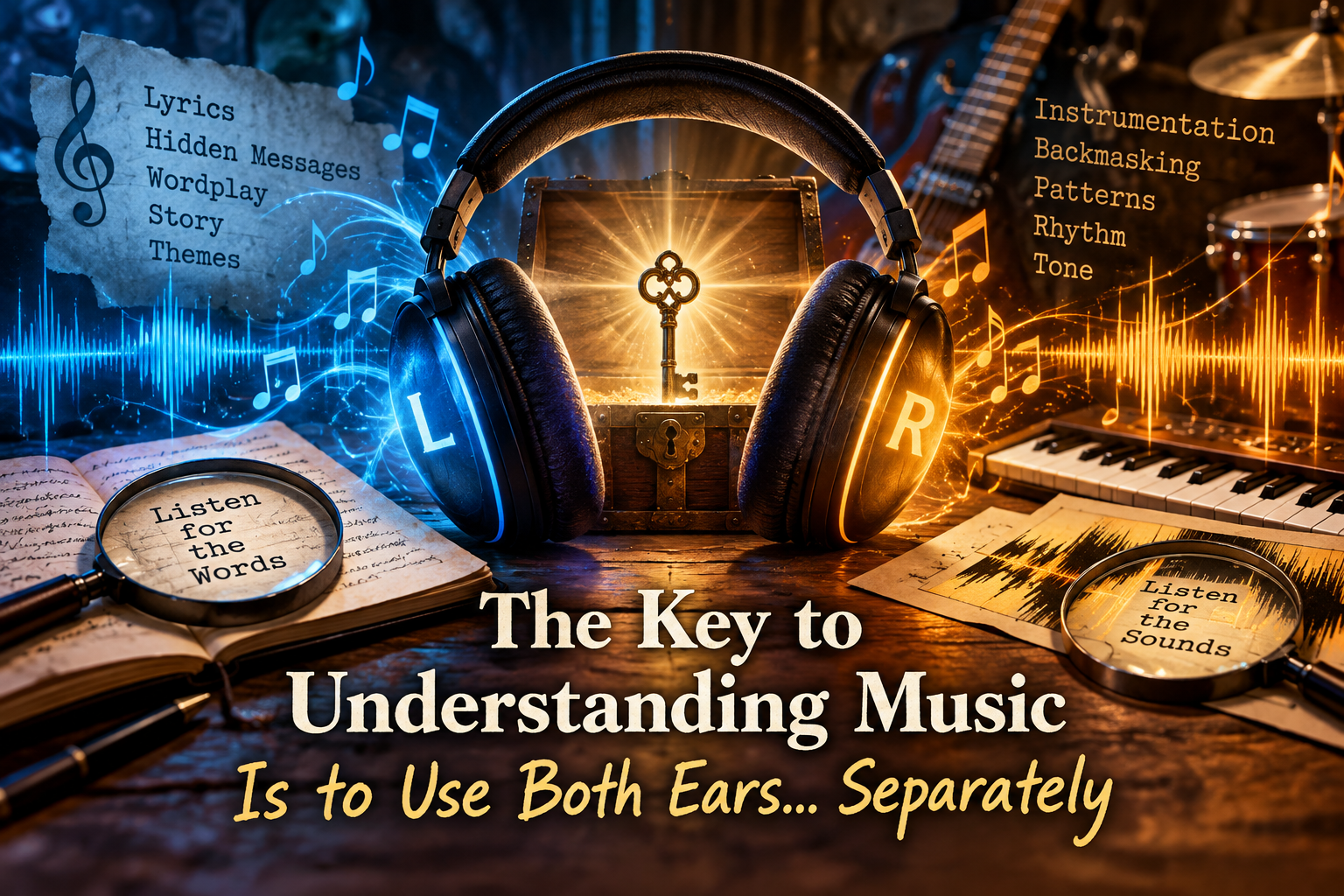
That title does not make much sense—at least, not if you take it literally.
You have two ears because they are supposed to work together. But songs can ask us to do something stranger: hear the same words one way, then hear them again after learning what the songwriter intended.
And there is another word in the title worth keeping in the back of your mind: Key.
Sometimes the best-hidden message is not encrypted. You may have heard every word correctly and still missed what the songwriter was doing with it. A disturbing story can sound joyful. A song about obsession can sound romantic. A literal setting can become a metaphor. An ordinary word can carry another meaning underneath the first.
For a clue solver, that creates an important habit: understanding what the words say is not necessarily the same thing as understanding what the writer intended them to mean.
Analysis
1. “Every Breath You Take” — The Police
Album:Synchronicity
“Every breath you take … I’ll be watching you.”
Read as devotion, the words can sound intensely romantic. Read as surveillance, the same promise becomes unsettling.
Sting has described the song in terms of jealousy, possession, surveillance and control. The words do not change; the listener’s understanding of the narrator does.
Clue-solving lesson: Ask who is speaking—and whether you have assumed that person’s intentions.
The line is easy to lose inside one of the most exuberant records of its era, yet it points toward the relationship doubt underneath the party atmosphere.
André 3000 has discussed the song in terms of unhappy relationships and people remaining together because convention tells them they are supposed to.
Clue-solving lesson: Presentation can be misdirection. Do not let emotional packaging determine meaning before examining the information itself.
At the surface level, the line belongs naturally to a hotel. It changes once the hotel itself is no longer assumed to be merely a building.
Don Henley has described the song in broader metaphorical terms involving America, excess, the music business and the darker side of the American dream.
Clue-solving lesson: Before searching for a noun, ask whether the noun represents something else.
Those few words can sound celebratory when delivered by a huge chorus and pounding arrangement. Repeating the title alone, however, does not tell the story in the verses.
The song follows a Vietnam veteran struggling after returning home. Springsteen has discussed the veterans behind it and characterized the work as a protest song.
Clue-solving lesson: The loudest clue is not automatically the controlling clue.
The lyric is not especially hidden once you focus on it. The misdirection comes from how easily its darkness slides past inside music that feels breezy and infectious.
Mark Foster has discussed the deliberate irony of putting serious material beneath upbeat music and using music and melody to communicate different layers of a story.
Clue-solving lesson: Contradiction can be intentional information. The mismatch itself may matter.
It is remarkably direct language for a song remembered first by many listeners for its bright, bouncing hook. The presentation makes explicit information surprisingly easy not to process.
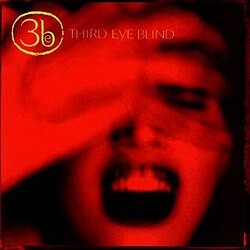
Stephan Jenkins has connected the song directly to crystal meth use and to the broader idea of continually wanting something without becoming satisfied.
Clue-solving lesson: What is easiest to notice may not contain the most information.
“Every new beginning comes from some other beginning’s end.”
In a bar, the line works as last-call philosophy. With Dan Wilson’s explanation in hand, the same thought becomes strikingly literal: one enclosed existence ends as a new life begins.
Wilson has explained that while writing the song, the impending birth of his daughter became another major meaning inside it. The surface interpretation can be correct without being complete.
Clue-solving lesson: A correct interpretation does not prove that you have found the complete interpretation.
None of these examples requires an elaborate cipher. They require resisting the urge to stop at the first interpretation that makes sense.
Across the examples, a narrator’s intentions are misread; happy music disguises unhappy subject matter; a literal place becomes metaphor; a conspicuous chorus overwhelms its verses; opposing emotional signals are deliberately paired; and ordinary words carry more than one meaning.
A useful question follows: What else could this mean without changing the words?
Which brings us back to the title. Using both ears “separately” is impossible as literal listening advice. Figuratively, one ear can hear the surface story while the other listens for the second one.
And Key? It can mean the thing that unlocks an answer. In music, it means something else too.
The title has been demonstrating the lesson from the beginning.
Bottom Line
The goal is not to invent a more complicated interpretation. It is to recognize when a valid first interpretation may be incomplete.
The strongest double meanings allow both readings to work. For clue solving, an answer that fits can sometimes become the beginning of another test rather than the end of the search.
Hear what is there. Then ask whether you have heard all of it.
Sources & References
The Police — “Every Breath You Take.” Sting on surveillance, possession and obsession. MusicRadar.
OutKast — “Hey Ya!” André 3000 discussion of relationships and convention. Interview quotation/reference. Editorial: replace with strongest available primary interview source before publication.
Eagles — “Hotel California.” Don Henley on the song’s broader metaphor. CBS News.
Foster the People — “Pumped Up Kicks.” Mark Foster on the deliberate contrast between upbeat music and dark subject matter. SFGate.
Third Eye Blind — “Semi-Charmed Life.” Stephan Jenkins discussion of methamphetamine use and the song’s theme. American Songwriter.
Semisonic — “Closing Time.” Dan Wilson discussing the childbirth layer. Dan Wilson interview.
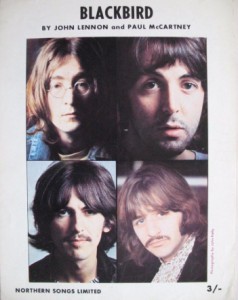
The Beatles — “Blackbird.” Paul McCartney discussion of the song’s civil-rights meaning. McCartney interview reference. Editorial: prefer the original interview publication where available.
Keep investigating
Open Question
When a clue has an obvious interpretation that works, what evidence would justify testing whether the same words also support a second meaning?
Approved research contributions appear here after review.
No approved community contributions yet.
Contribute to this Research
Share your strongest relevant evidence, correction, interpretation, challenge, connection, context, research lead, question, or editorial suggestion. This is for substantive research contributions rather than general conversation.
Email privacy: Your email address is private. It is not displayed publicly, used for marketing, sold, or shared at any time with anyone outside StaceyToon.com. It is used only for verification, contribution-limit/moderation controls, and necessary contribution-status communication.



Community research
Community Contributions
Approved research contributions appear here after review.