Why Conundrum’s Twelve Eggs Should Be Studied as Twelve Method Cases
The documented solutions do not reduce to one mechanical cipher; different stories use maps, folklore, dialect, visual matching and route instructions
ReadTopic
The documented solutions do not reduce to one mechanical cipher; different stories use maps, folklore, dialect, visual matching and route instructions
Read
A sentence near the front of the book carried layered references to secret messages, ancient Egyptians and gold.
Read
The creator released hints over the long solve period, including clarifications about the final answer.
Read
A number that makes little sense as a price functions as the mile value.
Read
A phrase associated with Idaho’s motto helps establish the state.
Read
Rocks positioned on the 9 and 5 squares of a hopscotch board supply I-95.
Read
A Connect Four game, an eye and scissors form a phonetic rebus for Connecticut.
Read
A distinctive W-shaped natural feature serves as the final visual confirmer near the solitary stone.
Read
The clue describes a physical structure through material-versus-appearance wordplay.
Read
A deliberately indirect phrase is translated into a real place name through synonyms/associations.
Read
Successive verbal instructions transform an intermediate number into the target street number.
Read
A phrase sends the solver to a photographed number on Blaine’s arm.
Read
A transformed phrase is interpreted semantically as Los Angeles.
Read
The chest was recovered, but no complete authoritative clue-by-clue solution was published by Fenn, and later reconstructions differ.
Read
The poem includes a physical “blaze” concept associated with the final approach.
Read
Fenn repeatedly pushed searchers back toward the poem rather than elaborate code systems.
Read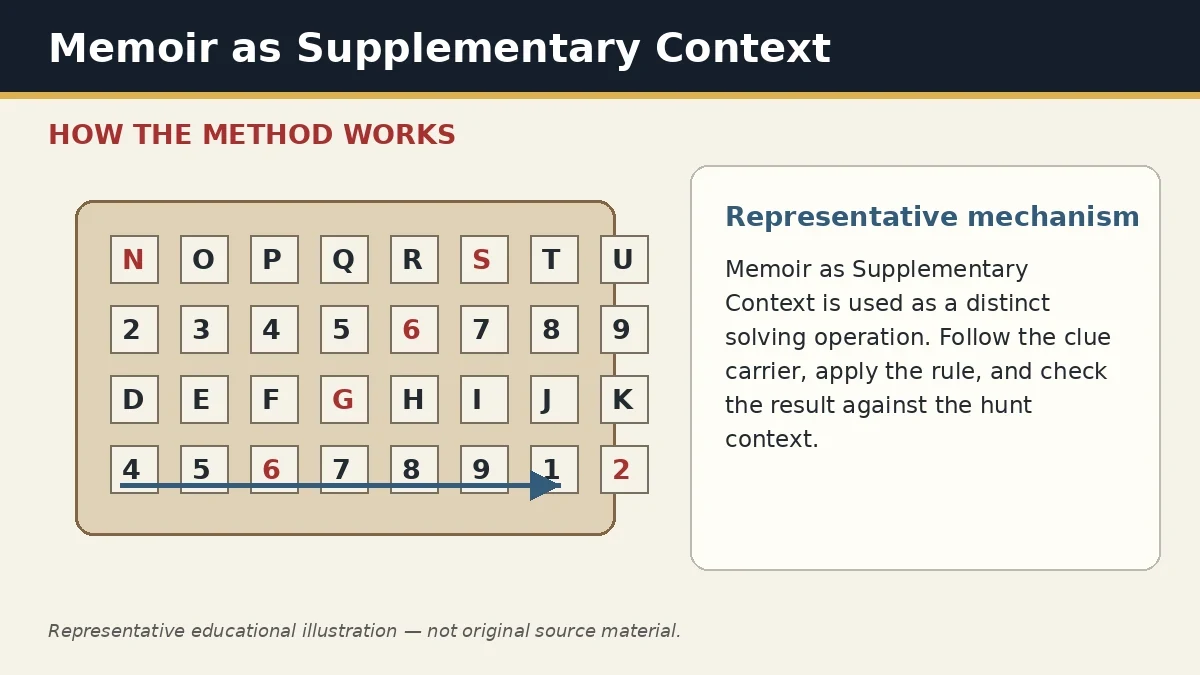
The poem appears inside a memoir containing stories that searchers treated as possible hints or context.
Read
Fenn directed searchers toward maps and geographic understanding.
Read
The poem uses natural-language descriptions that searchers map to waters, canyons, creeks and other terrain.
Read
Fenn repeatedly described nine clues in the poem and emphasized following them in order.
Read
The recovered cases share broad image/verse convergence but use different local details and routes.
Read
Nine casques remain unrecovered, so many popular pairings and exact-site theories cannot be creator-confirmed.
Read
Each puzzle is tied to cultural/immigration material associated with its city and jewel.
Read
Numeric language in the verse participates in narrowing the final area.
Read
The recovered Chicago solve depends on reaching a place where visual relationships in the image align with the real scene.
Read
Elements in the painting resemble features in neighboring cultural gardens.
Read
Verse language corresponds to names/words found on the Greek Cultural Garden wall.
Read
An Ohio outline is embedded within the painting’s patterned surface.
Read
The Cleveland painting contains a skyline/landmark form read through negative space.
Read
State, shoreline or geographic outlines can be embedded in otherwise fantastical forms.
Read
Several paintings contain numbers interpreted as latitude/longitude components.
Read
Painting and verse clues converge on a North American city before the exact park is solved.
Read
The book separates twelve paintings from twelve verses, requiring solvers to determine the pairings.
Read
The final answer is a two-word historical name not expected to appear directly in the novel.
Read
The Eye of Horus motif points solvers toward a chapter icon and associated number.
Read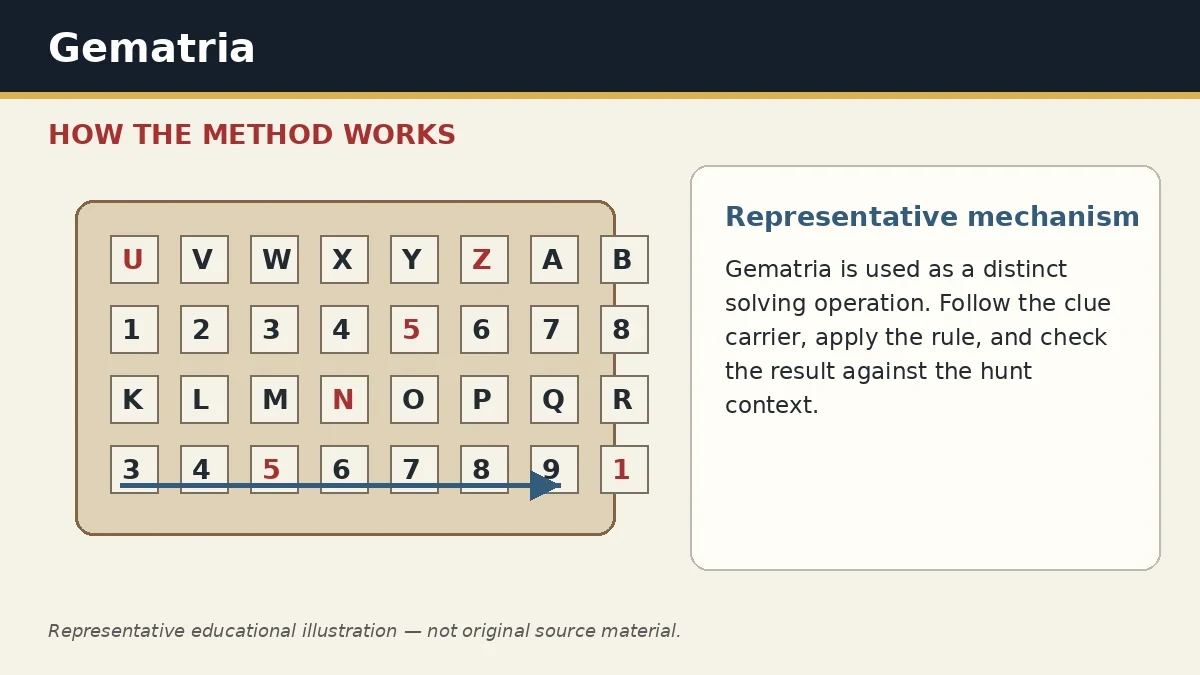
The value 70 is entered into a Jewish Gematria framework to obtain Ayin, associated with eye.
Read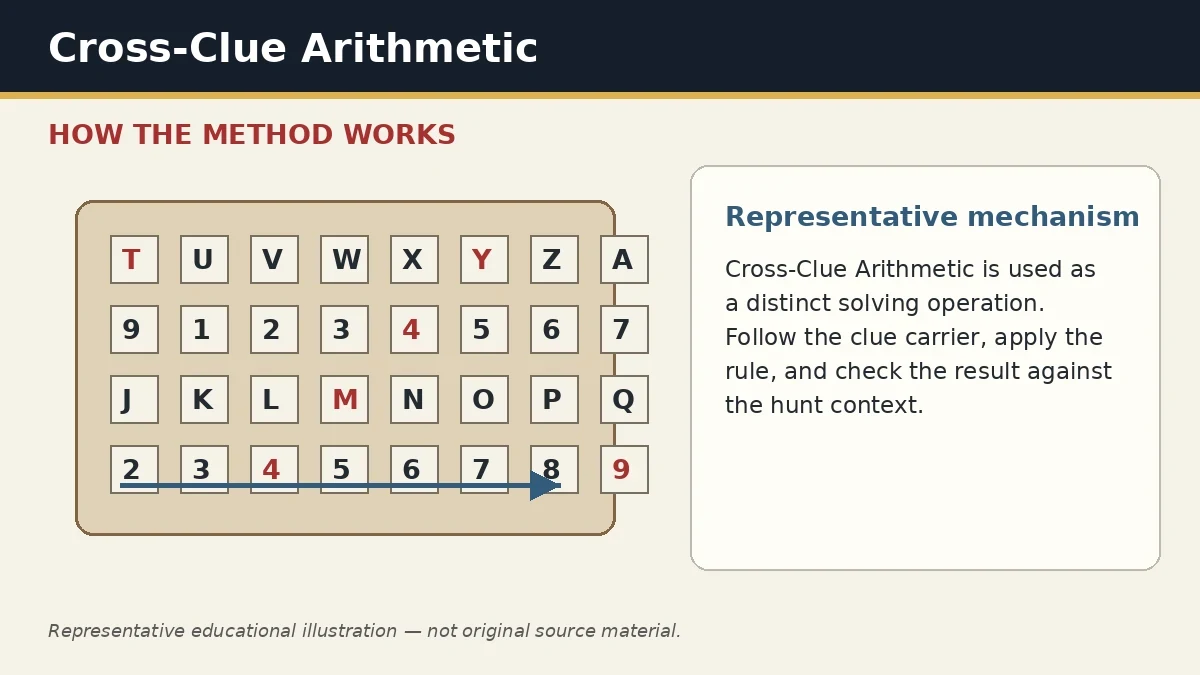
Numbers derived from the clue chain are combined arithmetically.
Read
The stage phrase strongly evokes a New Testament verse.
Read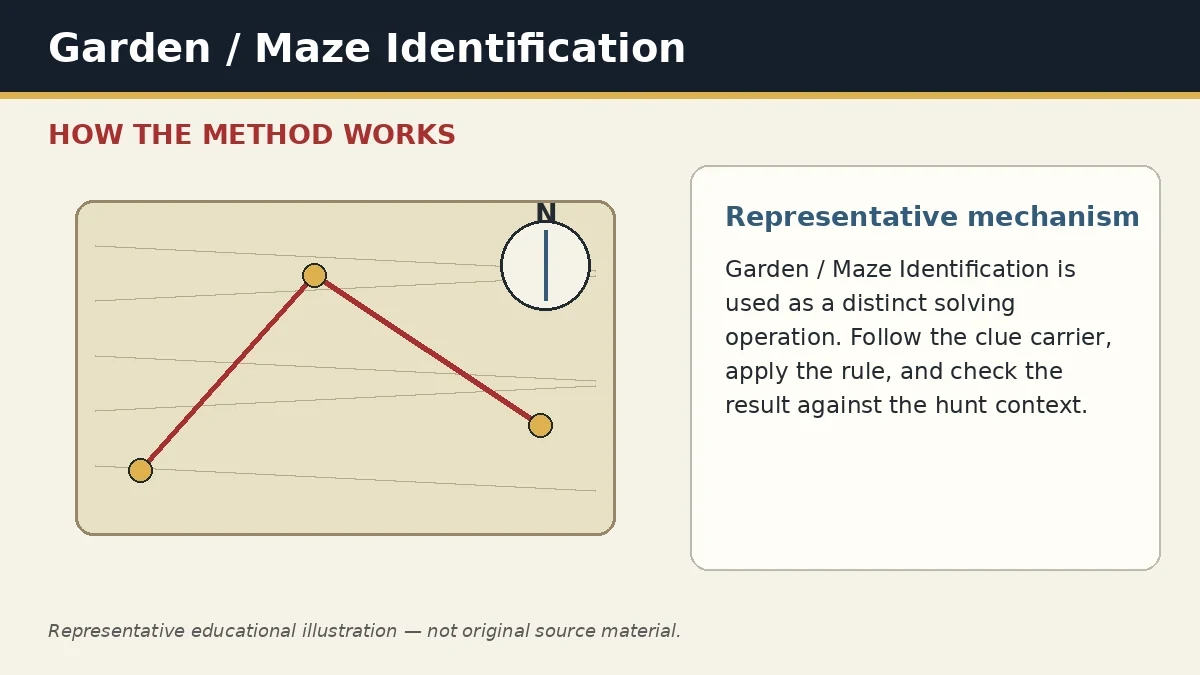
The translated and assembled clues converge on a named real garden.
Read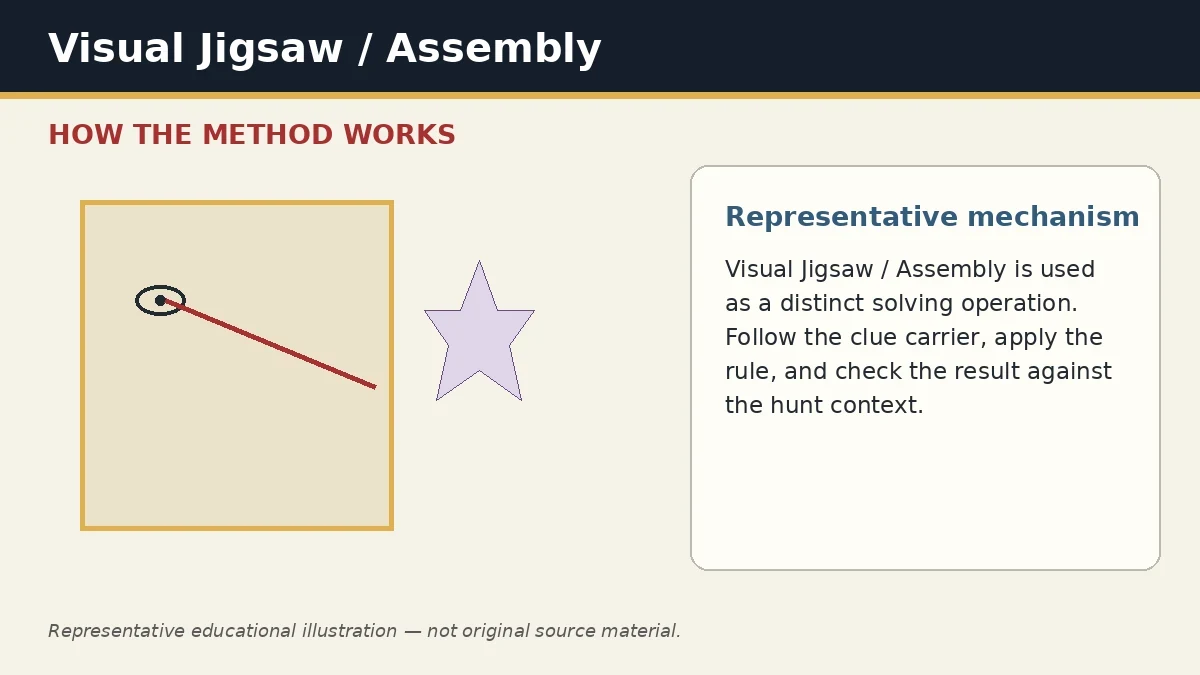
Separate visual pieces in the book must be recognized as parts of one literal puzzle.
Read
The hieroglyphic material is distributed across section openings rather than presented in one block.
Read
Section headers contain hieroglyphic messages.
Read
The hunt’s number-string method resembles a code used by a character in the story.
Read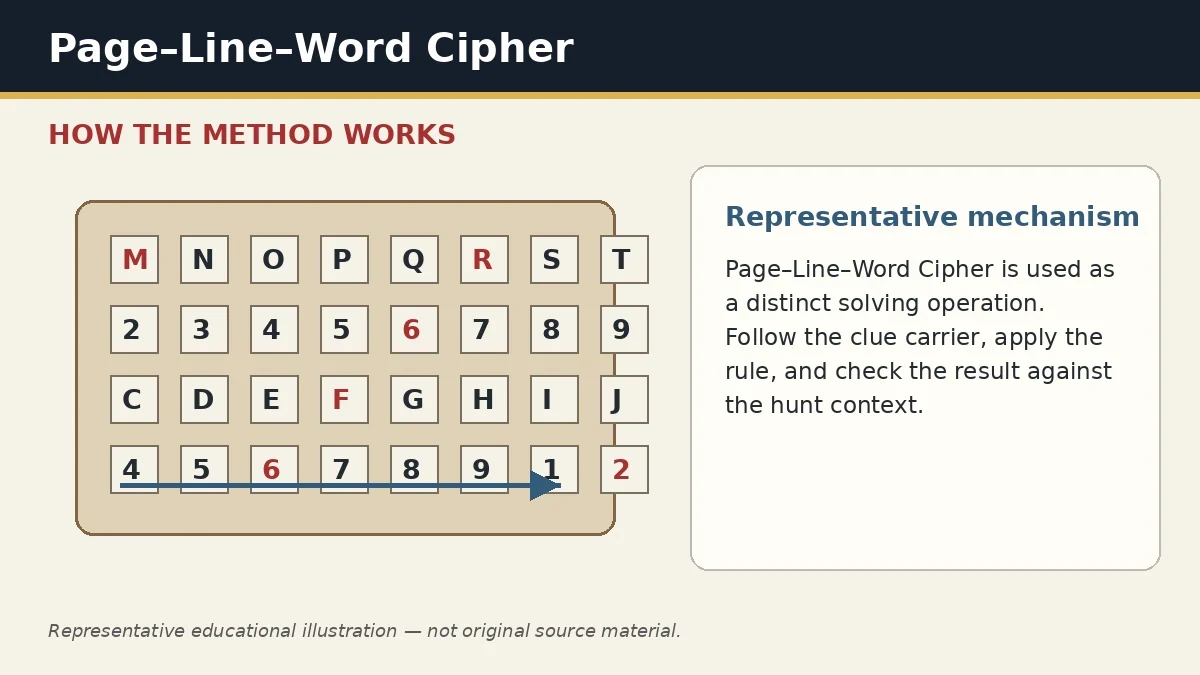
Number strings break into page, line and word positions.
Read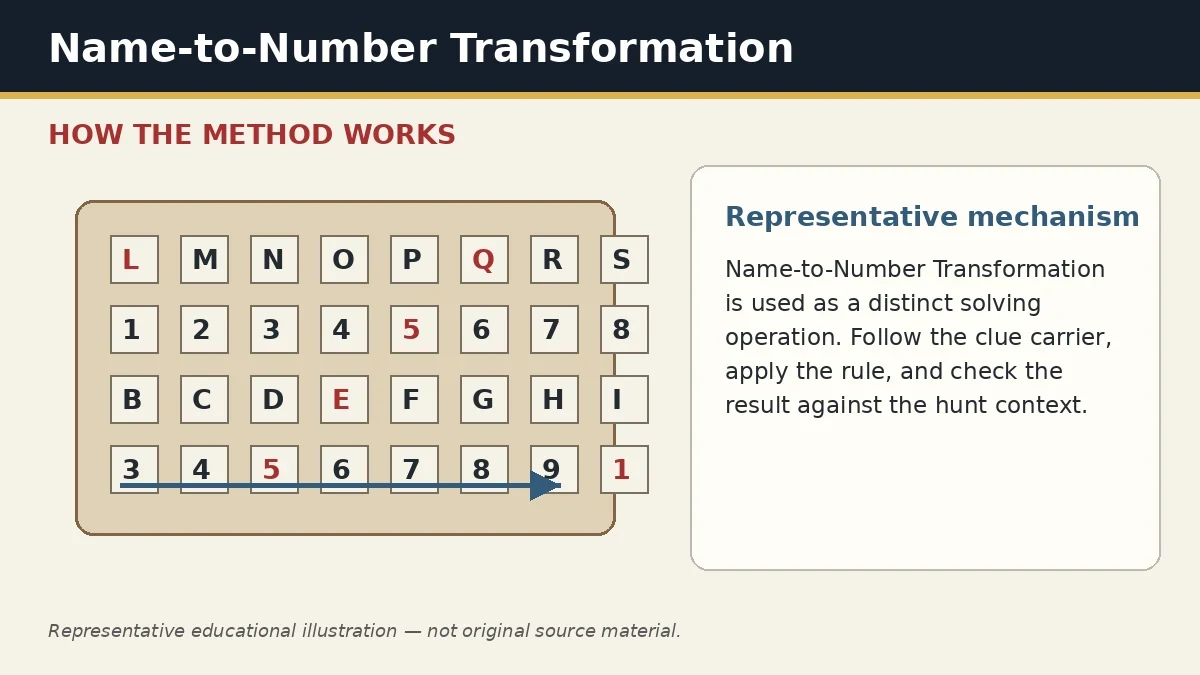
The first answer is a numeric transformation associated with Isis.
Read
The online hunt required correct answers to unlock successive stages.
Read
Additional clues were released over time through the hunt’s channels.
Read
After the main treasure was found, a new riddle challenged solvers to identify a tiny area and offered another prize.
Read
The hunt was explicitly designed with clues woven through a novel.
Read
The text extraction independently pointed to Hot Springs after the cover/route work had already suggested that area.
Read
A companion line was processed in reverse to yield AT CEDAR LOT.
Read
The winner interpreted the author’s repeated wording as an instruction to take two letters at a time.
Read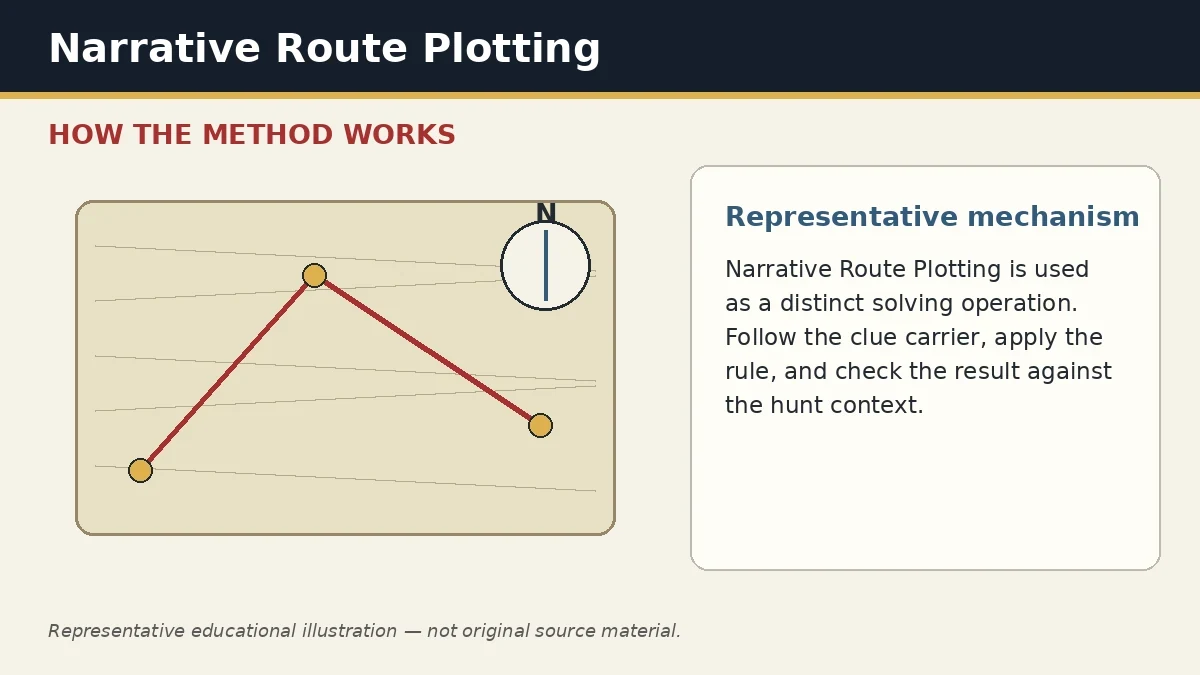
The winner plotted the characters’ movements and stated mileages on Google Maps.
Read
Winner Coy Lothrop treated the unusual embossed dot pattern under the dust jacket as purposeful.
Read
Four tea cups / T imagery encode “four-T,” sounding like forty.
Read
A periodic table shows “Mi” where Argon (Ar) should be.
Read
A dollar-bill portrait of George Washington identifies Washington.
Read
Counts of legs on three depicted objects form the mile value 307.
Read
Numbers 24, 25 and 26 are combined to make 75.
Read
A familiar Heinz 57 visual is altered to show 56, supplying the mile.
Read
A U.S. map is obscured by balloons except for Indiana.
Read
Three pictured elements can be read phonetically as “Oh-hi-oh.”
Read
A copy/reference to The 39 Clues provides 39 for I-39.
Read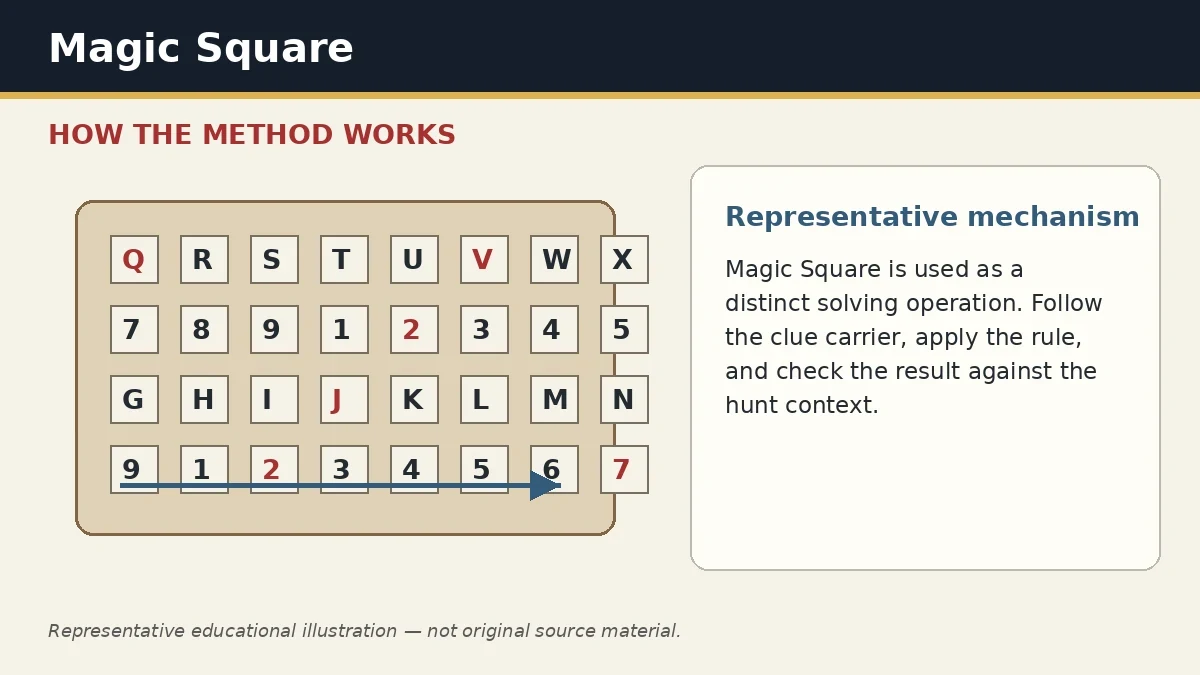
A magic-square result points to the 21st state, Illinois.
Read
The mile value appears reversed through a mirror.
Read
An unusual displayed time of 1:80 points to mile 180.
Read
Lone Star imagery on chili boxes indicates Texas.
Read
The mile value 262 appears in the paisley rug.
Read
A newspaper date visually contains the digits needed for I-81.
Read
Portraits of Thomas Jefferson, Dave Matthews and Missy Elliott all connect to Virginia.
Read
Each apartment hides data for a U.S. state, an Interstate highway and a mile position.
Read
A typical solve uses one image for the place-name cipher, another for local geography, and another for the tree.
Read
Once the common Polybius grammar became known, the remaining token puzzles became easier to attack.
Read
Tokens were placed in accessible tree knotholes rather than requiring excavation.
Read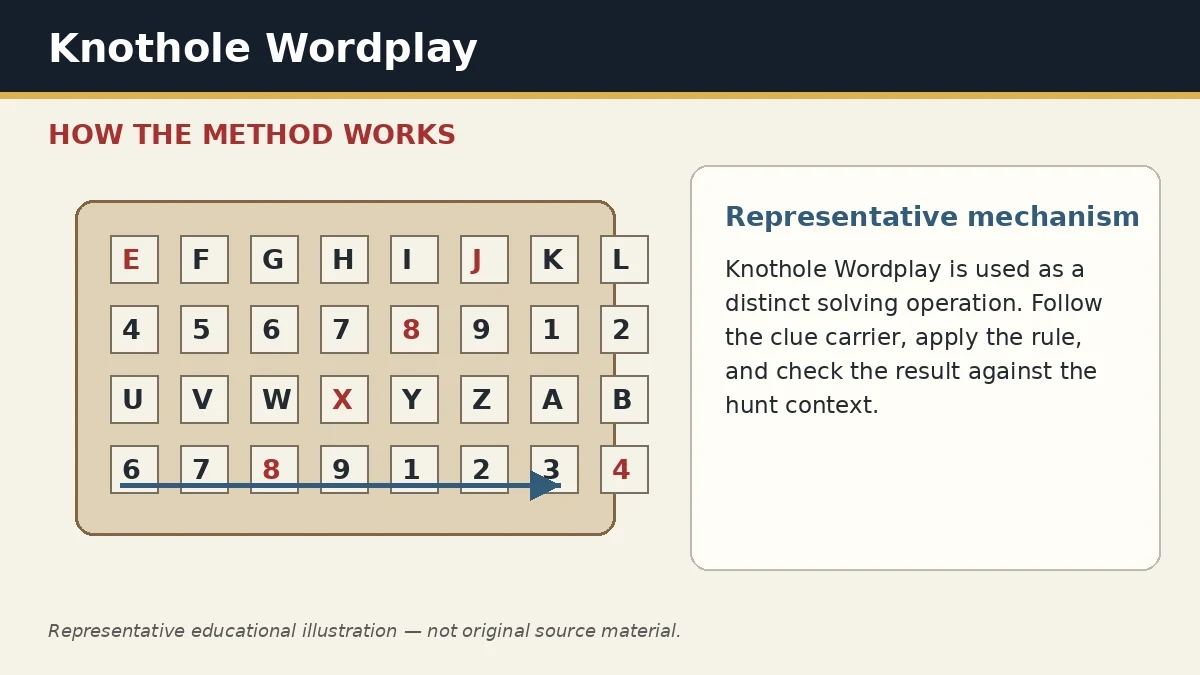
The metapoem uses wordplay that directs attention to holes in trees.
Read
A separate image identifies the actual tree associated with a token.
Read
After decoding the park, a separate fairy/drop-cap image narrows the search inside it.
Read
The Butterfly carrier is read around the border in a defined direction.
Read
The Butterfly puzzle uses different break shapes around a border as the five symbol classes.
Read
Each jeweled creature uses a different visual way to generate the Polybius coordinate pairs.
Read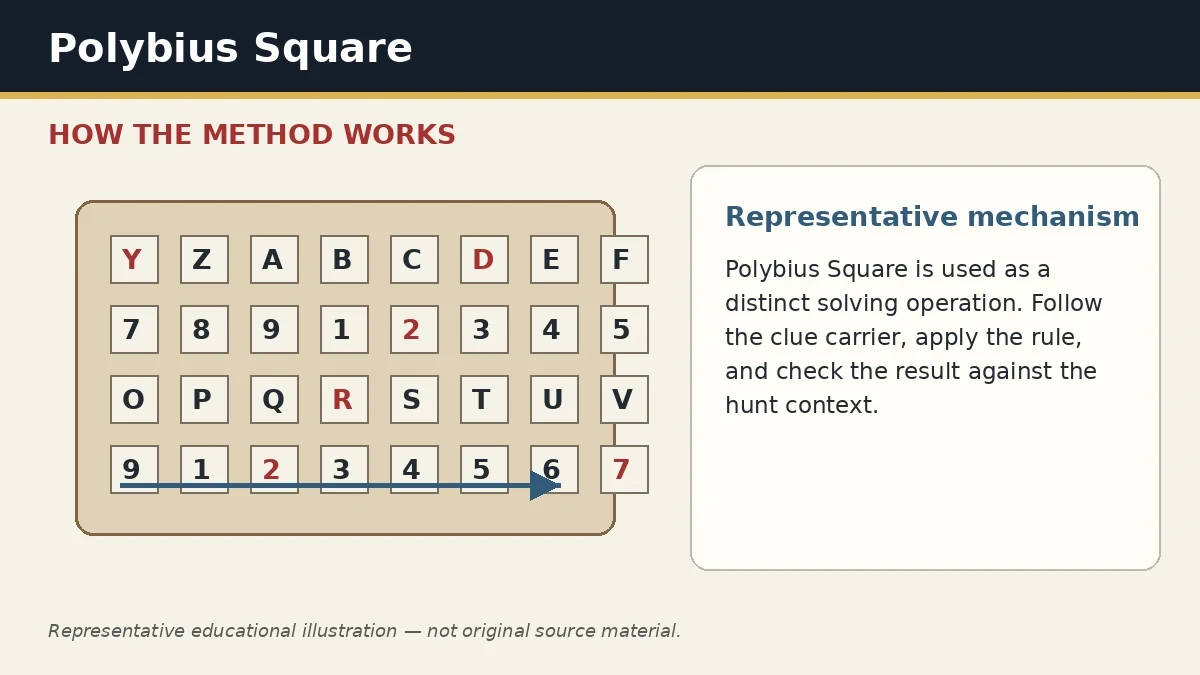
Every token puzzle ultimately feeds coordinate pairs into a shared 5×5 alphabet grid.
Read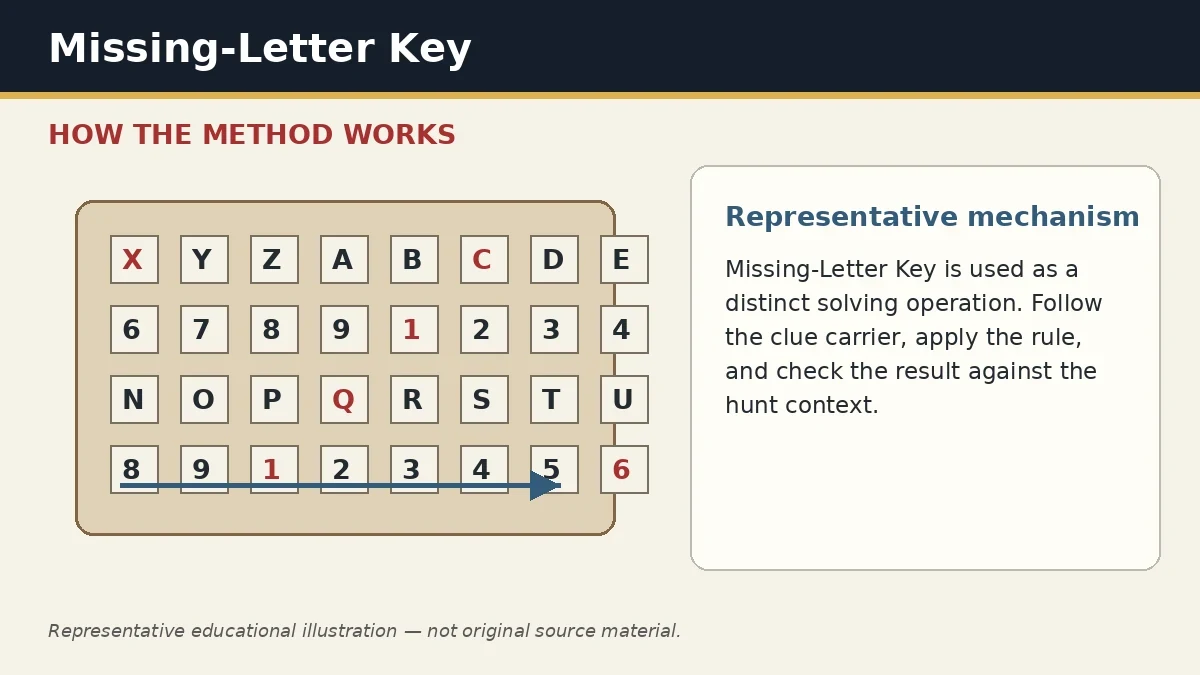
The book omits Q from the alphabetic key used by the hunt.
Read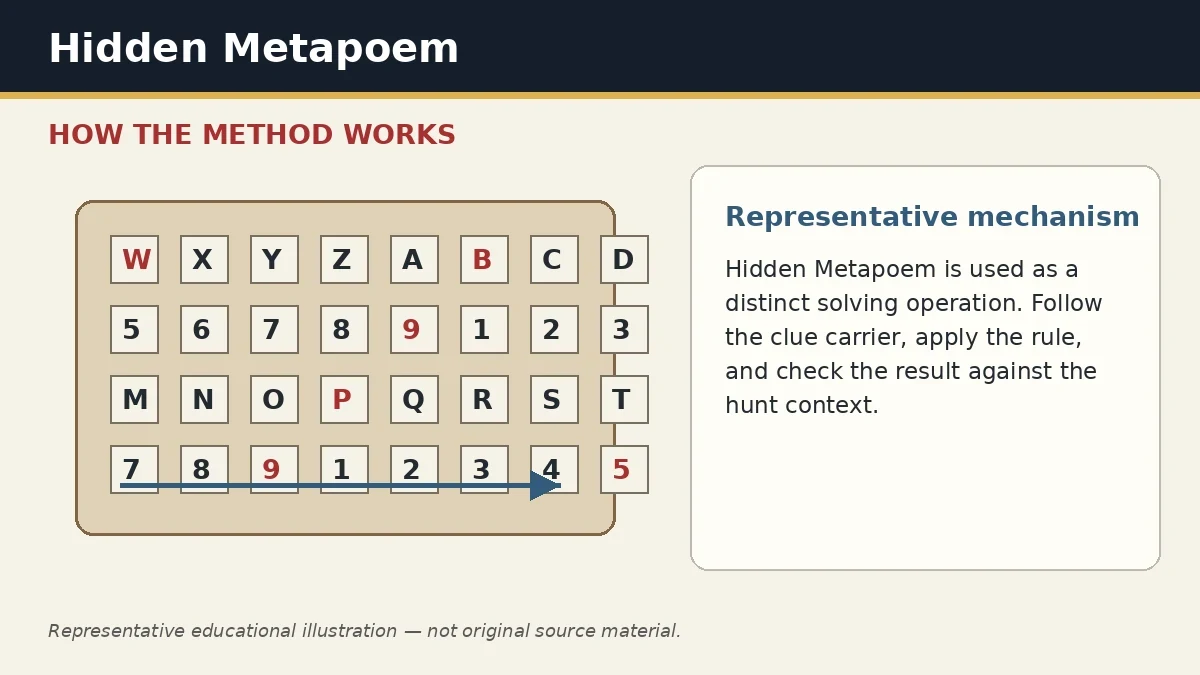
Camouflaged lines across illustrations form a metapoem explaining the shared puzzle grammar.
Read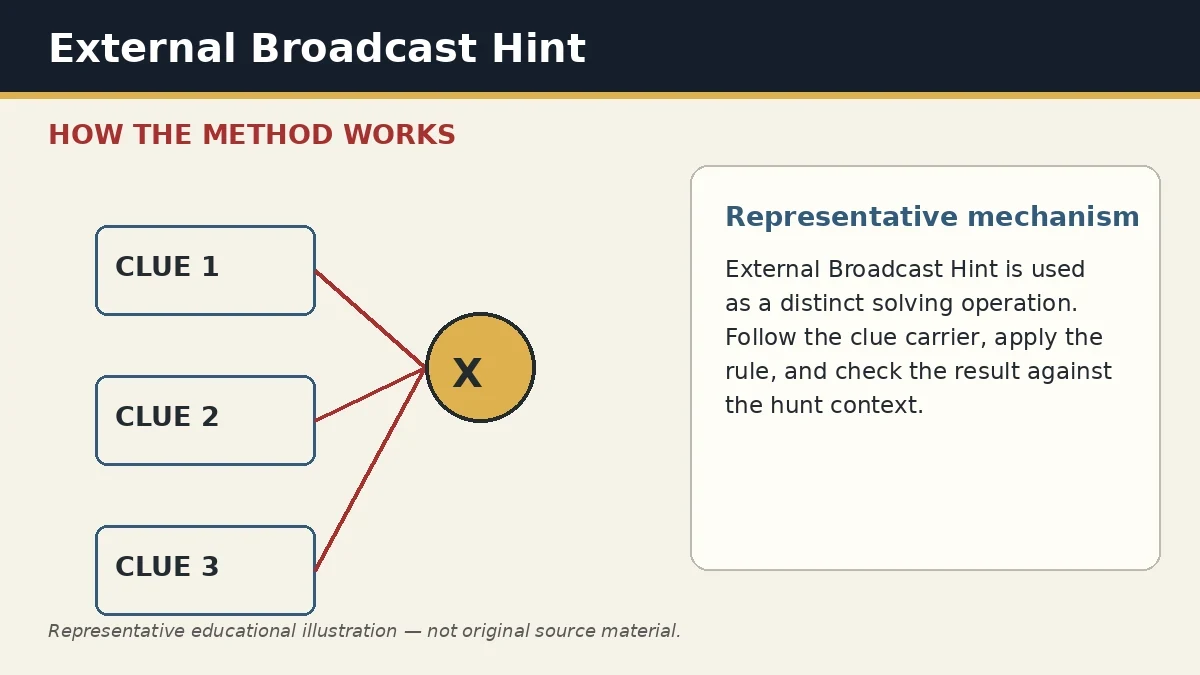
A later television clue was designed to be sufficient on its own to locate the treasure.
Read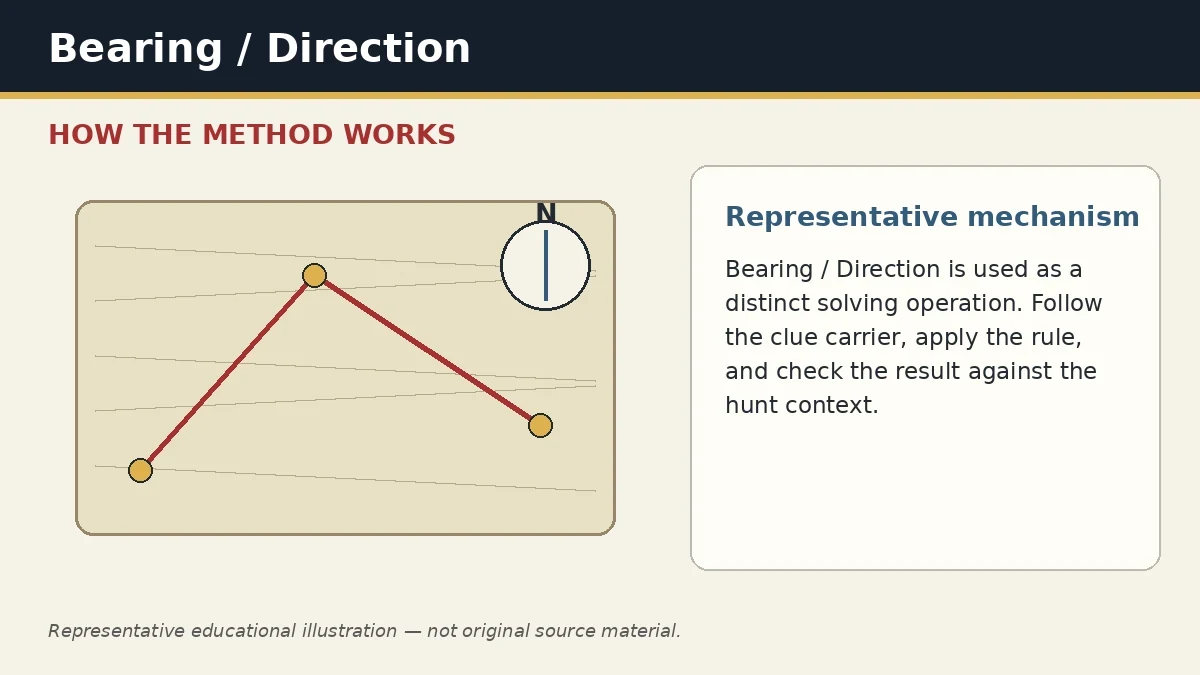
The reduced instruction includes a southeast directional component.
Read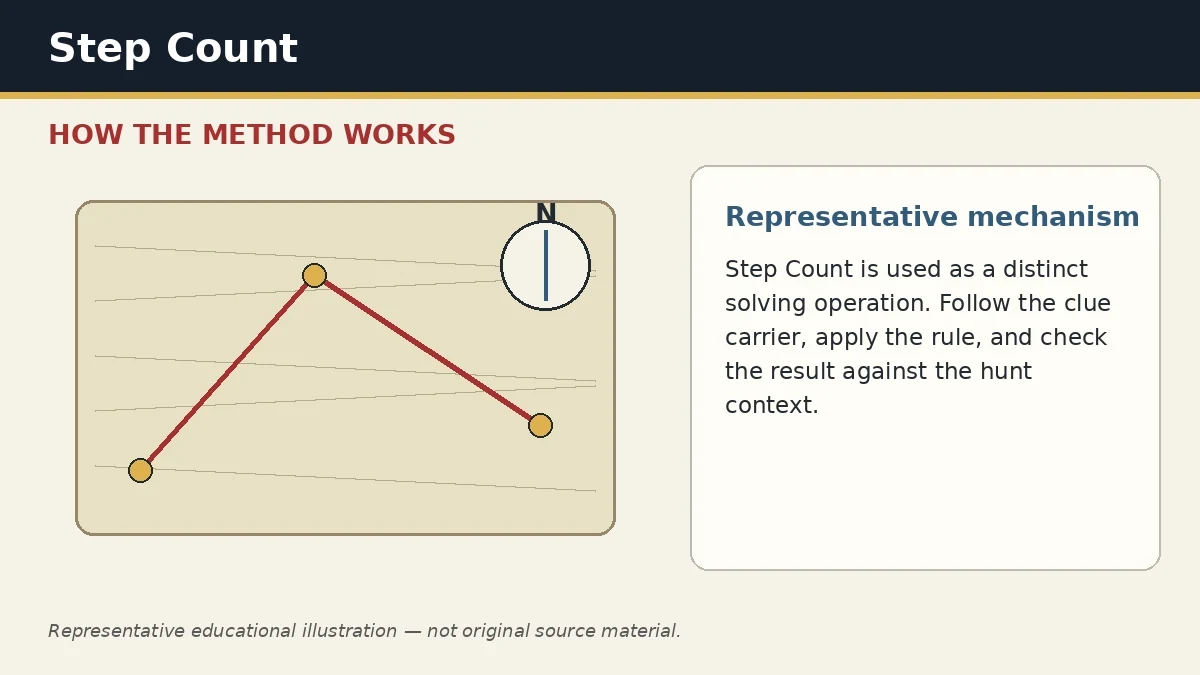
The final instruction set includes a count that maps to a staircase at the target area.
Read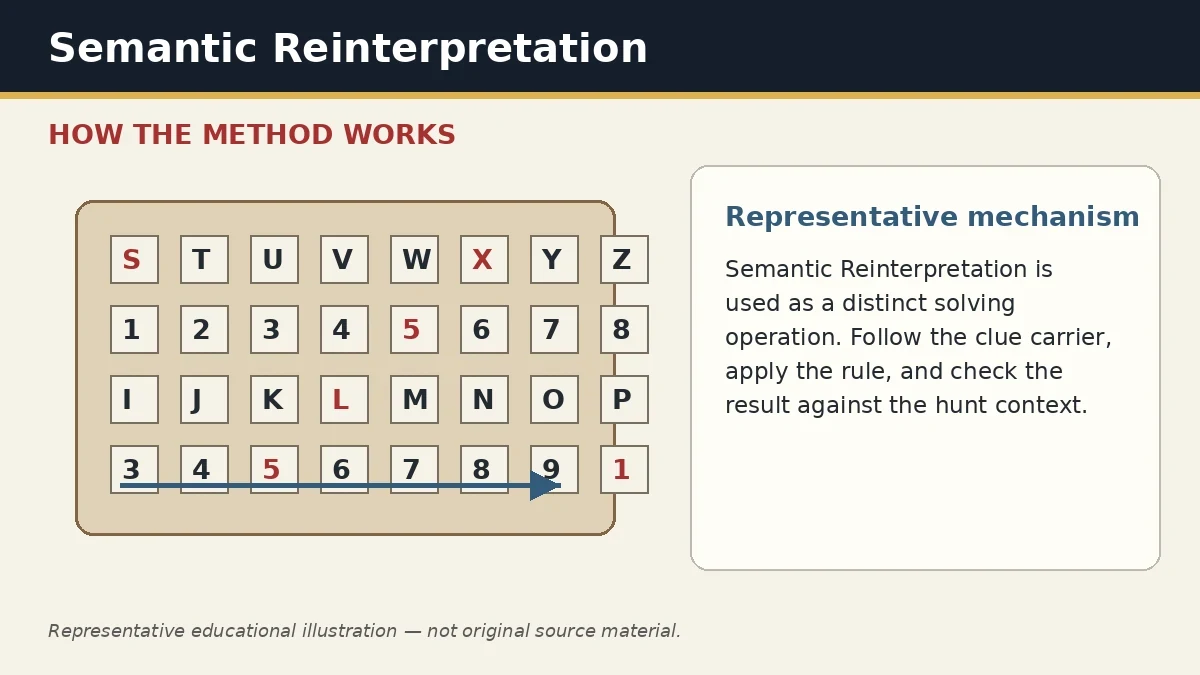
The transformed phrases are not always literal place names; they must be interpreted conceptually.
Read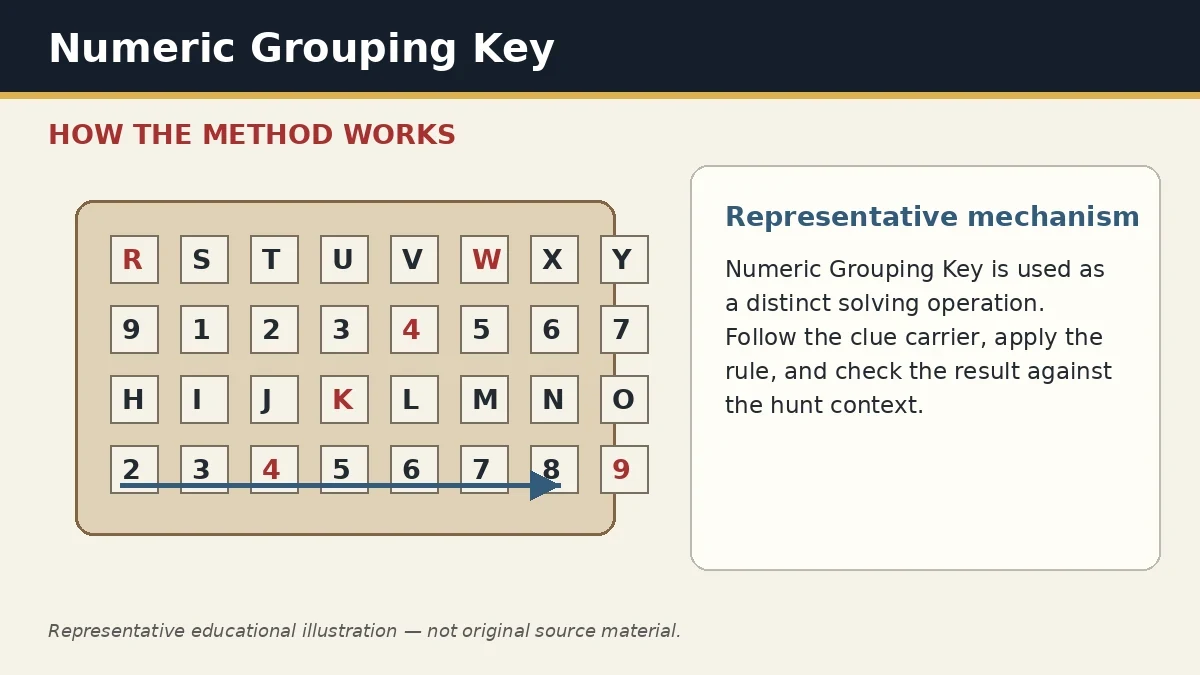
Number strings on the final page supply the grouping pattern used in the reduction.
Read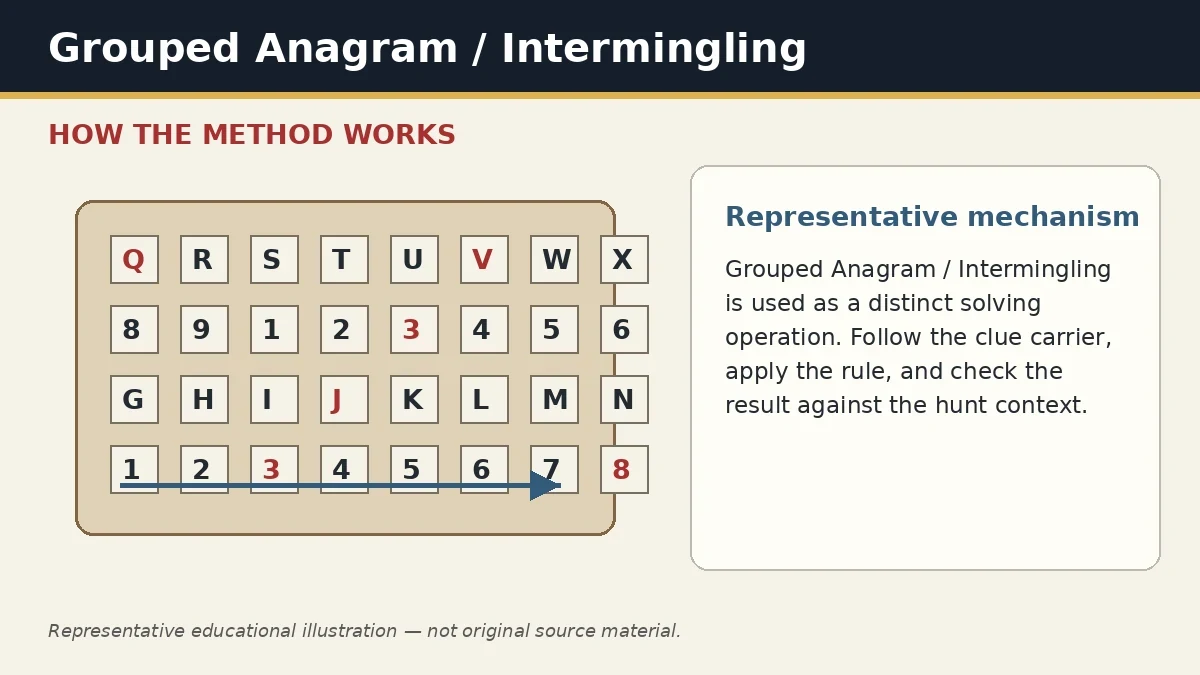
A clue about “intermingle” plus numerical grouping directs groups of words to be recombined.
Read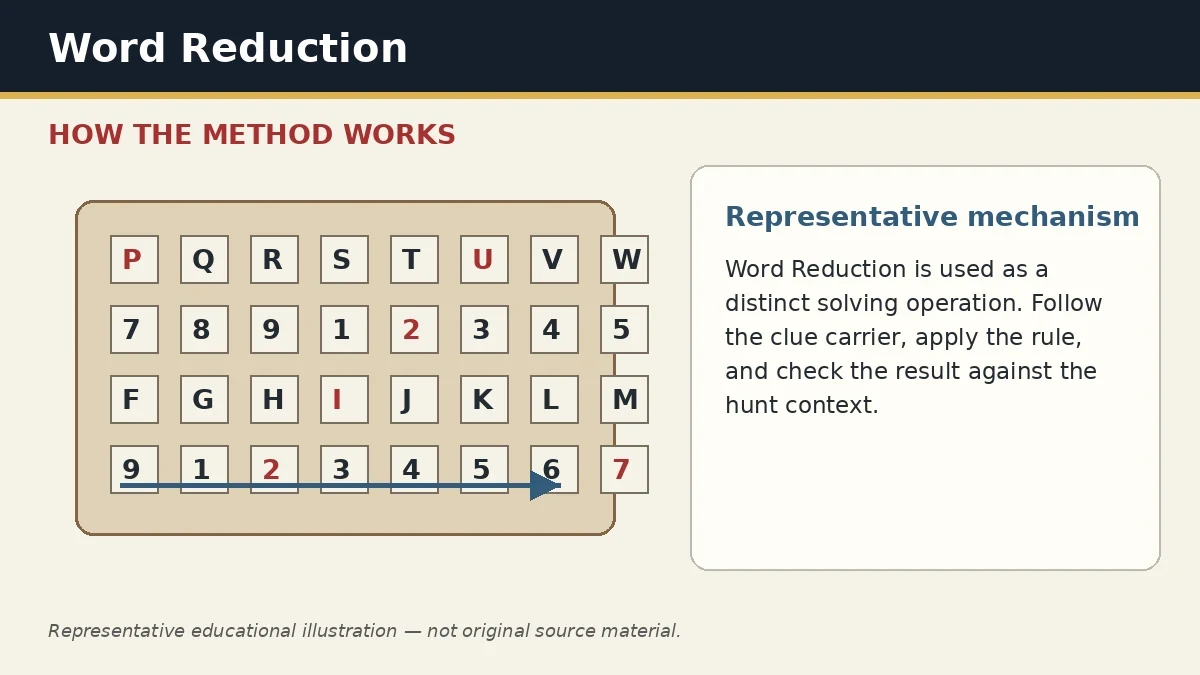
After following the embedded instructions, only selected words remain.
Read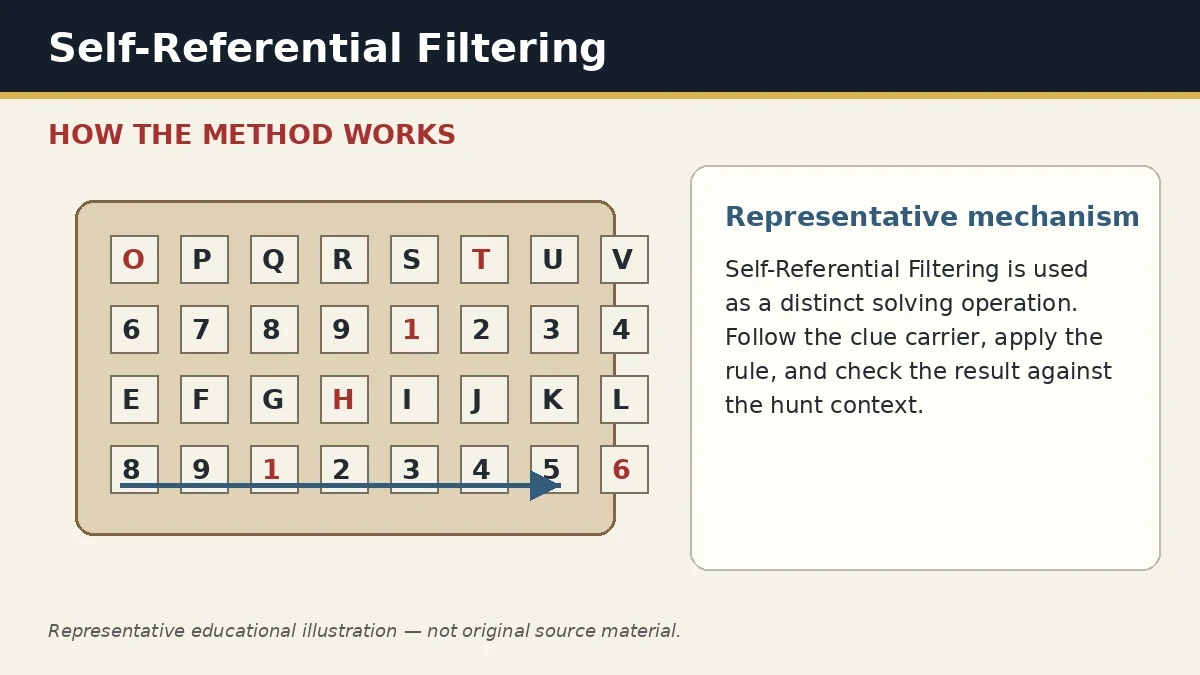
The decoded corpus includes statements that direct filtering and rejection.
Read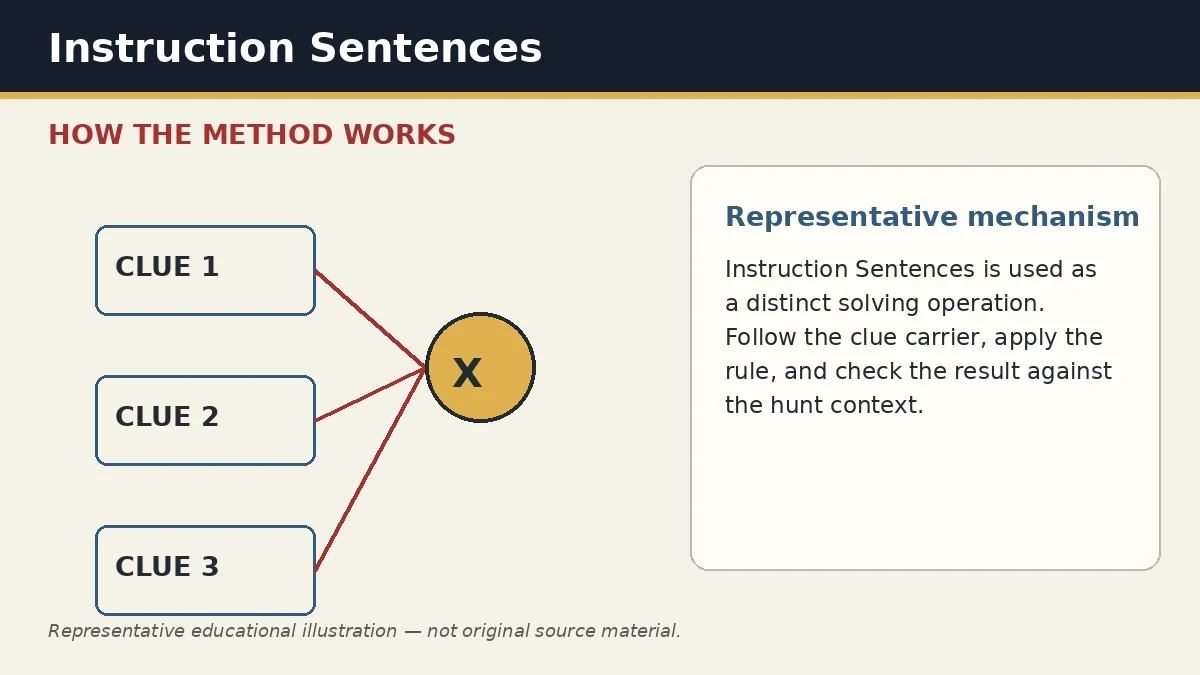
The first major decode yielded 41 strange sentences.
Read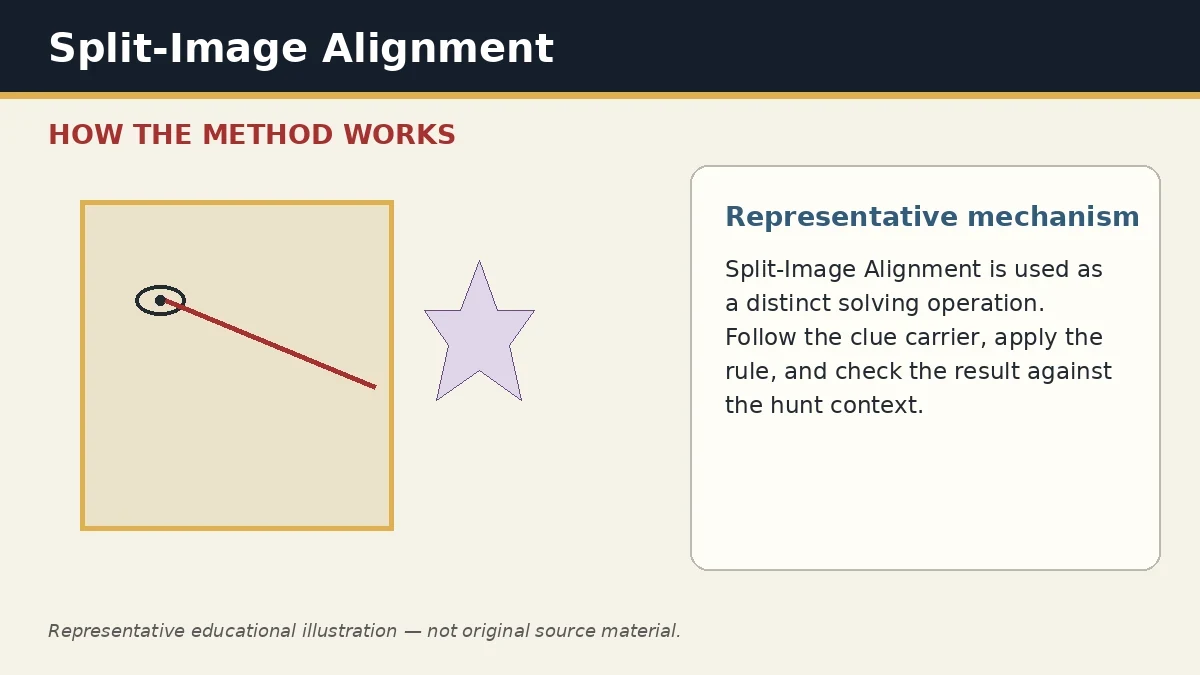
Some codes required aligning separated visual pieces.
Read
Solvers had to distinguish small visual differences among repeated designs.
Read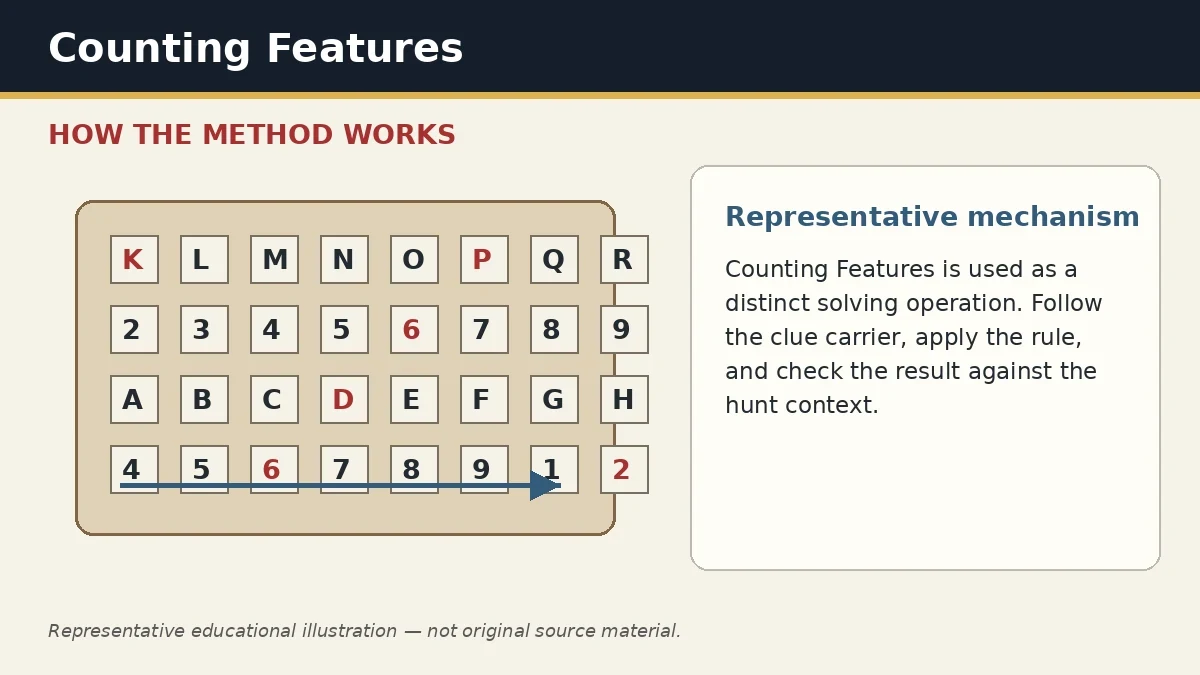
Some visual codes required counting repeated physical features.
Read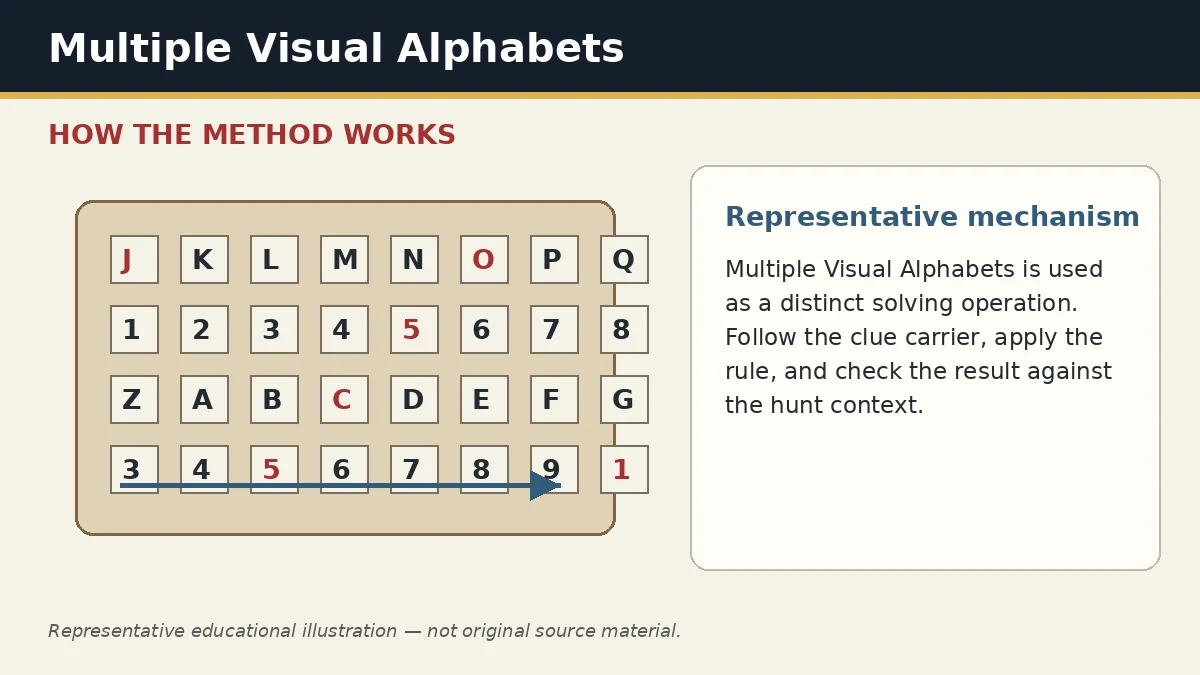
The hunt used 15 distinct visual code types rather than one repeated substitution alphabet.
Read
The essential puzzle material was distributed through decorative-looking marginal elements.
Read
The creator explicitly identified misspellings that were not intended as clues.
Read
Don Adams noted that modern internet access makes many of the old puzzles easier.
Read
The creator released two additional clue sets after one and two years.
Read
The final solution is described by the creator as unexpected and based on a general theme.
Read
The creator warns that solving the individual puzzles does not necessarily give the final answer.
Read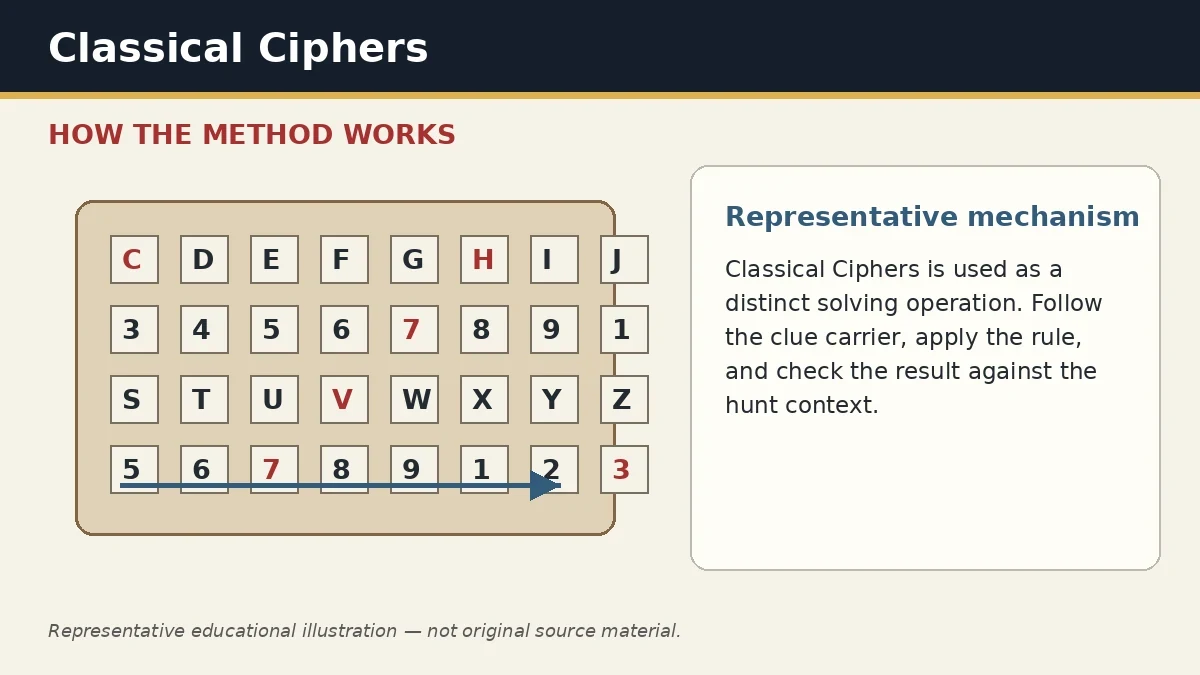
Don Adams explicitly describes solved cyphers within the hunt.
Read
The book organizes its challenge through fictional search narratives rather than presenting a naked puzzle sheet.
Read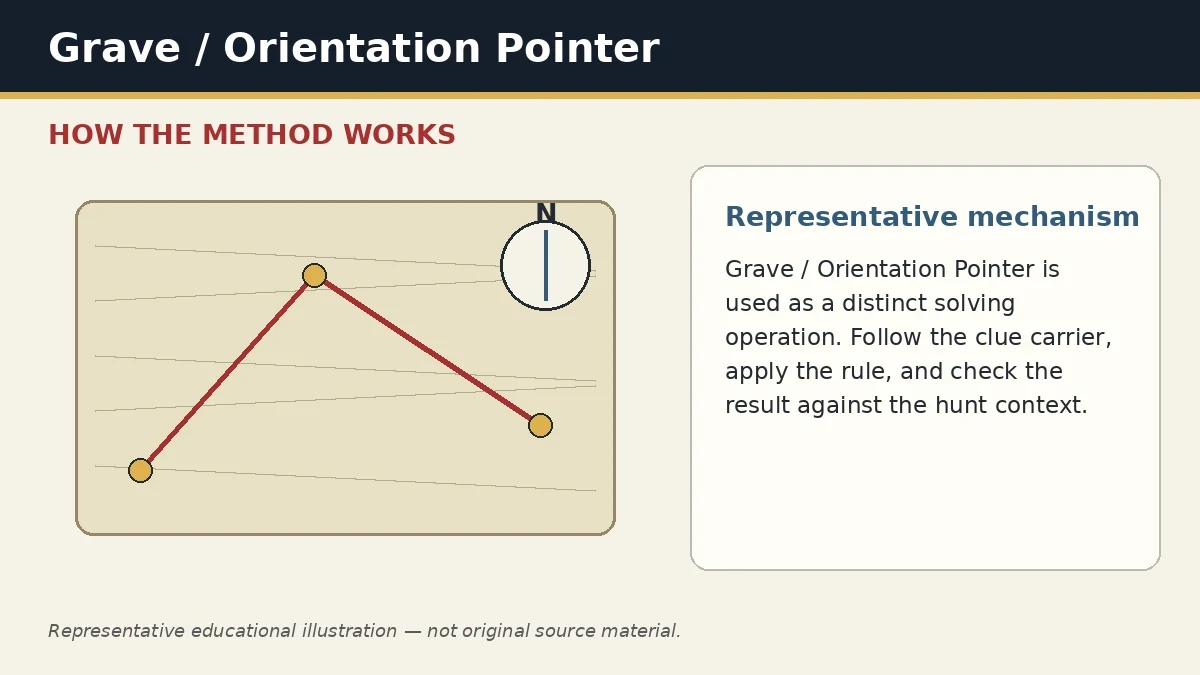
A soldier’s grave and the way it lies help define the final area, while the actual cache remains outside sacred ground.
Read
A phrase sounding like “more gold” points to Maughold.
Read
A number in the verse corresponds to the height of Snaefell.
Read
The verse begins at Tynwald Hill and gives directional and place-based instructions across the Isle of Man.
Read
Figures in the illustration correspond to figures on a roadside painted sign near Misterton.
Read
The story draws on the Cuckoos of Crewkerne folktale.
Read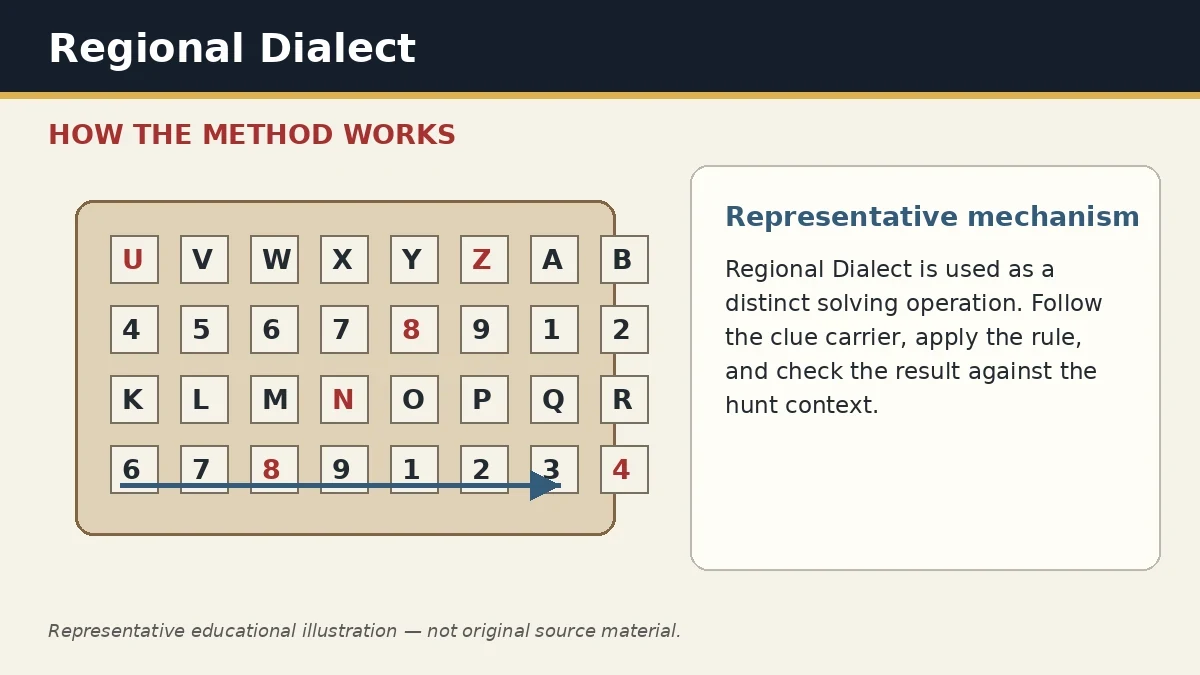
The story is written in West Country dialect.
Read
The obvious cave feature was private property, so the practical hiding point had to be nearby on accessible ground.
Read
The accompanying illustration reinforces a tall house with twin cave-like openings.
Read
A phrase in the story resembles the sound of a real Welsh mountain name.
Read
The story adapts the legend of the Wrekin and a giant carrying earth.
Read
The identified towns are joined on an Ordnance Survey map.
Read
The Professor Egghead story embeds names such as Ampthill, Roxton, Potton and Langford.
Read
Each golden egg was associated with its own illustrated story/verse puzzle.
Read
Masquerade contains attractive subsidiary patterns that can consume solver attention without advancing the core route.
Read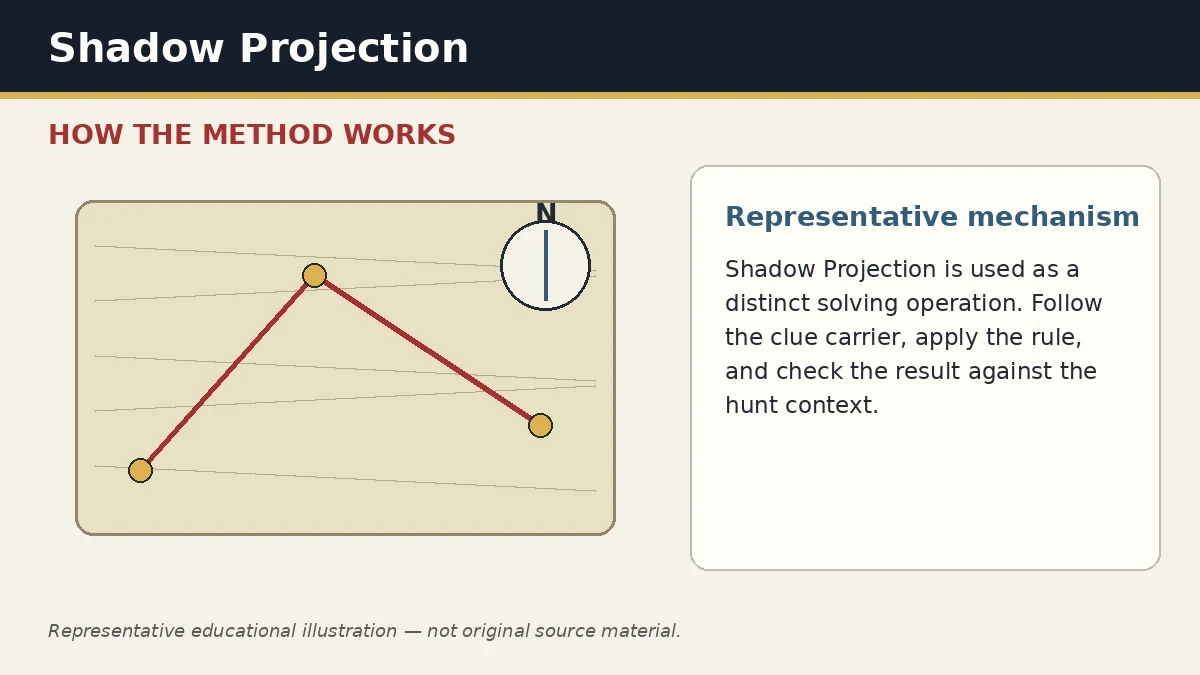
The last-mile location uses the monument and its shadow as a real-world geometric pointer.
Read
The master message invokes midday, light and equinox rather than only a static place.
Read
A historical name in the extracted instruction links the word puzzle to a real monument and place.
Read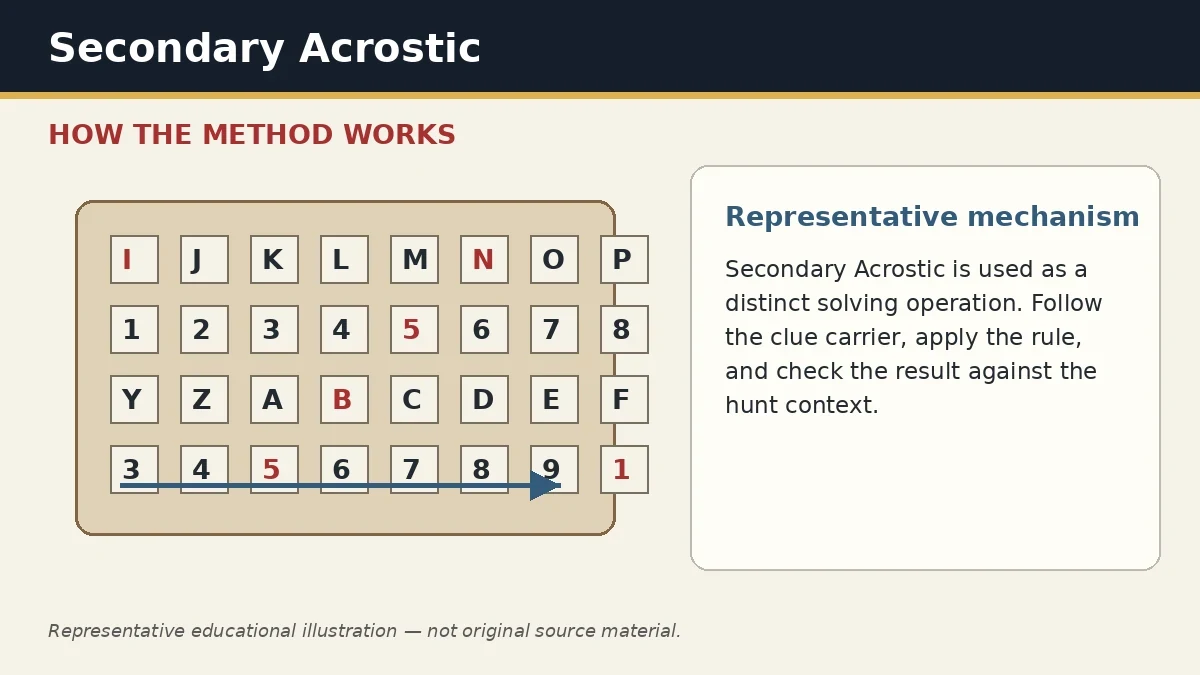
The initial letters of the extracted words/phrases form a geographic instruction.
Read
A final numerical grid confirms the lengths of words and phrases extracted from the paintings.
Read
The solver must know not only how to draw lines but which depicted figures to process first.
Read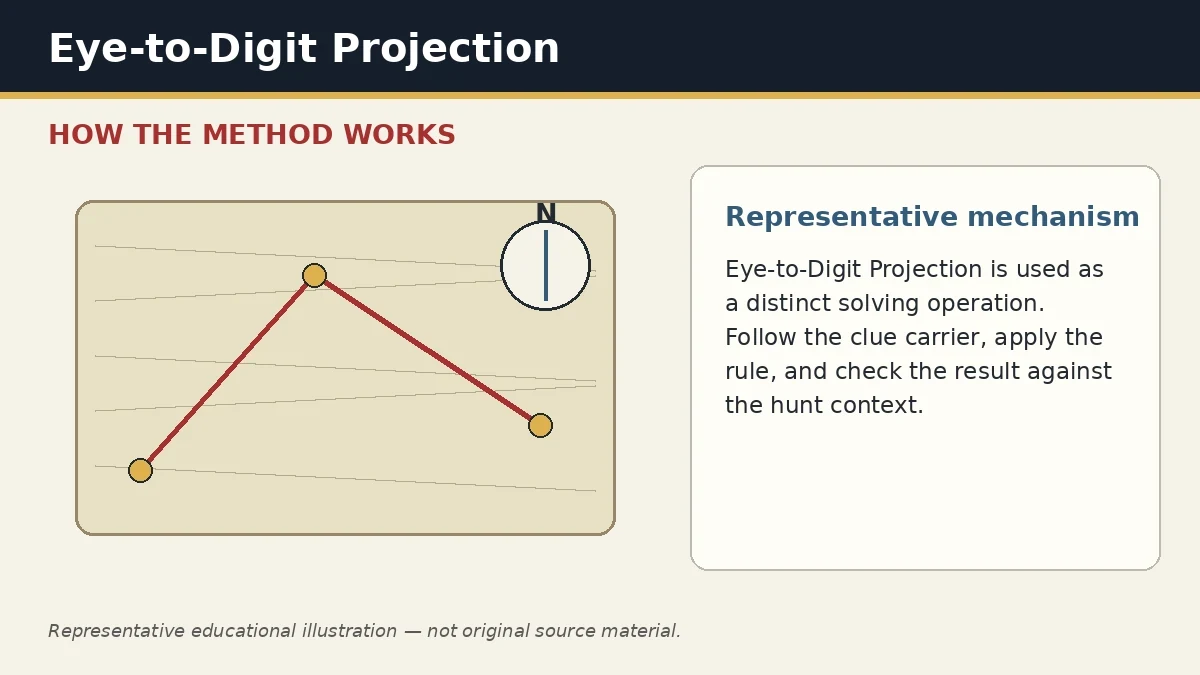
Eyes and visible fingers, toes, paws or equivalent digits act as geometric anchors.
Read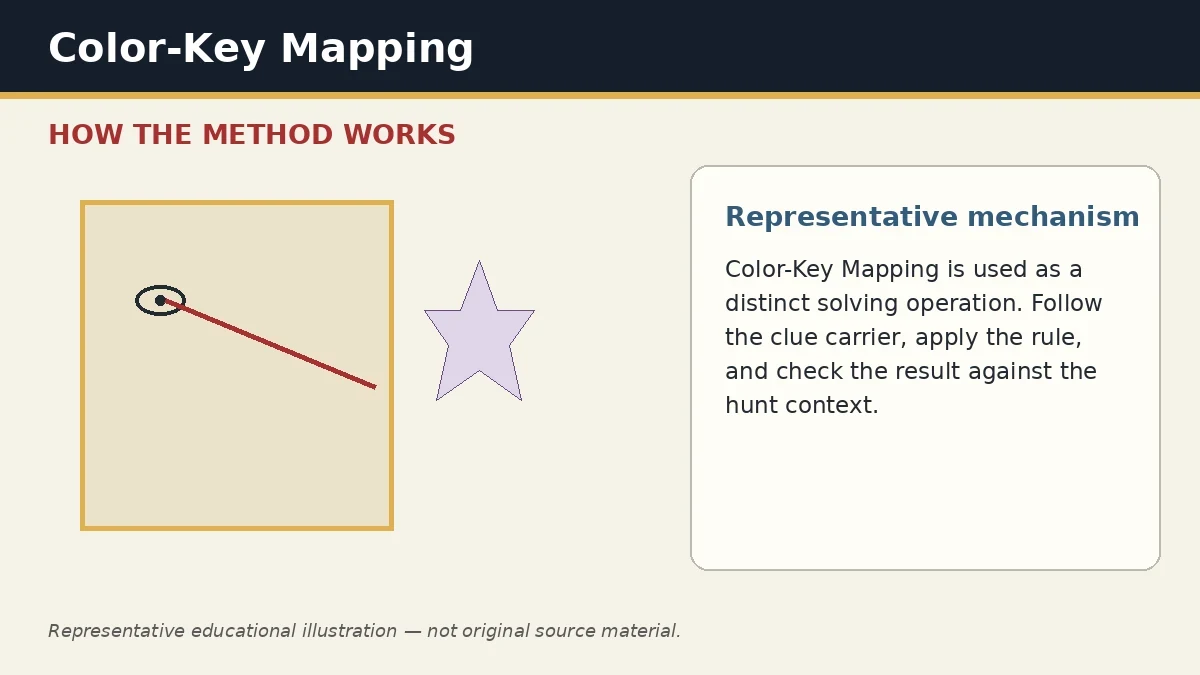
The Newton painting connects a repeating color sequence to the control rings of figures.
Read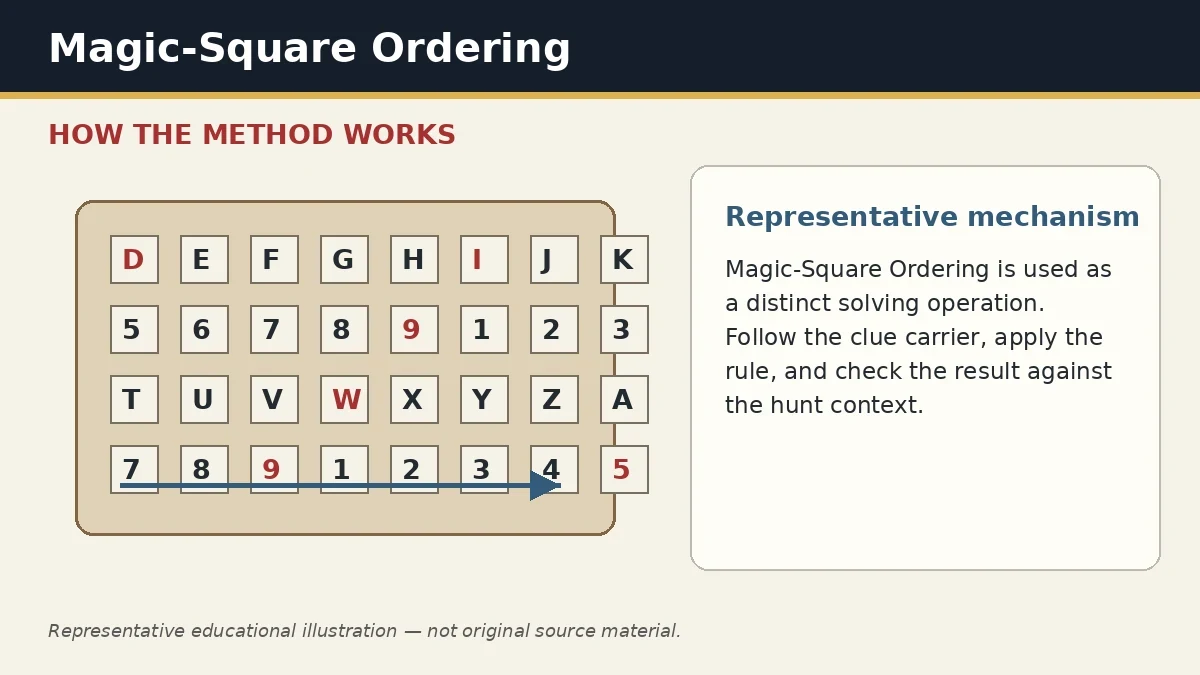
A numbered magic square supplies an order that is reused against another grid.
Read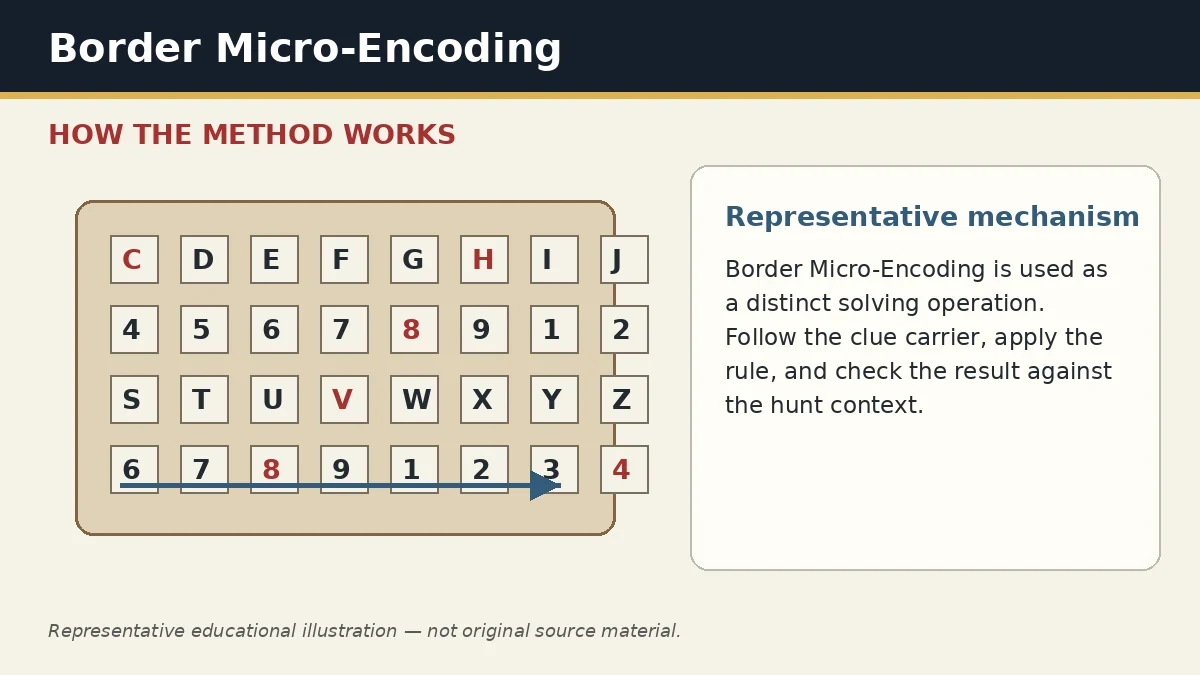
Specially treated letters around the paintings form short words independent of the main geometric extraction.
Read
A hare is concealed in every painting, teaching solvers that the illustrations contain deliberately hidden forms.
Read