How One Early Sentence Summarized Multiple Map of the Dead Stages
A sentence near the front of the book carried layered references to secret messages, ancient Egyptians and gold.
ReadTopic
A sentence near the front of the book carried layered references to secret messages, ancient Egyptians and gold.
Read
The creator released hints over the long solve period, including clarifications about the final answer.
Read
The chest was recovered, but no complete authoritative clue-by-clue solution was published by Fenn, and later reconstructions differ.
Read
The poem includes a physical “blaze” concept associated with the final approach.
Read
Fenn repeatedly pushed searchers back toward the poem rather than elaborate code systems.
Read
The poem appears inside a memoir containing stories that searchers treated as possible hints or context.
Read
Fenn directed searchers toward maps and geographic understanding.
Read
The poem uses natural-language descriptions that searchers map to waters, canyons, creeks and other terrain.
Read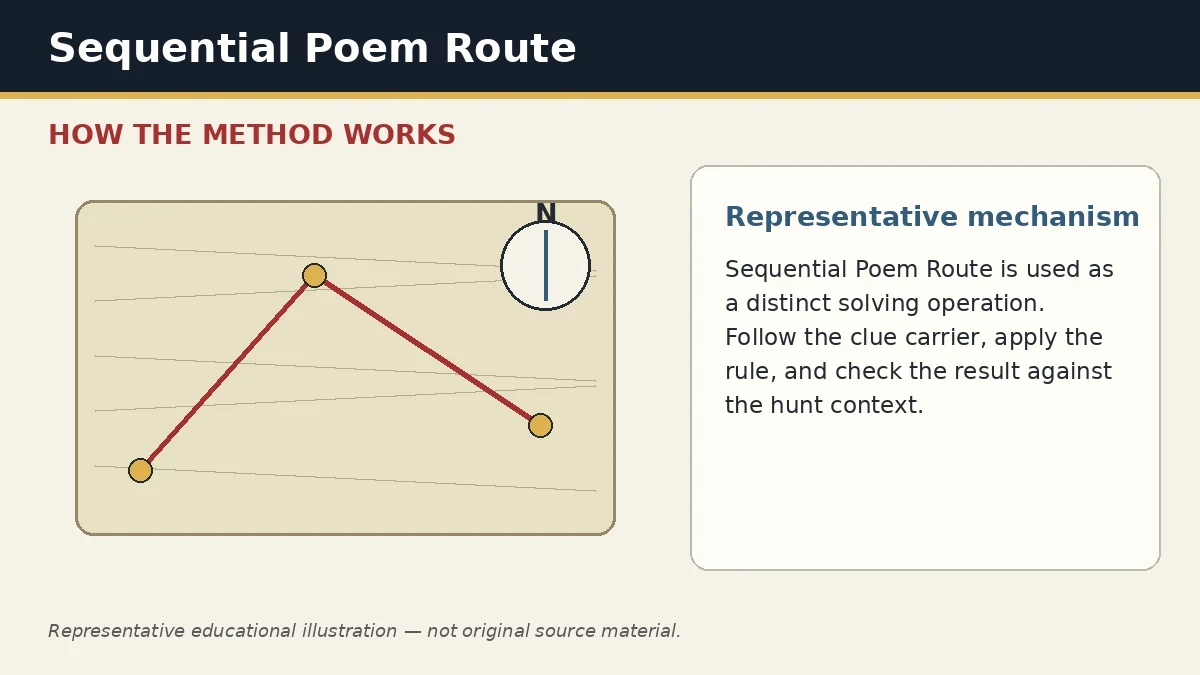
Fenn repeatedly described nine clues in the poem and emphasized following them in order.
Read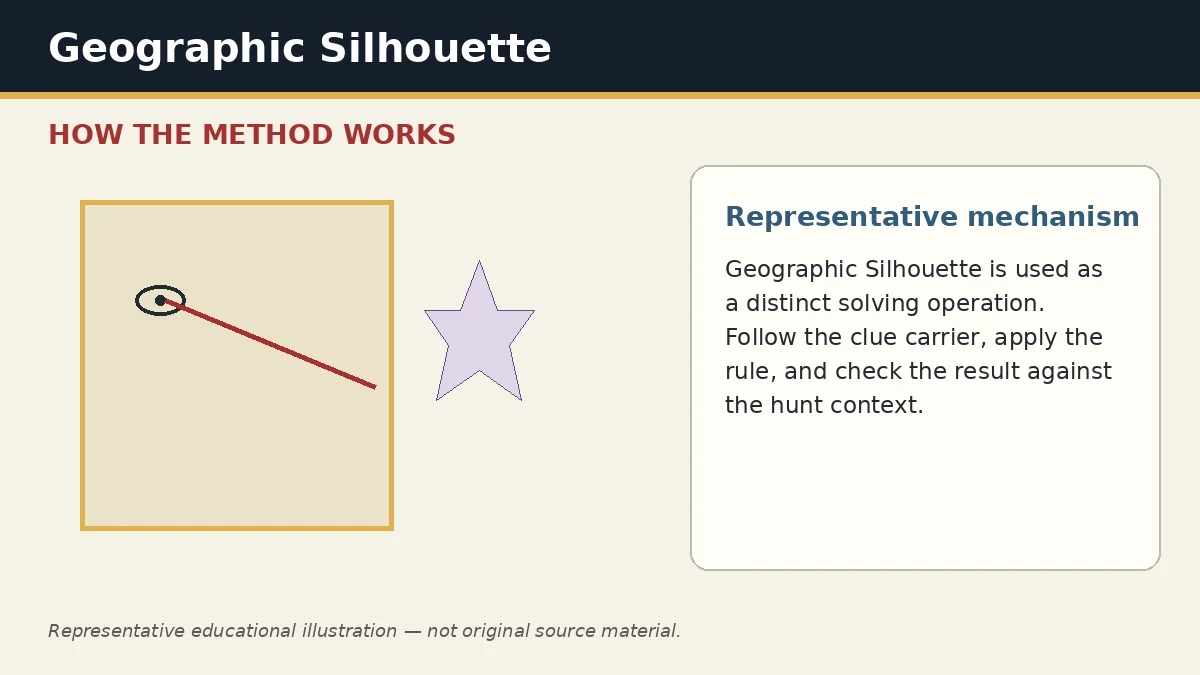
State, shoreline or geographic outlines can be embedded in otherwise fantastical forms.
Read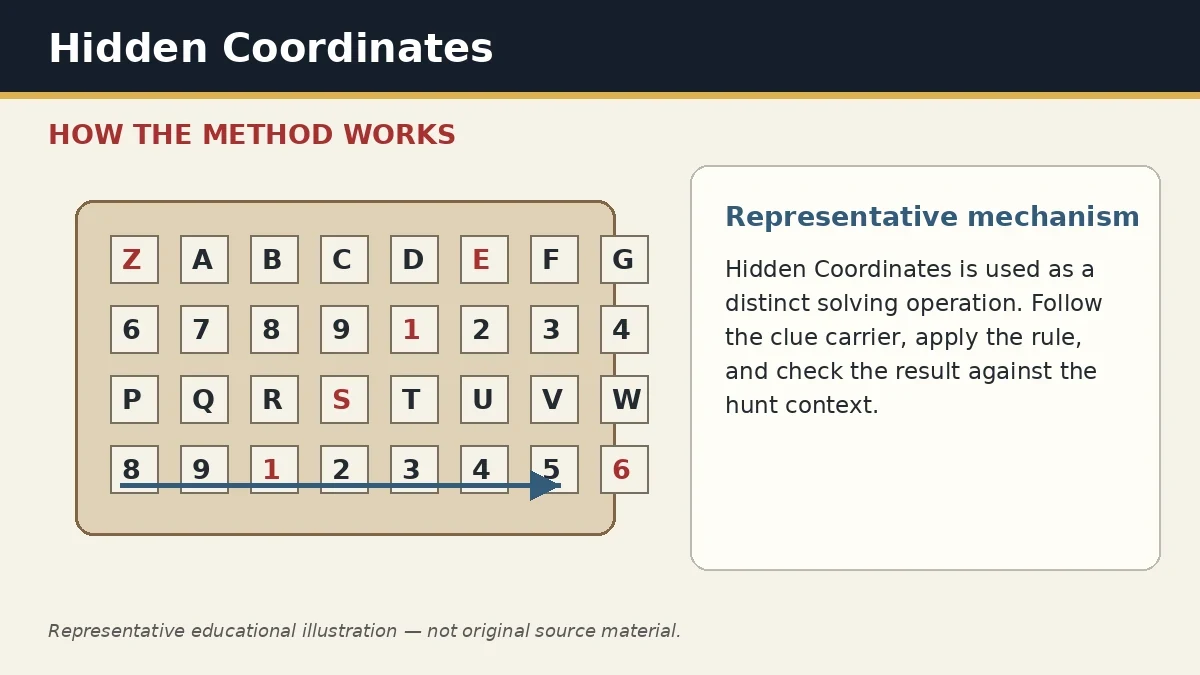
Several paintings contain numbers interpreted as latitude/longitude components.
Read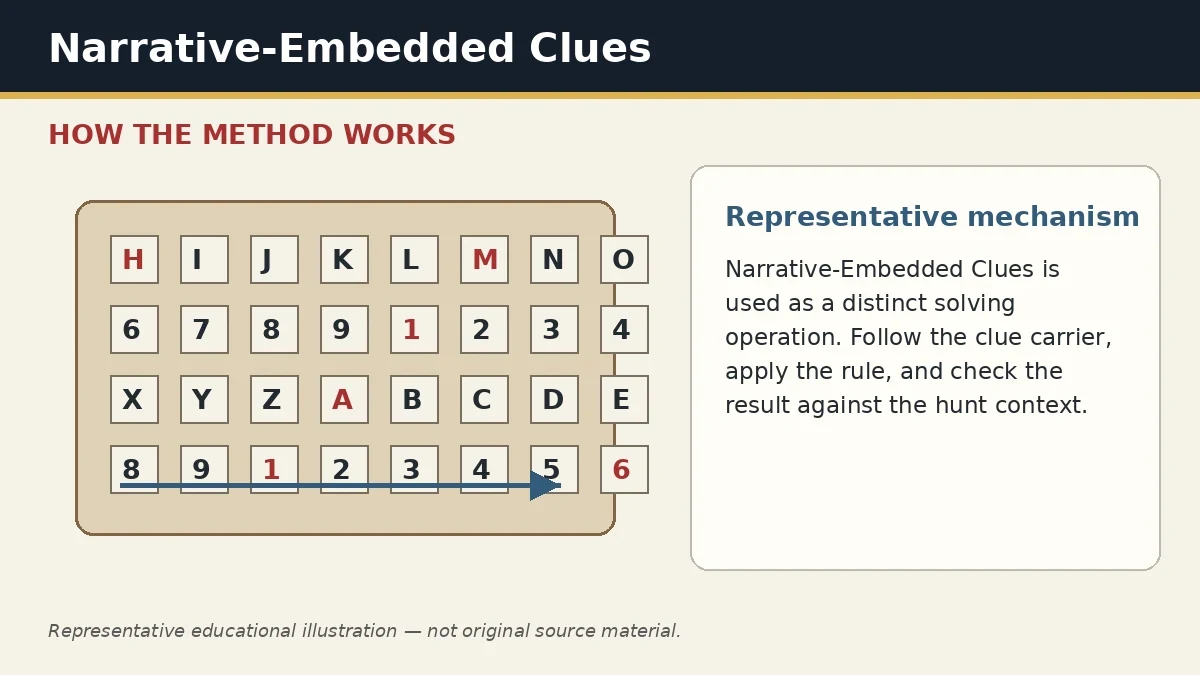
The hunt was explicitly designed with clues woven through a novel.
Read
The text extraction independently pointed to Hot Springs after the cover/route work had already suggested that area.
Read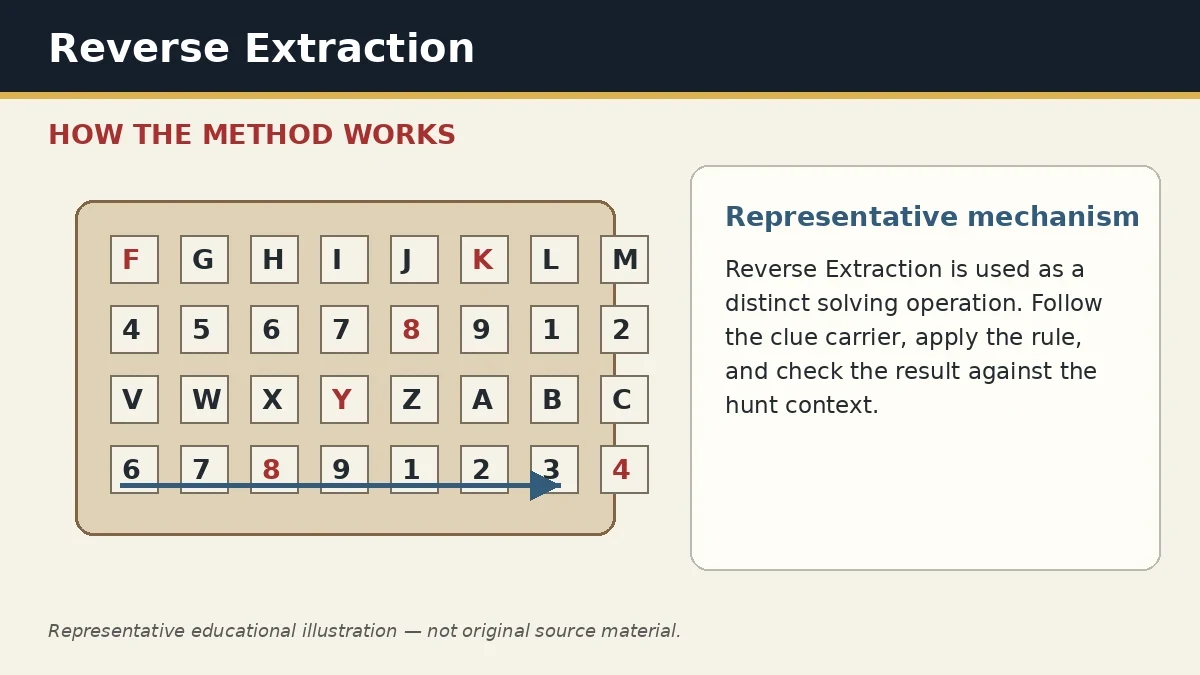
A companion line was processed in reverse to yield AT CEDAR LOT.
Read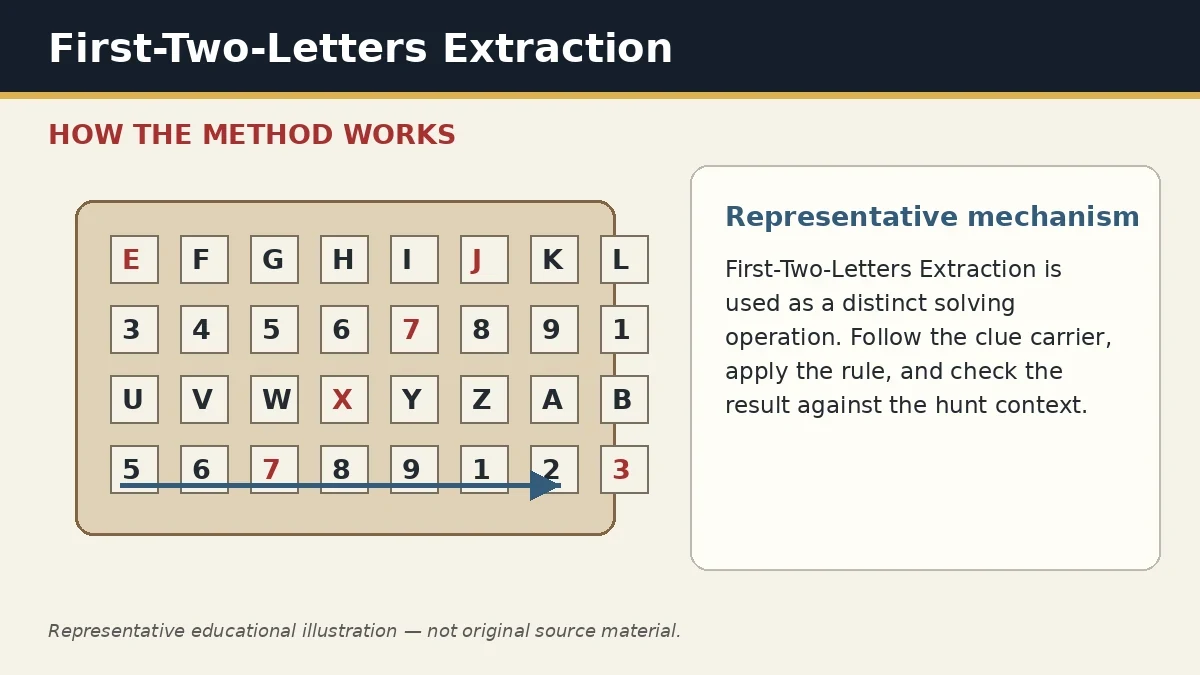
The winner interpreted the author’s repeated wording as an instruction to take two letters at a time.
Read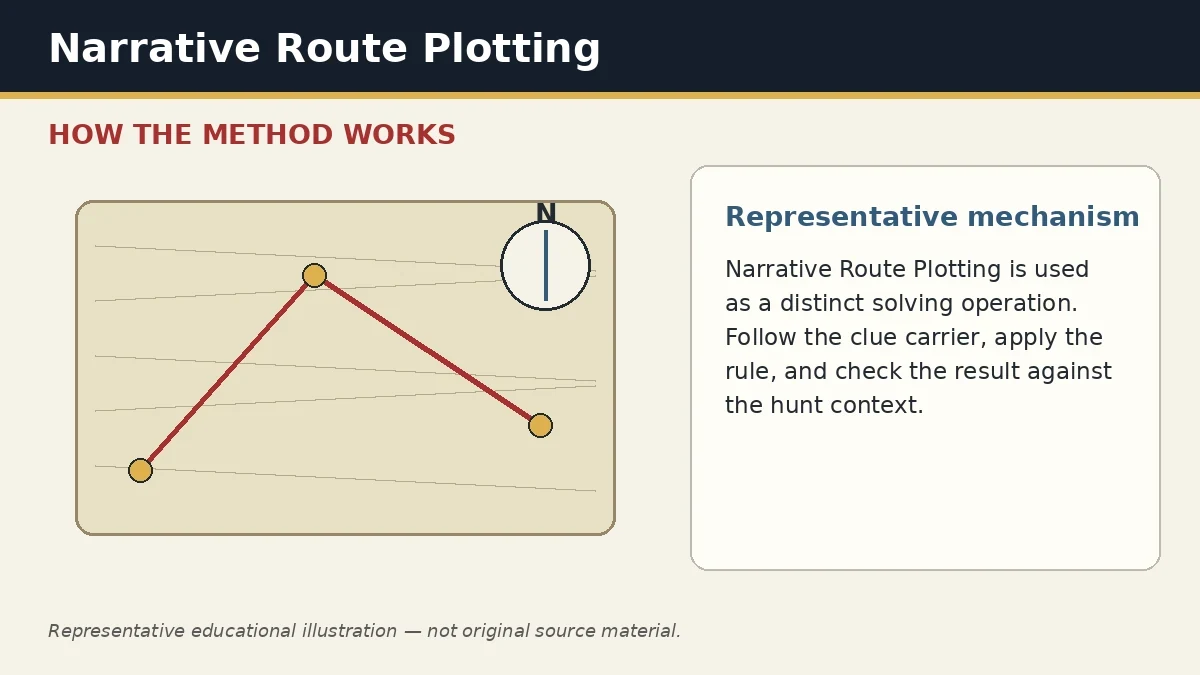
The winner plotted the characters’ movements and stated mileages on Google Maps.
Read
Winner Coy Lothrop treated the unusual embossed dot pattern under the dust jacket as purposeful.
Read
An unusual displayed time of 1:80 points to mile 180.
Read
The mile value 262 appears in the paisley rug.
Read
A typical solve uses one image for the place-name cipher, another for local geography, and another for the tree.
Read
Once the common Polybius grammar became known, the remaining token puzzles became easier to attack.
Read
Tokens were placed in accessible tree knotholes rather than requiring excavation.
Read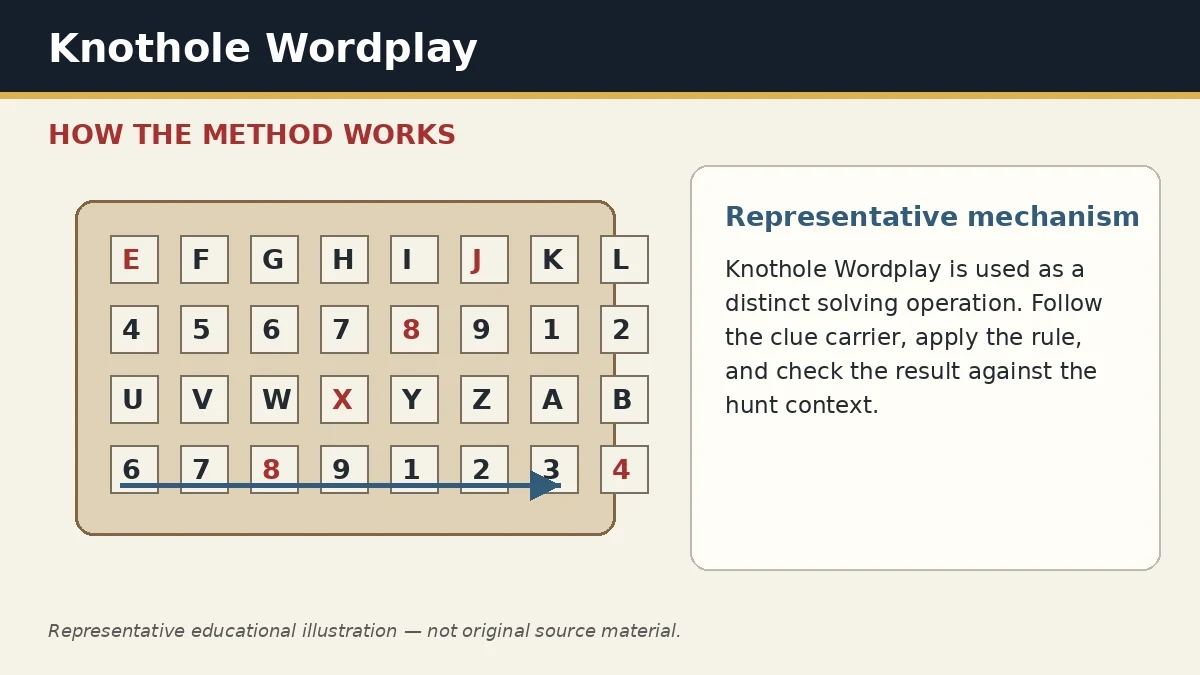
The metapoem uses wordplay that directs attention to holes in trees.
Read
A separate image identifies the actual tree associated with a token.
Read
After decoding the park, a separate fairy/drop-cap image narrows the search inside it.
Read
The Butterfly carrier is read around the border in a defined direction.
Read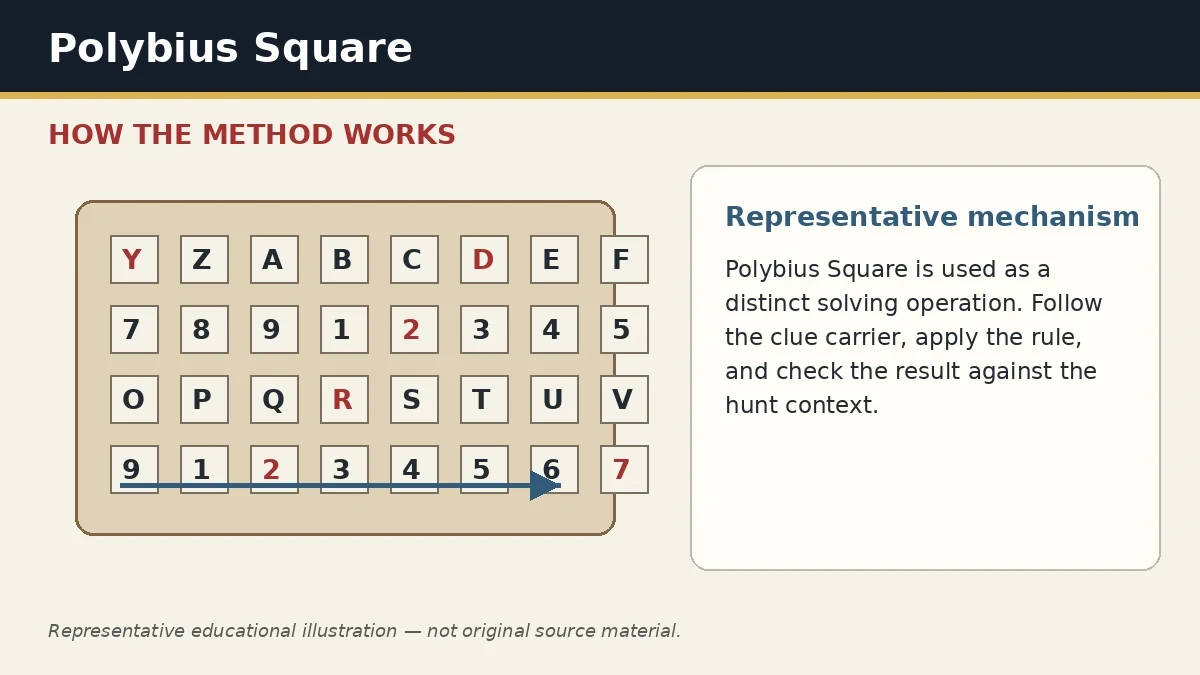
Every token puzzle ultimately feeds coordinate pairs into a shared 5×5 alphabet grid.
Read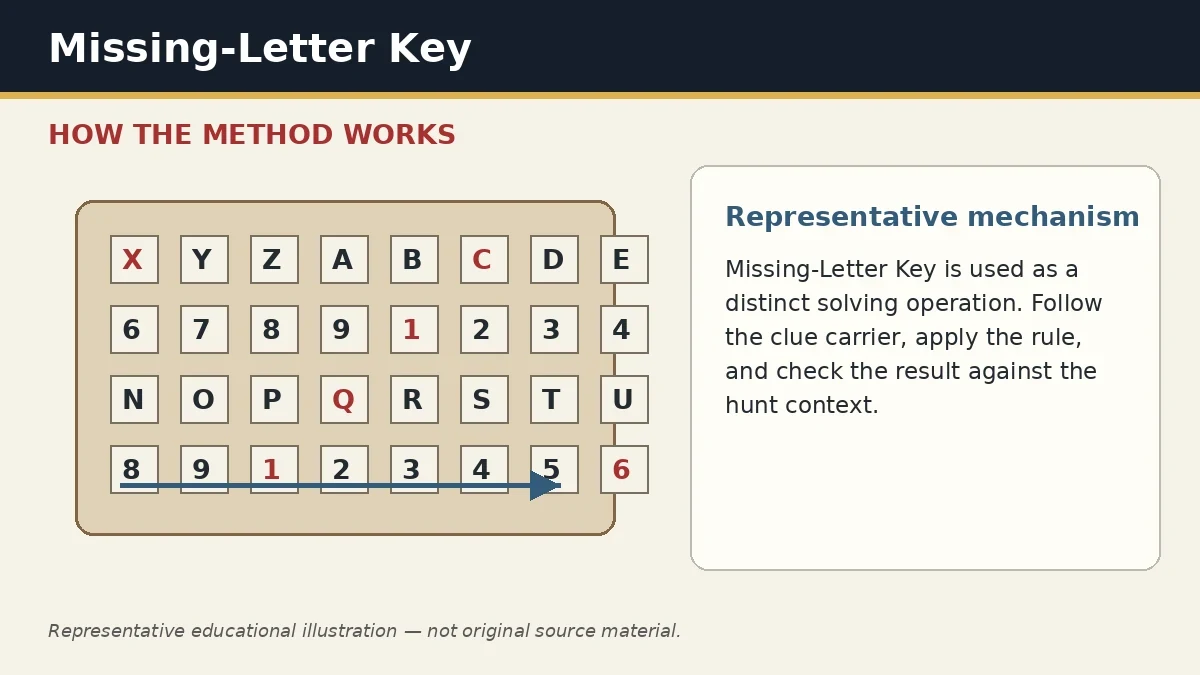
The book omits Q from the alphabetic key used by the hunt.
Read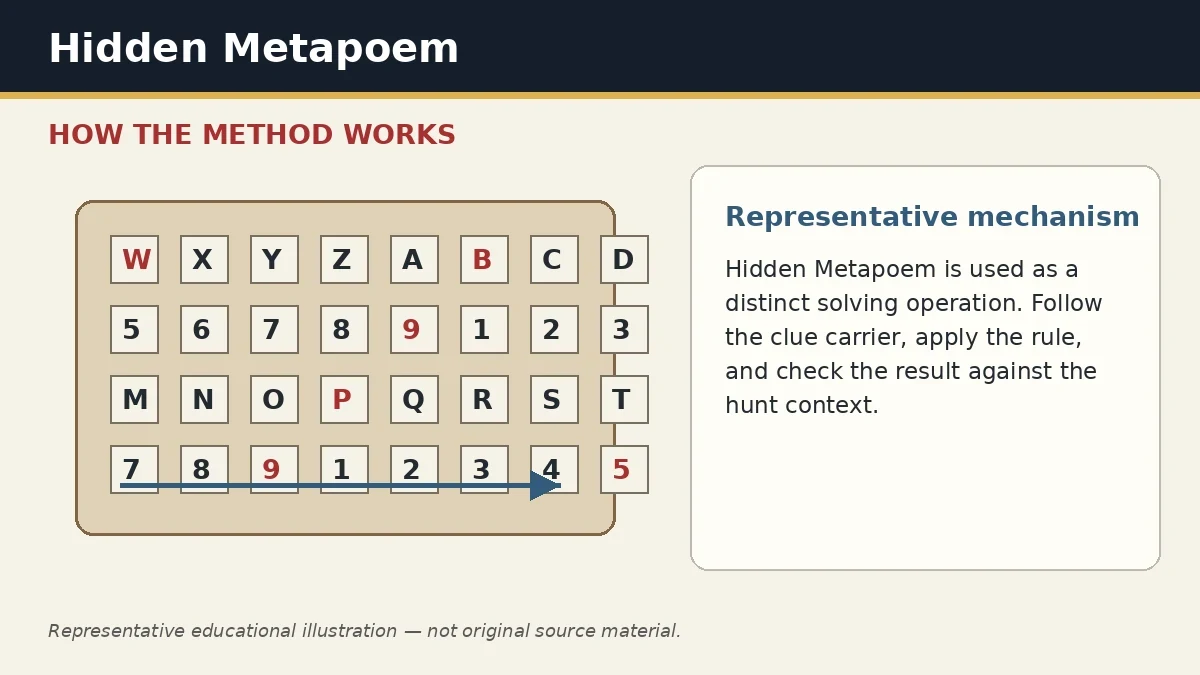
Camouflaged lines across illustrations form a metapoem explaining the shared puzzle grammar.
Read
A later television clue was designed to be sufficient on its own to locate the treasure.
Read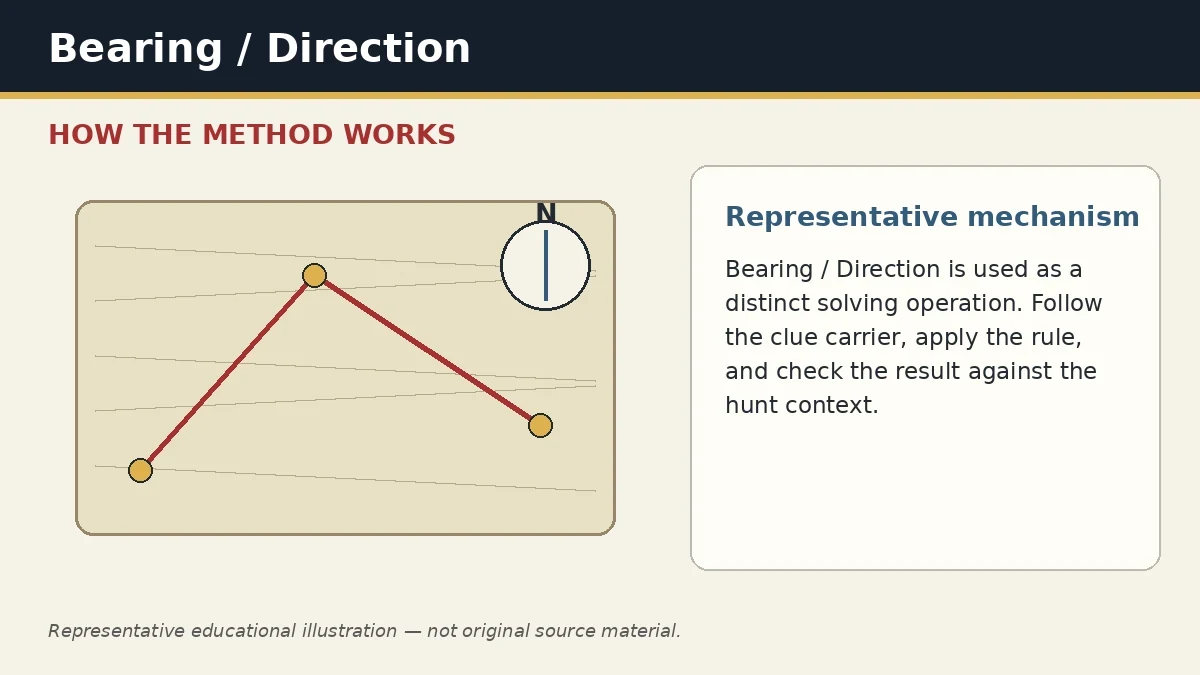
The reduced instruction includes a southeast directional component.
Read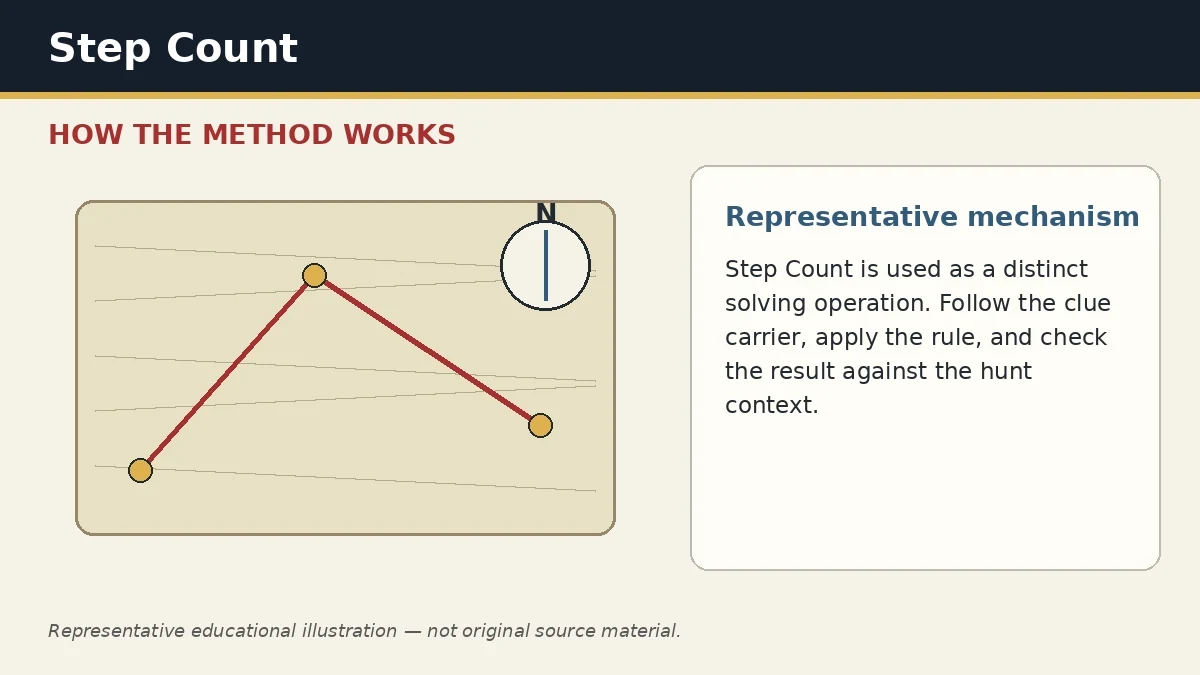
The final instruction set includes a count that maps to a staircase at the target area.
Read
The transformed phrases are not always literal place names; they must be interpreted conceptually.
Read
Number strings on the final page supply the grouping pattern used in the reduction.
Read
A clue about “intermingle” plus numerical grouping directs groups of words to be recombined.
Read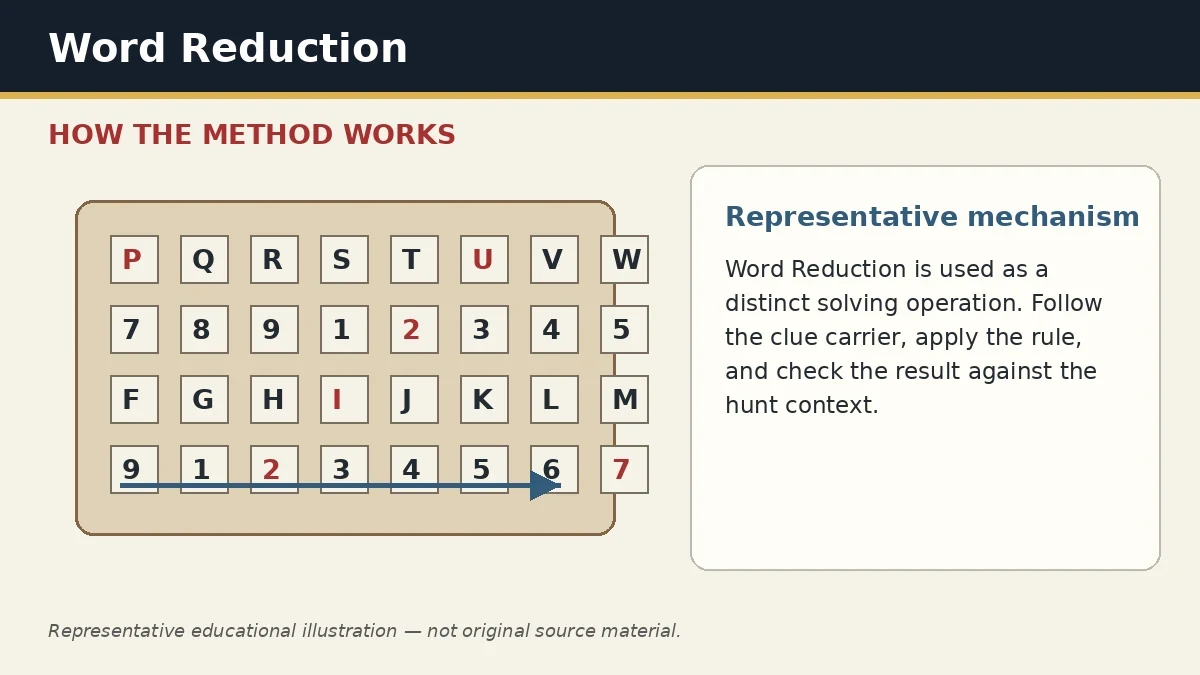
After following the embedded instructions, only selected words remain.
Read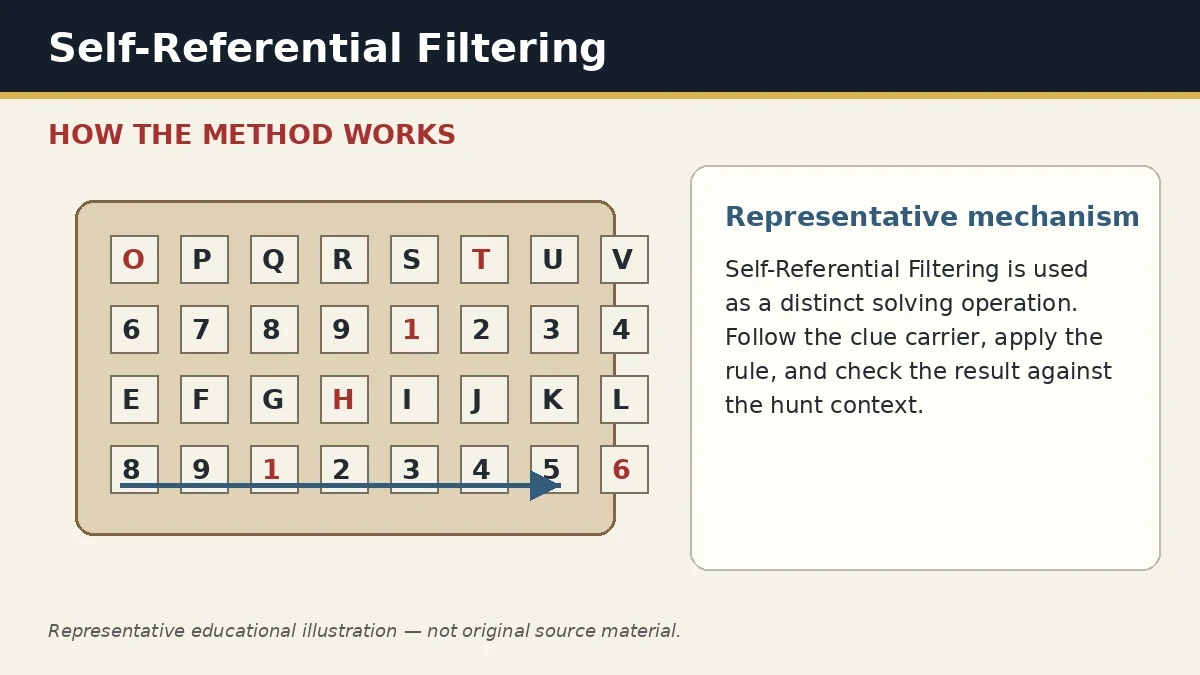
The decoded corpus includes statements that direct filtering and rejection.
Read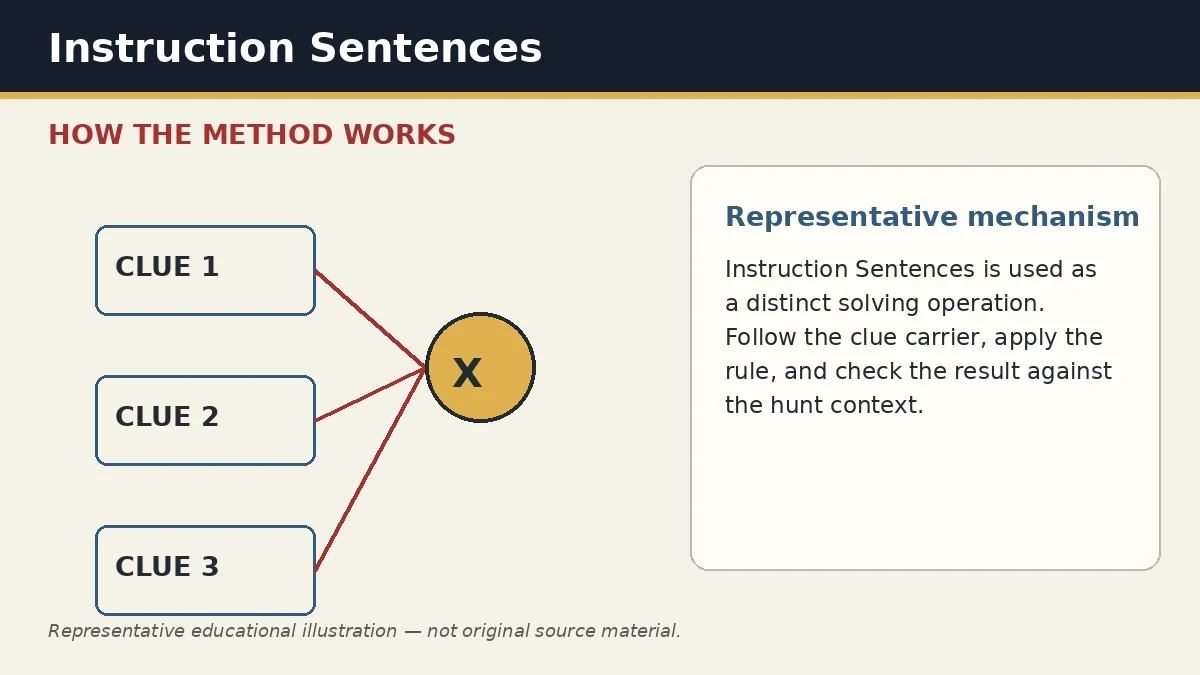
The first major decode yielded 41 strange sentences.
Read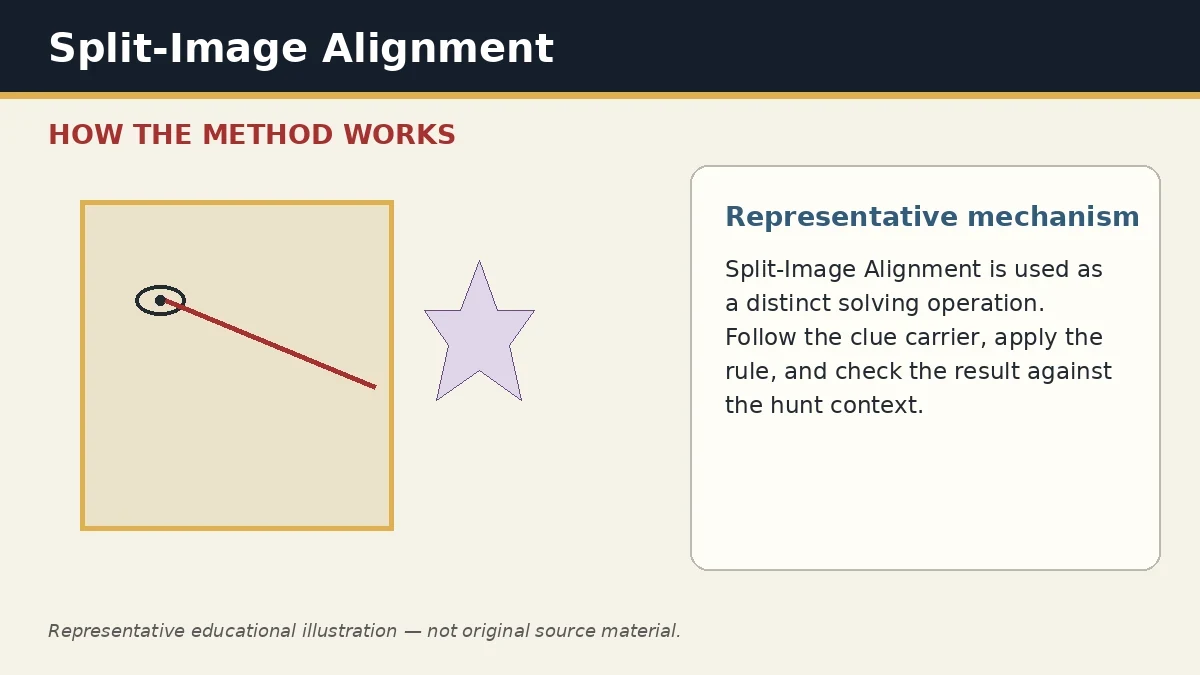
Some codes required aligning separated visual pieces.
Read
Solvers had to distinguish small visual differences among repeated designs.
Read
Some visual codes required counting repeated physical features.
Read
The hunt used 15 distinct visual code types rather than one repeated substitution alphabet.
Read
The essential puzzle material was distributed through decorative-looking marginal elements.
Read
The creator explicitly identified misspellings that were not intended as clues.
Read
Don Adams noted that modern internet access makes many of the old puzzles easier.
Read
The creator released two additional clue sets after one and two years.
Read
The final solution is described by the creator as unexpected and based on a general theme.
Read
The creator warns that solving the individual puzzles does not necessarily give the final answer.
Read
Don Adams explicitly describes solved cyphers within the hunt.
Read
The book organizes its challenge through fictional search narratives rather than presenting a naked puzzle sheet.
Read
Masquerade contains attractive subsidiary patterns that can consume solver attention without advancing the core route.
Read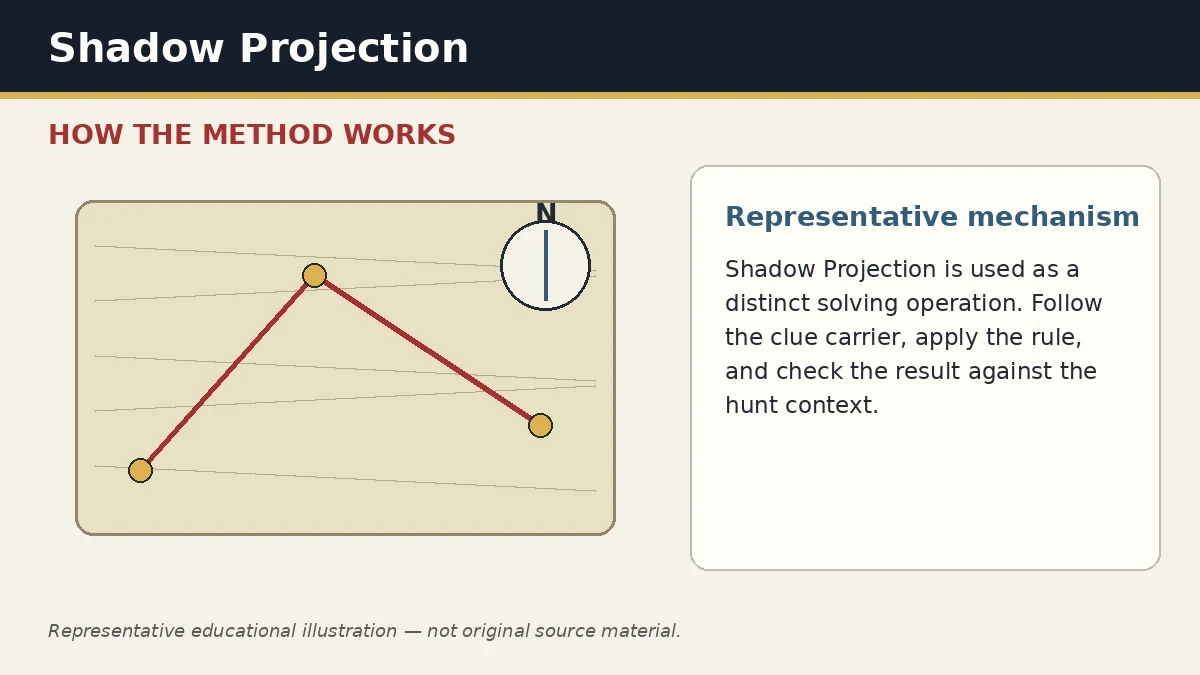
The last-mile location uses the monument and its shadow as a real-world geometric pointer.
Read
The master message invokes midday, light and equinox rather than only a static place.
Read
A historical name in the extracted instruction links the word puzzle to a real monument and place.
Read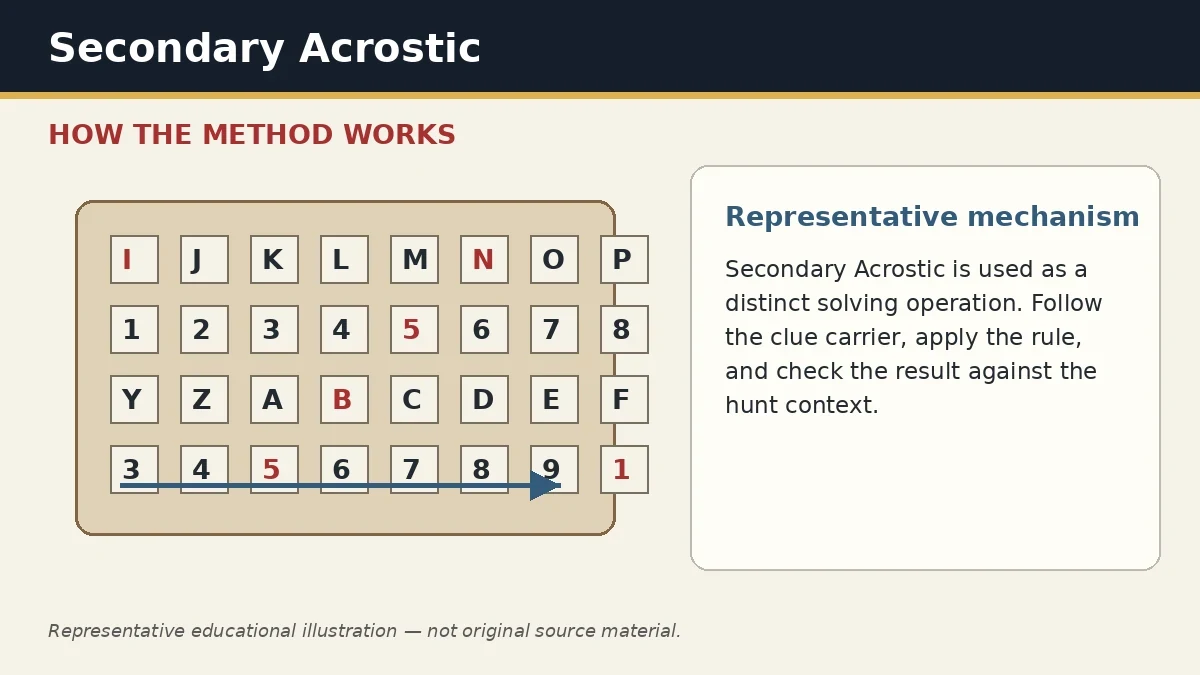
The initial letters of the extracted words/phrases form a geographic instruction.
Read
A final numerical grid confirms the lengths of words and phrases extracted from the paintings.
Read
The solver must know not only how to draw lines but which depicted figures to process first.
Read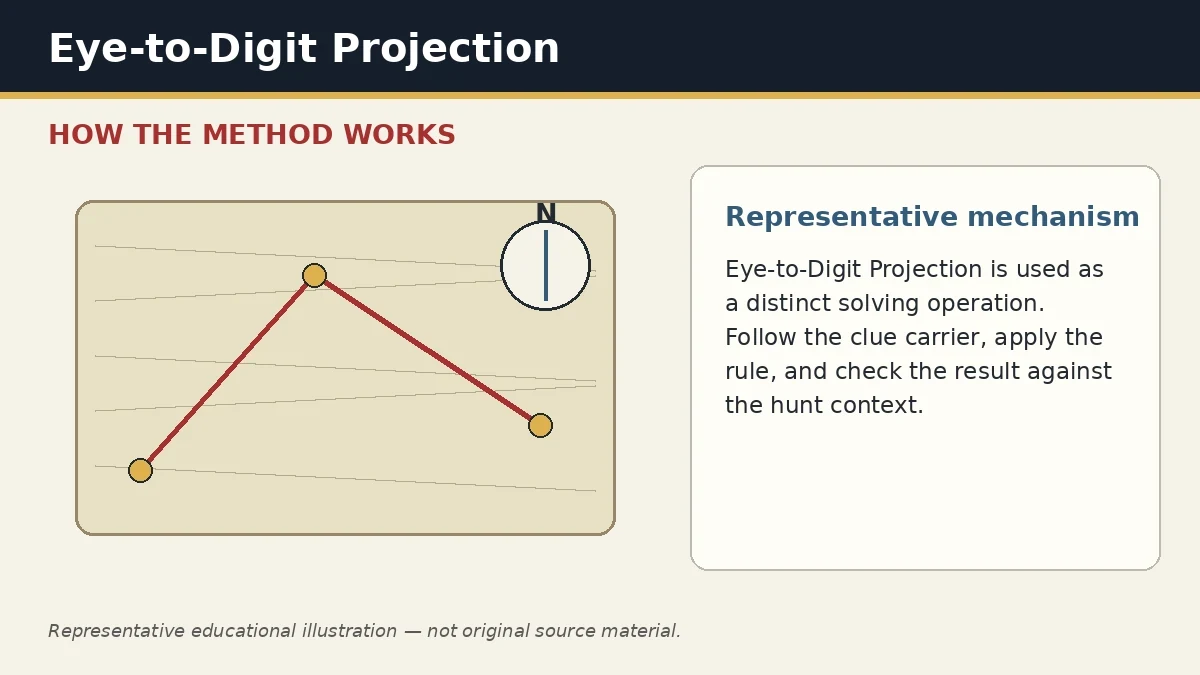
Eyes and visible fingers, toes, paws or equivalent digits act as geometric anchors.
Read
The Newton painting connects a repeating color sequence to the control rings of figures.
Read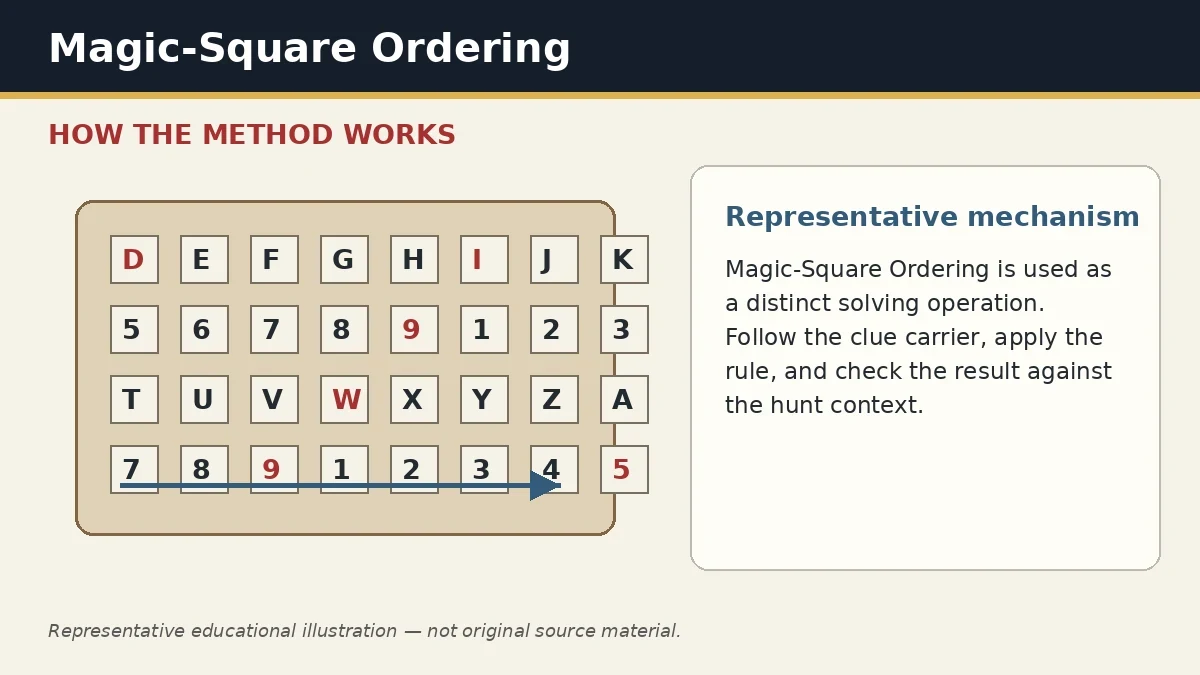
A numbered magic square supplies an order that is reused against another grid.
Read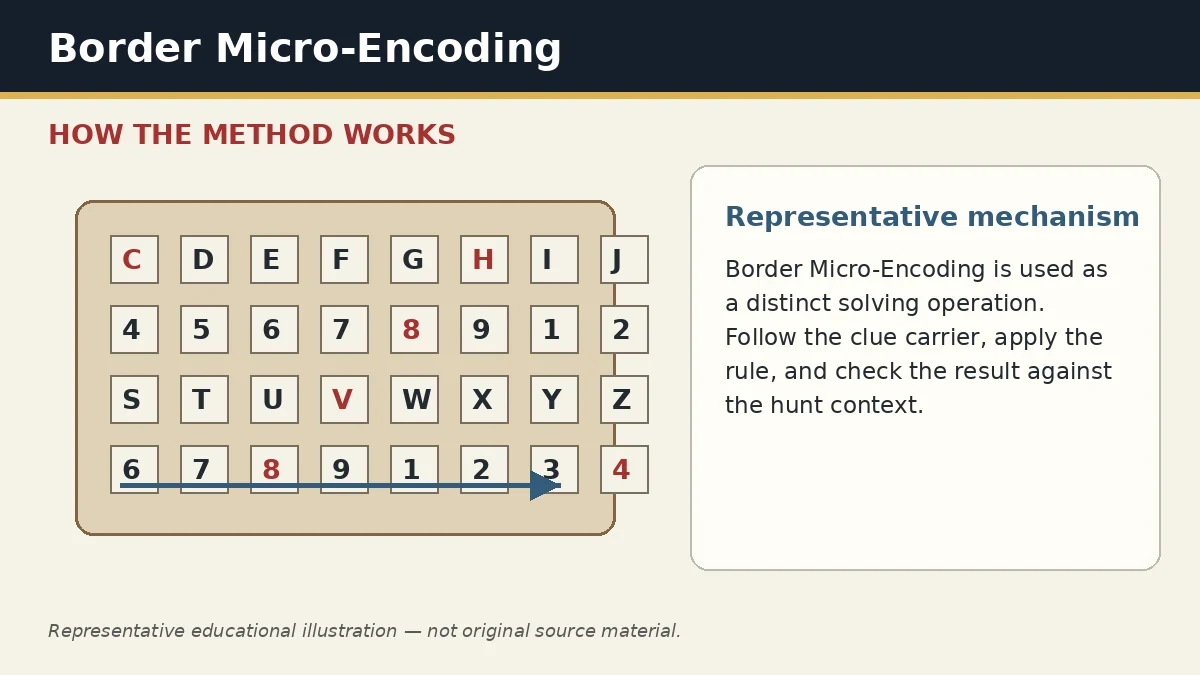
Specially treated letters around the paintings form short words independent of the main geometric extraction.
Read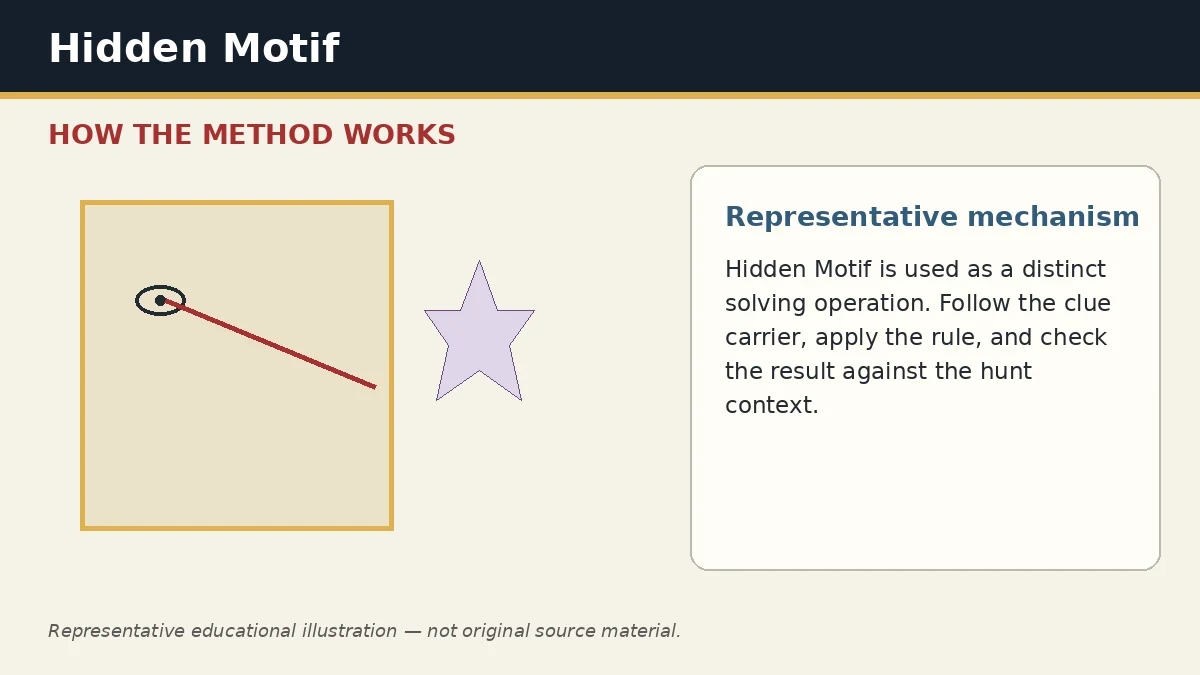
A hare is concealed in every painting, teaching solvers that the illustrations contain deliberately hidden forms.
Read