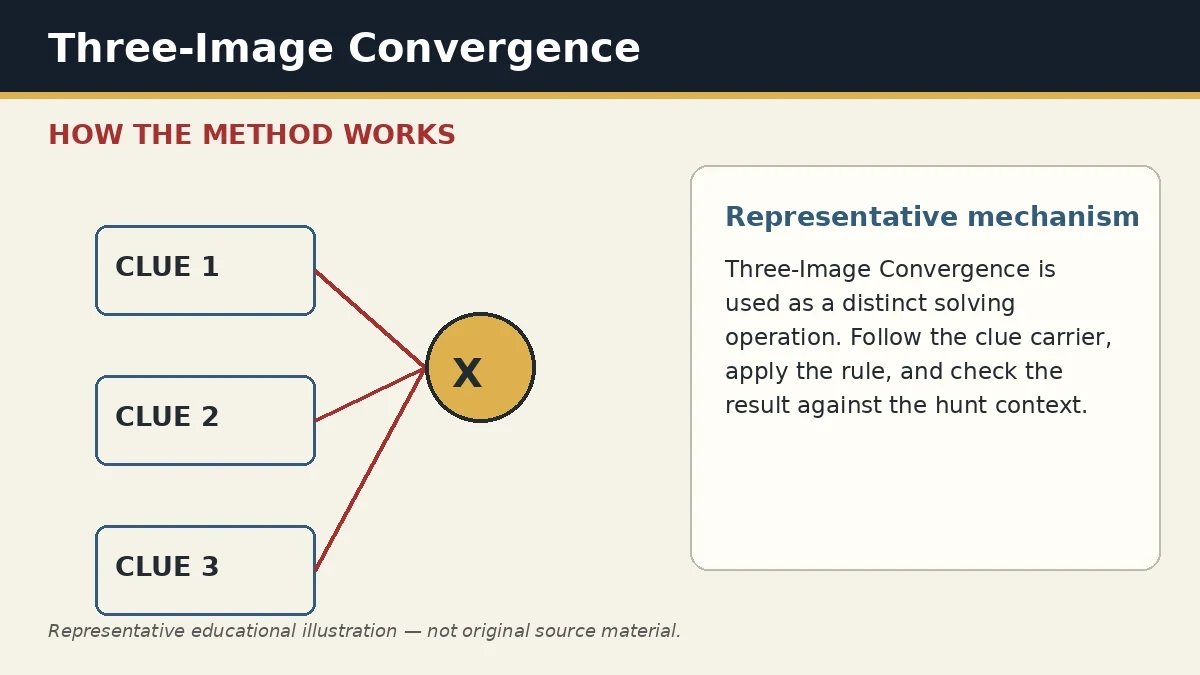
How Park Cipher, Local Map and Tree Image Converged in A Treasure’s Trove
A typical solve uses one image for the place-name cipher, another for local geography, and another for the tree.
ReadTopic
A typical solve uses one image for the place-name cipher, another for local geography, and another for the tree.
Read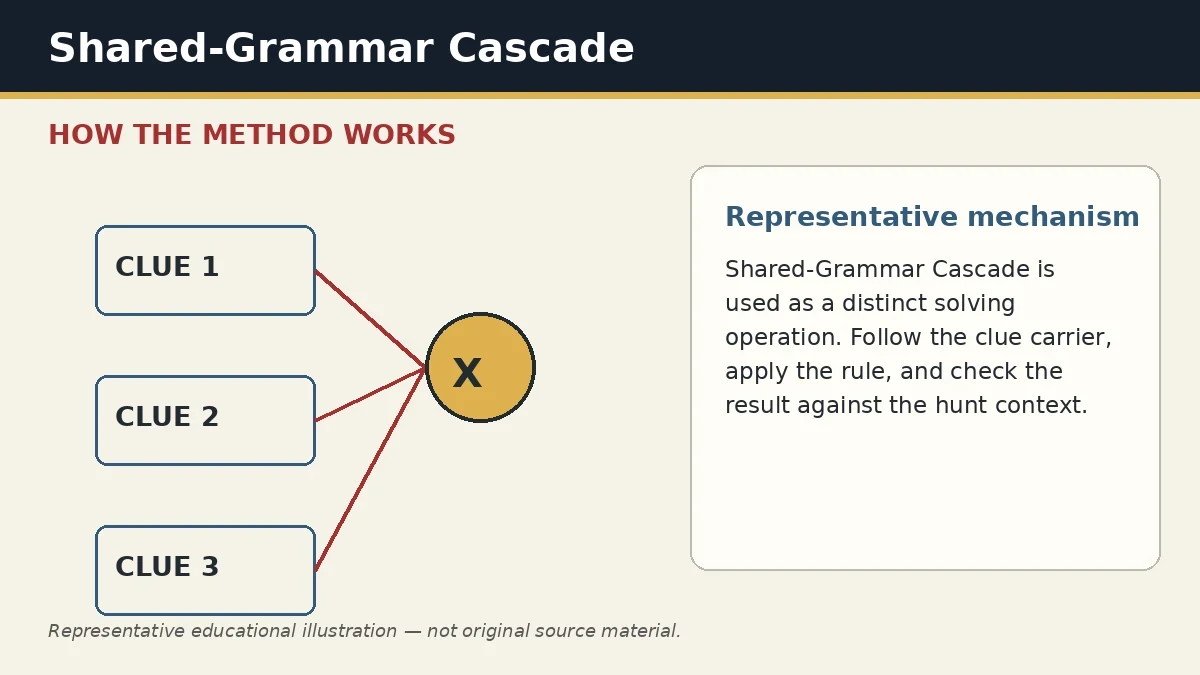
Once the common Polybius grammar became known, the remaining token puzzles became easier to attack.
Read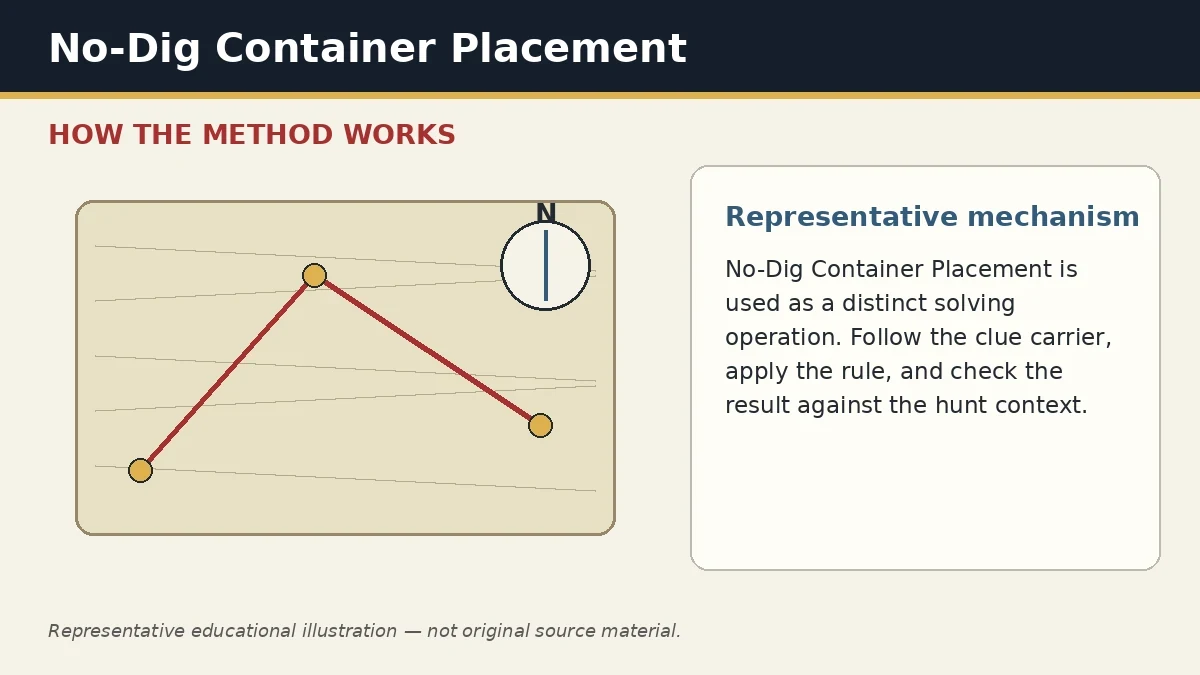
Tokens were placed in accessible tree knotholes rather than requiring excavation.
Read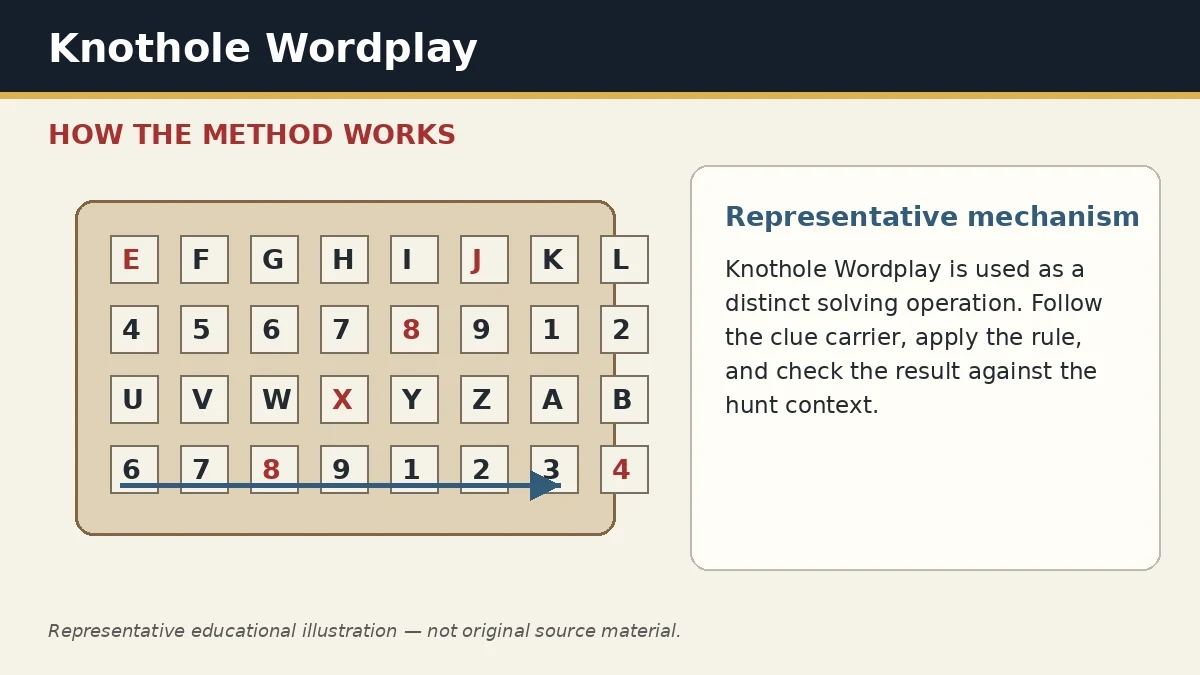
The metapoem uses wordplay that directs attention to holes in trees.
Read
A separate image identifies the actual tree associated with a token.
Read
After decoding the park, a separate fairy/drop-cap image narrows the search inside it.
Read
The Butterfly carrier is read around the border in a defined direction.
Read
The Butterfly puzzle uses different break shapes around a border as the five symbol classes.
Read
Each jeweled creature uses a different visual way to generate the Polybius coordinate pairs.
Read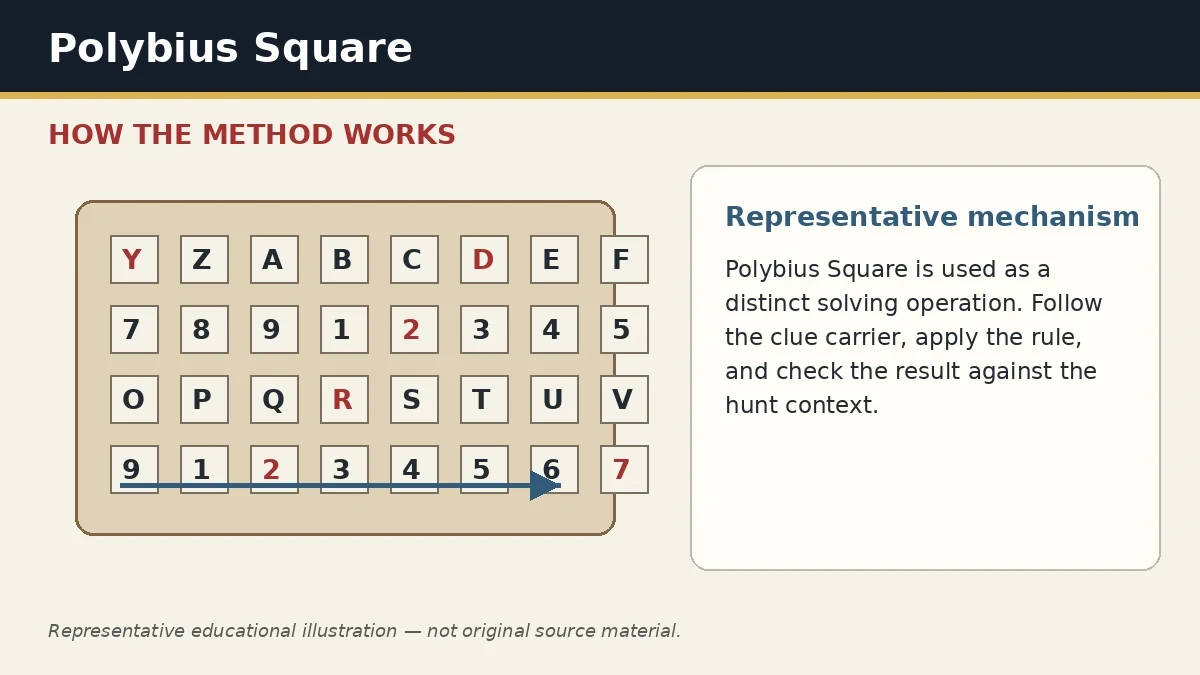
Every token puzzle ultimately feeds coordinate pairs into a shared 5×5 alphabet grid.
Read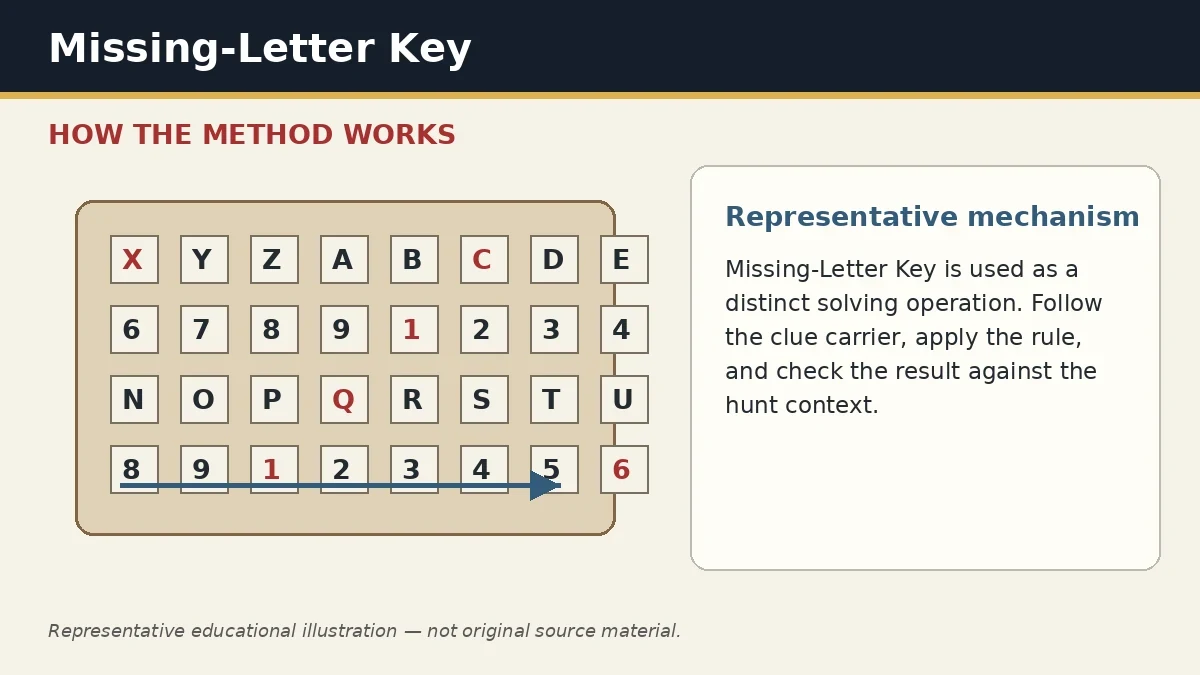
The book omits Q from the alphabetic key used by the hunt.
Read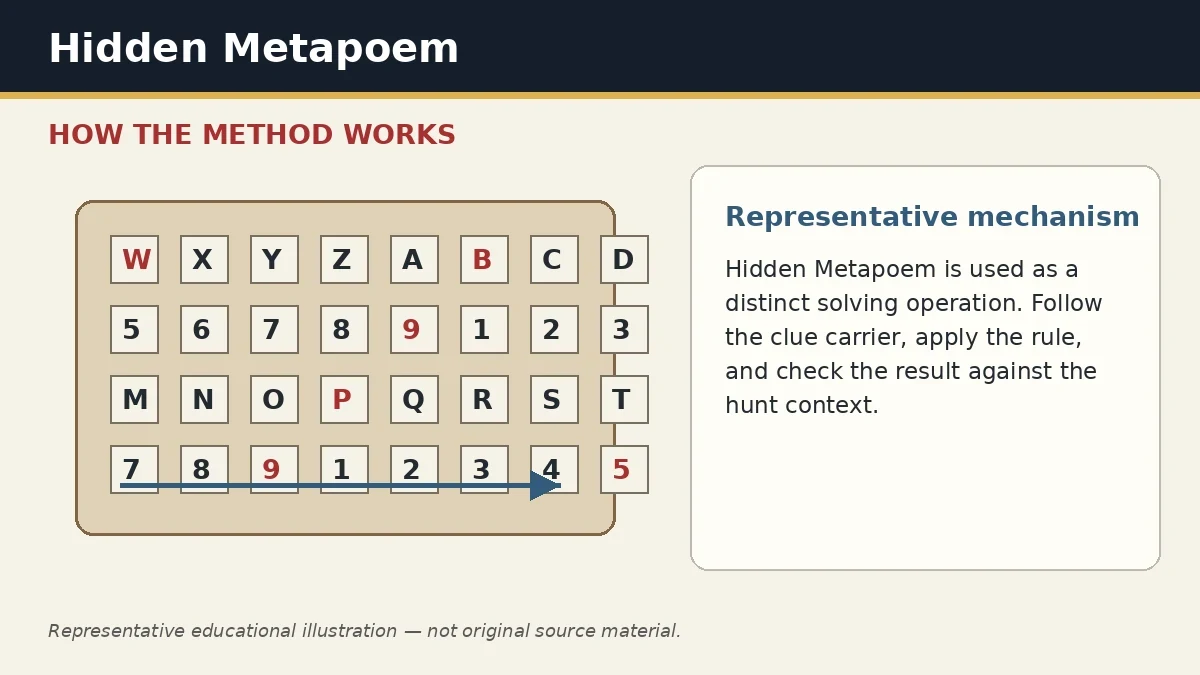
Camouflaged lines across illustrations form a metapoem explaining the shared puzzle grammar.
Read